
JL-3 Submarine-Launched Missile Test-Fired at 8,000 Kilometers Completes the Underwater Link in the PLA's Nuclear Retaliation Chain
 Li Minghui
JL-3 Submarine-Launched Missile 8000 Kilometers Test Launch Completes the Underwater Link in the PLA's Nuclear Retaliation Chain
In the launch on July 6, the most easily overlooked aspect is not the number "8000 kilometers," but the launch platform. The South China Morning Post reported on August 1 that a missile carrying a simulated warhead flew approximately 8000 kilometers, marking China's first confirmed test of a submarine-based missile since 1982, and the first known launch completed by a nuclear-powered submarine. The missile model has not been officially confirmed, but reports from the Global Times suggest it may be the JL-3.
If this judgment holds, it is more than just another long-range missile test. The land-based Dongfeng series addresses the issues of "range" and "quantity," bombers provide visible deterrence, while submarine-launched missiles address another matter: whether credible retaliatory capability can be maintained after the first wave of strikes. In simple terms, the most challenging link to complete in the nuclear retaliation chain is precisely underwater.
Is 8000 Kilometers Enough?
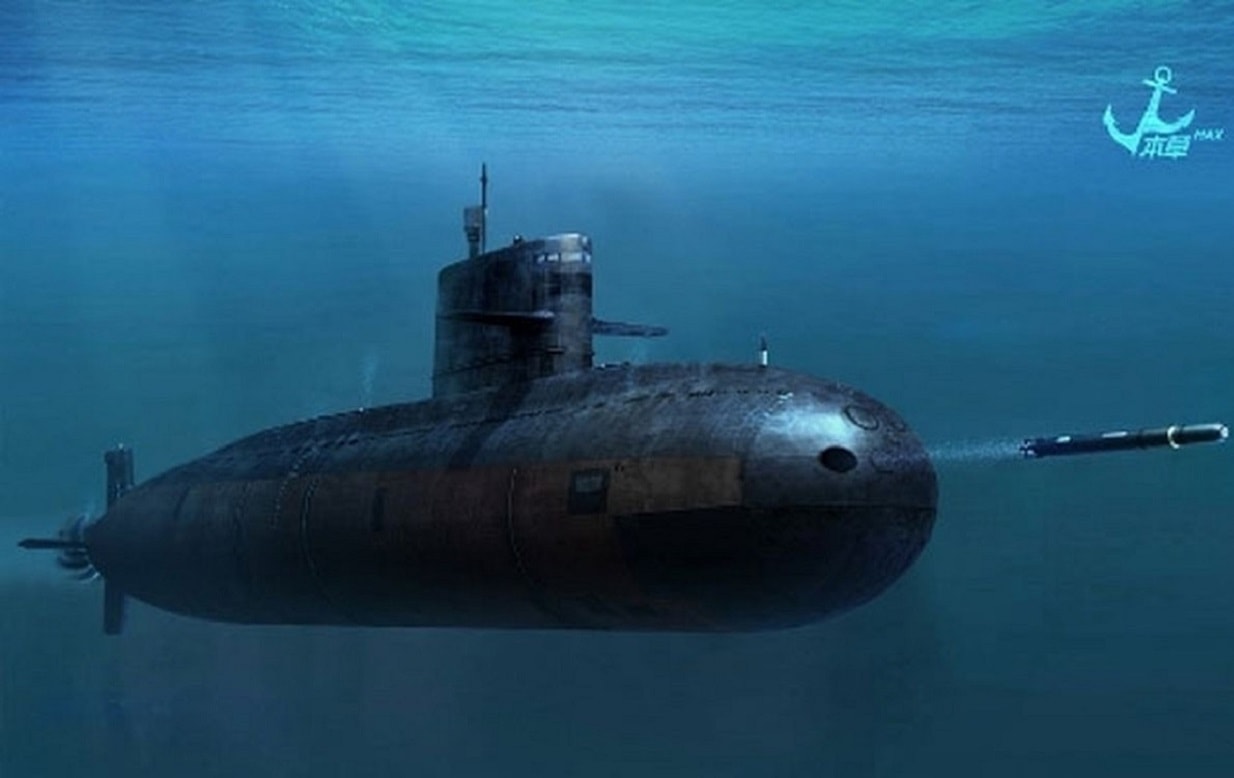
In publicly available information, the JL-3 is generally regarded as the next generation of submarine-launched intercontinental ballistic missiles following the JL-2, with estimates of its range exceeding approximately 9000 to 10000 kilometers. The 8000 kilometers mentioned in this report is the actual flight distance, which does not equate to the maximum range. From an engineering perspective, test launches are often set up with trajectories and impact areas based on verification projects, and one cannot simply reverse-engineer the maximum specifications from a single flight distance.
However, 8000 kilometers is sufficient to illustrate one issue: if paired with strategic nuclear submarines operating in coastal or Western Pacific waters, China's underwater nuclear force coverage will significantly expand. In the past, the main criticisms of the Type 094 strategic nuclear submarine were its noise levels, exit channels, and the less-than-ideal range combination with the JL-2, which meant the platform might need to take greater risks to operate forward. With the missile's range increased, the submarine's reliance on distant sea operations will decrease, naturally enhancing its survivability.
The Shortcomings Are Not in the Missile Itself
What concerns me more is not whether the JL-3 has achieved its theoretical range, but whether it can maintain a stable alert status. Submarine-launched nuclear capabilities are a system engineering project, and the missile is just the most visible segment. Hull quieting, crew training, communication links, base support, and maritime patrol rhythms—any one of these links falling short will diminish the deterrent effect.
This is akin to equipping a sports car with a better engine, but the tires, fuel system, and maintenance crew must also keep up. In the past decade, China's military industry has made rapid progress in solid rocket engines, composite material casings, and guidance control; however, publicly available information rarely proves that underwater continuous patrols have reached the mature levels of the U.S. and Russia. Regarding this, the outside world can only make limited inferences from launch frequencies, satellite images, and official snippets.
Viewing Silos Expansion and Underwater Test Launches Together
In the same week, there was another signal worth reading together. In a program commemorating the 99th anniversary of the PLA, personnel from the Rocket Force engineering unit rarely discussed the construction of more missile sites in recent years, stating that each completed site means more "strategic trump cards" can be deployed earlier and enter combat readiness. The South China Morning Post interprets this as a rare acknowledgment from Beijing regarding the new construction of nuclear missile silos.
Land-based silos and submarine-launched missiles do not replace each other; rather, they increase the uncertainty for adversaries. Silo-based missiles rely on scale and dispersed manufacturing to calculate challenges, while submarines create search challenges through stealth. The simultaneous public display of both lines indicates that China's nuclear force construction is shifting from "existence issues" to "system resilience issues." This is also the part that the U.S. finds most difficult to adapt to, as it has been more accustomed to assessing China's relatively small-scale, low-alert nuclear capabilities in the past.
The Real Issues Have Not Been Made Public
However, I do not believe this test launch signifies that China has already achieved a complete and mature sea-based nuclear deterrent. Whether the JL-3 can become a routine alert weapon still depends on whether it is ultimately paired with the improved Type 094 or the future Type 096 strategic nuclear submarine. The former is a transitional solution, while the latter could truly change the underwater situation in the Western Pacific.
Existing public information can only confirm a single long-range submarine-based launch and official media hints regarding the JL-3; it cannot confirm the missile model, launch submarine model, or actual combat deployment status.
What is truly worth questioning is not how far the JL-3 flew, but when the Chinese Navy will enable the strategic nuclear submarines carrying it to conduct low-noise, long-duration, verifiable combat patrols. The missile has already made its appearance, but the underwater platform has not yet fully revealed itself.
Main Sources
- South China Morning Post, August 1, 2026, regarding the July 6 submarine-based missile launch and clues about the JL-3.
- South China Morning Post, July 31, 2026, regarding CCTV's disclosure of the Rocket Force missile site construction.
- Xinhua News Agency and SCMP, July 31, 2026, regarding the PLA's strengthening of unmanned intelligent technology and intelligent military system construction.
The People's Liberation Army Navy conducted a test launch of the JL-3 submarine-launched missile on July 6, 2026, in the South China Sea. The missile reportedly achieved a flight distance of approximately 8000 kilometers, marking a significant advancement in China's underwater nuclear capabilities. This test is the first confirmed launch of a submarine-based missile since 1982 and is seen as a critical enhancement to China's nuclear deterrent system.
- The JL-3 missile was launched from a nuclear submarine for the first time since 1982.
- The missile reportedly flew approximately 8000 kilometers during the test.
- This test enhances China's underwater nuclear deterrent capabilities.
- The JL-3 missile is speculated to have a maximum range of 9000 to 10000 kilometers.
- The development of the JL-3 is part of China's broader strategy to improve its nuclear deterrent system.