
JNIM and ISSP Target Gold Mines in Burkina Faso, Mali, and Niger in 2026
 Marie Dubois
JNIM and ISSP Target Gold Mines in Burkina Faso, Mali, and Niger in 2026
In Inata, in northern Burkina Faso, the gold mine is no longer just a closed industrial site. It is a checkpoint. The paths connecting it to Mali, the villages supplying the gold panners, and the convoys evacuating the ore now form a theater of operations where the Group for Support of Islam and Muslims (JNIM) and the Islamic State Province in the Sahel (ISSP) extract, recruit, and impose their law. The report published on September 26 by Africa Defense Forum, relying in particular on an analysis by ACLED, describes a war economy that moves around the mines rather than against their fences.
The mine is not the target; the network is
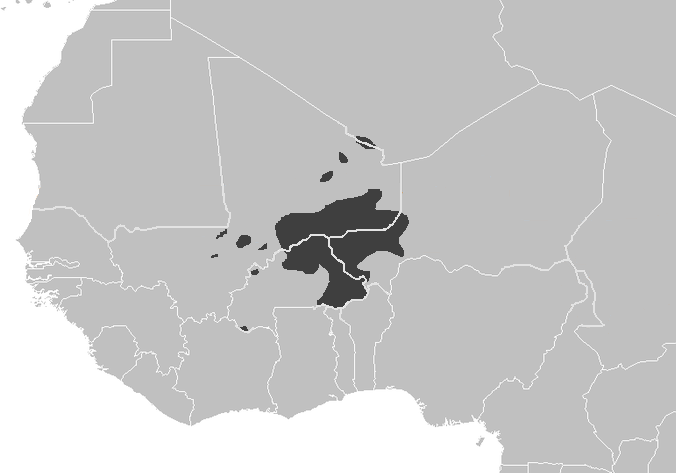
ACLED examined 44 mining sites in Burkina Faso, Mali, and Niger, the three members of the Sahel States Alliance (AES). Seventy-five percent of violent events related to mining activity occur in Burkina Faso. Most importantly, most occur within a ten-kilometer radius around the mines, and not within the facilities themselves. This distance says a lot about the jihadist method.
An industrial mine is guarded, monitored, and difficult to ransom directly. A village, a path, or a transporter is more vulnerable. JNIM and ISSP tax the gold panners, extort merchants, control the roads, and sometimes recover gold directly from their bases. The metal is easy to hide, move, and convert into cash. It pays for explosives, motorcycles, phones, and recruits. Gold is not a singular explanation for the insurgency, but it provides a local treasury that airstrikes do not destroy.
Inata and the Liptako-Gourma Corridor
Inata, near the Malian border, was the first mine targeted by jihadists in 2018. The Burkinabè junta closed it in 2024. According to the analysis cited by Africa Defense Forum, the site and its region have been under JNIM control since June. This control does not necessarily mean a permanent presence of uniformed fighters. It can take the form of temporary checkpoints, imposed intermediaries, and a threat credible enough for locals to self-censor.
Further east, the Liptako-Gourma — the area where Burkina Faso, Mali, and Niger converge — remains the hub of competition between JNIM and ISSP. The Essakane mine, one of the largest in Burkina Faso, is located in this space. On the other side of the border, in Niger, the Samira mine reminds us that the administrative border does not separate economic circuits. A motorcycle loaded with gold crosses a boundary drawn on a map more easily than a military convoy.
This is where the reading by national borders fails. For armed groups, the resource is a continuum of villages, paths, and markets. For AES forces, it often remains divided among three chains of command, three budgets, and limited air resources.
The Dioura Precedent Shows the Cost of the Void
The mining situation cannot be separated from the weakness of Malian garrisons. On September 10, JNIM attacked the Dioura camp in the Mopti region. RFI reported on September 19 that at least a hundred Malian soldiers were said to have been killed and dozens more captured. The group released images of prisoners, vehicles, and seized weapons, while the army announced air-ground operations and the neutralization of fighters.
The exact toll remains disputed. This is precisely the operational problem. When a garrison is abandoned or unable to quickly reopen a road, mining communities do not see a staff map; they see who can guarantee access to the market the next morning. The authority that does not protect people or goods gradually loses local intelligence. On the ground, this loss is sometimes worth more than a captured base.
A Threat Descending Towards Coastal States
Héni Nsaibia, an ACLED analyst cited by Africa Defense Forum, believes that JNIM's expansion towards the borders of Senegal, Guinea, Côte d'Ivoire, and Ghana can export this model. The mining areas in northwestern and central-northern Nigeria are also exposed, as JNIM and ISSP already have footholds there. The danger is not just a spectacular attack on a mine. It is the gradual establishment of an armed toll on the roads feeding the mines.
For the AES juntas, the announced response will likely be military. It is essential, but insufficient if it is limited to retaking a site before leaving. It is necessary to hold the axes, protect the markets, and maintain civilian interlocutors after the passage of units. The administrative closure of a mine can even worsen the situation if it leaves communities without income that JNIM can then tax or recruit.
On the ground, a mine is not a point to defend. It is a supply chain to secure, from the well to the market.
The available data do not yet allow for a precise measurement of the share of gold in the budgets of JNIM and ISSP. However, they show a clear trend: the groups do not necessarily seek to own the ore; they seek to control those who produce and transport it. If Malian, Burkinabè, and Nigerien forces do not restore a lasting presence around the mining corridors, the next front will not be a capital. It will be a secondary path, ten kilometers from a mine, where no one is looking.
Sources
- Africa Defense Forum, “Sahel Gold Mines Fuel Terror Groups,” September 26, 2026, citing ACLED and the Global Initiative Against Transnational Organized Crime.
- RFI, “Mali the toll of the JNIM jihadists' attack in Dioura rises to about a hundred soldiers killed,” September 19, 2026.
JNIM and ISSP are actively targeting gold mines in Inata and the Liptako-Gourma region, controlling supply routes and taxing miners. The groups have established operational control since June 2026, exploiting the local economy and recruiting from vulnerable communities. A recent attack on the Dioura military camp resulted in significant casualties, highlighting the operational challenges faced by local forces.
- JNIM and ISSP control mining areas in Burkina Faso, Mali, and Niger.
- 75% of violent events related to mining occur in Burkina Faso.
- JNIM attacked the Dioura camp, resulting in significant military casualties.
- Gold is used to fund jihadist activities and operations.
- The situation around mining areas is critical for local communities and military forces.