
JNIM strikes Dioura in Mali — nearly 100 soldiers killed and the central front shifts in 2026
 Marie Dubois
JNIM strikes Dioura in Mali — nearly 100 soldiers killed and the central front shifts in 2026
Dioura, Nara district, September 21, 2026. After more than a week of fighting, the Malian army has evacuated by helicopter two companies from its garrison. This is not an ordinary rotation. It is the abandonment of a position that Bamako claimed to hold against Jama’at Nusrat al-Islam wal-Muslimin (JNIM), the Sahelian branch linked to Al-Qaeda.
According to a revised toll by AFP from military, security, and local sources, nearly 100 Malian soldiers and five members of the Russian Africa Corps have been killed. About a hundred men are reported missing, around thirty wounded, and a comparable number captured. JNIM claims 150 soldiers killed and 93 prisoners. This figure is not confirmed. The Malian army has yet to publish an official toll.
Dioura reveals a break in the Malian system
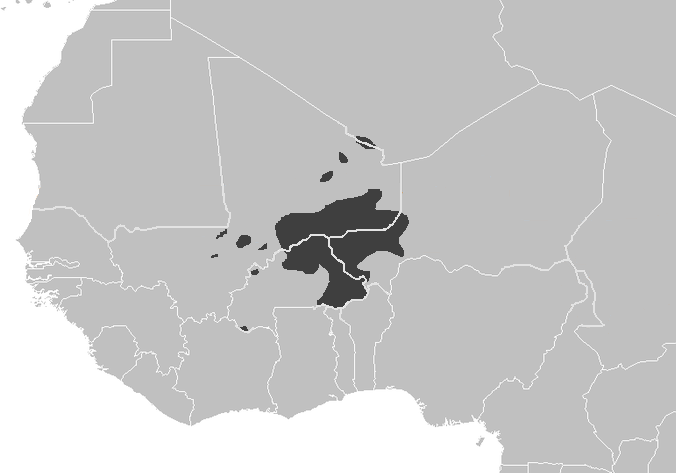
Dioura is not a regional capital. This is precisely the problem. The locality is situated in that rural depth where administrative maps cease to explain the war. The tracks that connect central Mali to Mauritania and northern Burkina Faso are not impermeable borders. They are corridors for resupply, taxation, and recruitment.
An isolated garrison can hold its enclosure and lose everything surrounding it. According to a report published by The Sahel Brief, the position endured more than a week of pressure before extraction. Therefore, JNIM did not need a spectacular victory in one night. It was enough to cut off movements, wear down the defenders, and make resupply too risky.
On the ground, an evacuation by helicopter means that the route is no longer considered passable or safe. It also consumes rare air capacity, while the Malian army must monitor several axes at once. The issue is not just to retake Dioura. It is also necessary to hold the villages, secure the tracks, and prevent the return of fighters as soon as the columns depart.
The Russian factor does not compensate for isolation
The presence of five dead from the Africa Corps in the available toll is politically more significant than its numerical weight. Bamako has replaced part of its Western partnerships with a security relationship with Moscow, but Russian instructors and contractors cannot abolish geography. They can enhance firepower, intelligence, or the protection of a convoy. They cannot create a permanent logistics chain on every track of the operational theater.
The raid on September 19 against a military drone hangar near Sévaré gives Dioura additional significance. Two distinct events do not prove operational coordination. However, they indicate a common weakness: Malian forces possess more modern means, but their support points and infrastructures remain exposed.
JNIM seeks less to conquer a city than to make the state costly to maintain. Each garrison requires an escort, fuel, air rotations, and local intelligence. Each departure then gives fighters a recruitment argument: the army arrives in uniform, then departs under protection. It is a campaign of erosion, not a battle of lines.
Goïta's crisis meeting is not enough
Transition President Assimi Goïta convened his officials after the series of attacks in Dioura, Sévaré, and a checkpoint near Bamako. This sequence is concerning because it combines rural depth and pressure on the capital. It does not mean that JNIM can take Bamako tomorrow. Rather, it shows that the capital must now absorb crises from multiple directions, while the units deployed in the center are already stretched thin.
Mali can respond with sweeping operations, strikes, and temporary reinforcements. These measures can inflict losses on JNIM. They will not solve the problem if they are not accompanied by sustainable control of markets, water points, and secondary roads. In this war, whoever arbitrates a dispute, guarantees passage, or imposes a tax already exercises a part of power.
“Holding a base is not holding the ground,” summarizes the experience of operations in the Sahel. As long as the authorities cannot maintain a regular presence beyond the perimeter of their camps, every announced victory will remain reversible.
The next risk lies on the supply routes
The available information remains incomplete: the exact toll of Dioura, the actual duration of the siege, and the precise role of Russian fighters will need to be verified. But the trend is clear enough. JNIM is testing the Malian state's ability to support remote positions, then exploiting the vacant spaces left behind.
The operational priority for Bamako should therefore be less the symbolic recapture of a garrison than the protection of the links between bases. If the routes to Nara, Sévaré, and the transition areas remain intermittent, JNIM will not need to win a major battle. It will be enough to choose the next isolated position, wait for the season, and start again.
Sources: RFI, “Mali: the junta holds a crisis meeting after the resurgence of jihadist attacks,” September 21, 2026; AFP via Orange, “New toll from an attack in Mali,” September 21, 2026; The Sahel Brief, “Sahel Morning Brief — September 21, 2026,” September 21, 2026; ACLED, “Conflict in the Sahel.”
The Malian army evacuated two companies from Dioura on September 21, 2026, following intense fighting with JNIM, which claimed significant casualties. Nearly 100 Malian soldiers and five members of the Russian Africa Corps were reported killed. The JNIM's strategy appears focused on eroding the Malian state's ability to maintain remote positions, highlighting vulnerabilities in the region.
- Malian army evacuated two companies from Dioura after a week of fighting.
- Approximately 100 Malian soldiers and 5 Russian Africa Corps members were killed.
- JNIM claimed 150 soldiers killed and 93 captured, though these figures are unverified.
- The situation indicates a strategic shift in the conflict dynamics in Mali.
- The Malian government is struggling to maintain control over remote positions.