

On Saturday 19 September, Ukrainian forces fired more than 1,000 drones at targets in Russia, with the attack beginning overnight and continuing into Sunday morning.
Included in this largest attack by Ukraine of the war to date were hundreds of drones that were launched towards Moscow, according to statements by Russian officials on Sunday.
The timing of this attack was as important as the massive number of drones fired. Russia was in the middle of a three-day 18-20 September midterm election of deputies to Russia’s state Duma, the national parliament.
As drones were still hitting the Russian capital and sites elsewhere in Russia, the Kremlin was conducting this third and final day of these parliamentary elections.
Moscow’s mayor, Sergei Sobyanin, has called the 1,600 drones that landed Saturday-Sunday on Moscow and other Russian locales the “largest ever” drone attack on the Russian capital.
These included targets hit in and around the city – most notably damaging the Moscow Oil Refinery and a residential building near the famous Flight Research Institute (LII) in the nearby city of Zhukovskiy.
The Moscow refinery strikes are significant in that the facility supplies the majority of petrol and other fuel products to Moscow and the surrounding area.
Videos that were posted to social media sites showed the refinery, which is in the Kapotnya district of the capital, burning along separate buildings after several drone strikes hit the installation.
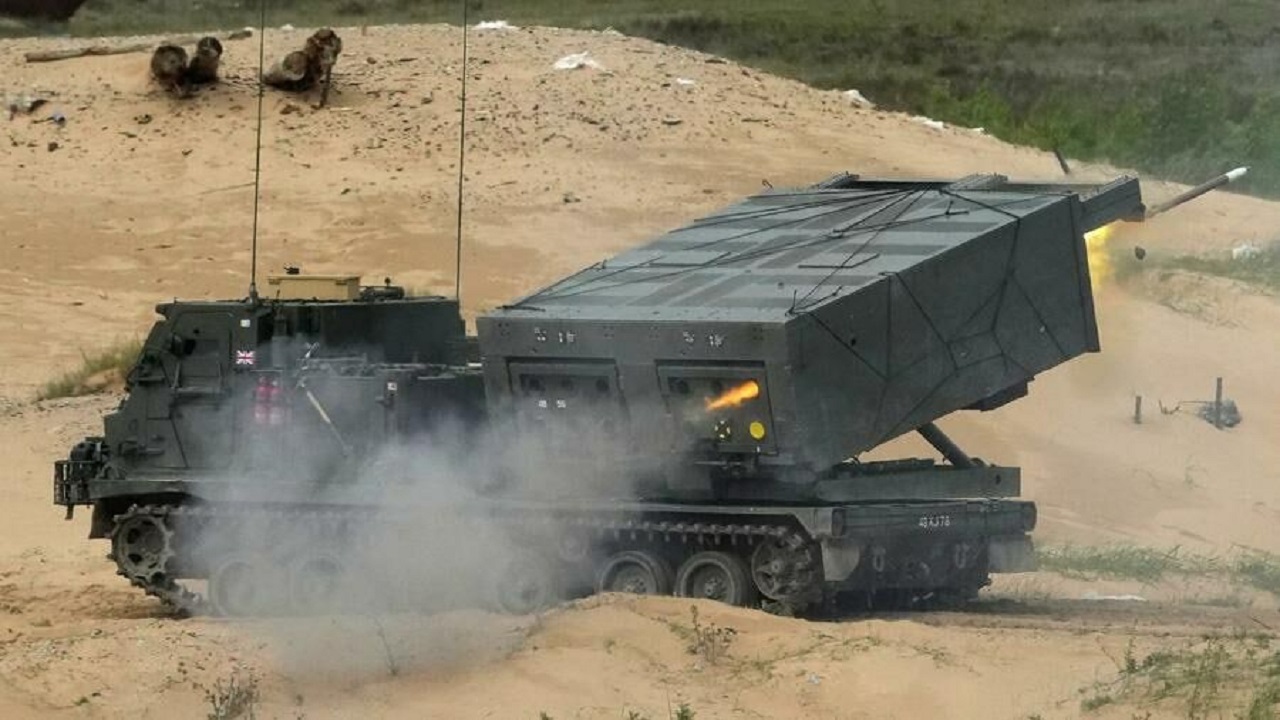
HIMARS. Image Credit: British Army.
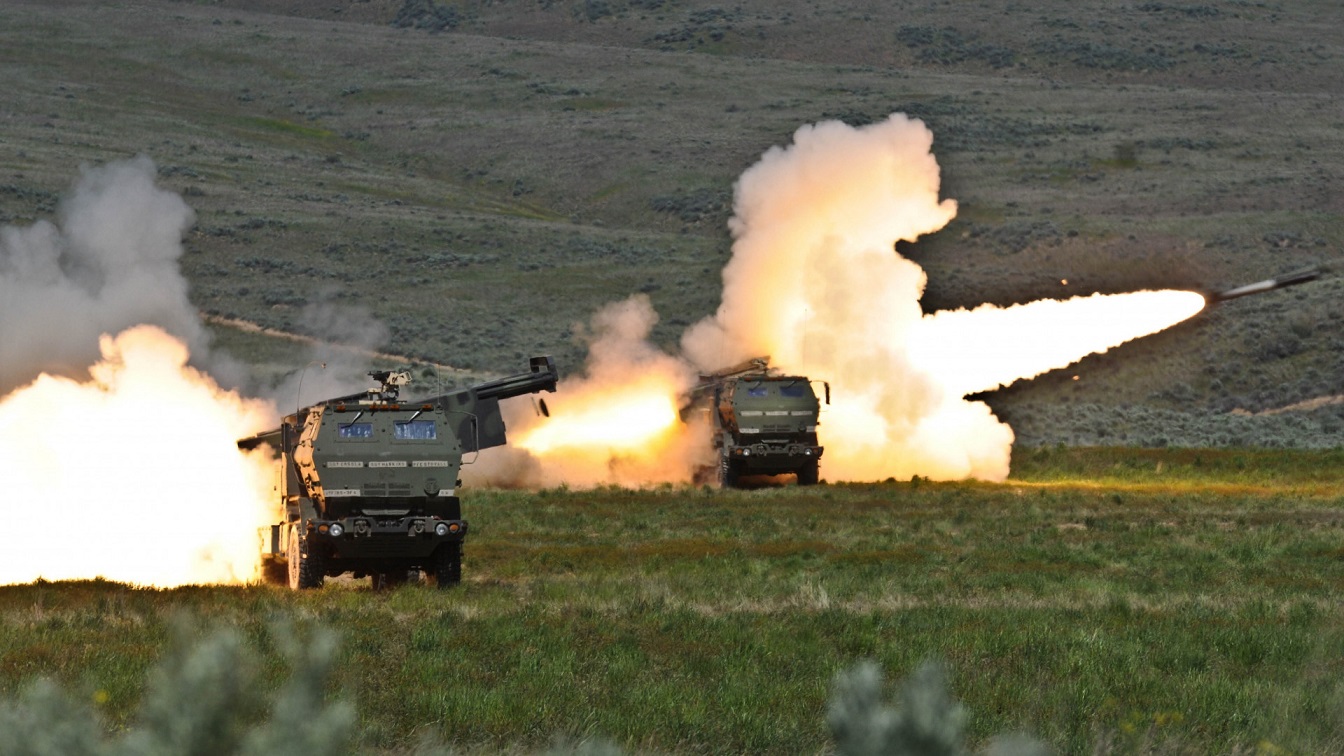
HIMARS. Image Credit: U.S. Military.
“Striking such facilities belonging to the Russian aggressor constitutes Ukraine’s exercise of its inalienable right to self-defense,” the Ukraine General Staff said in its official statement.
Flamingos and Pelicans
But more than just drones hit Moscow over these two days of attacks.
In his nightly address, Ukraine President Volodymyr Zelensky did not specify how many drones and different missiles were launched against Russia, but he did list several of Ukraine’s own domestically produced weapons systems that were used in the attack, to include the Flamingo cruise missile.
Zelensky also mentioned a “Pelican” missile to several media outlets, which some outlets mistakenly reported was the first confirmed use of the previously announced FP-7 ballistic missile. Later reports corrected the error and explained that the Pelican is actually a drone.
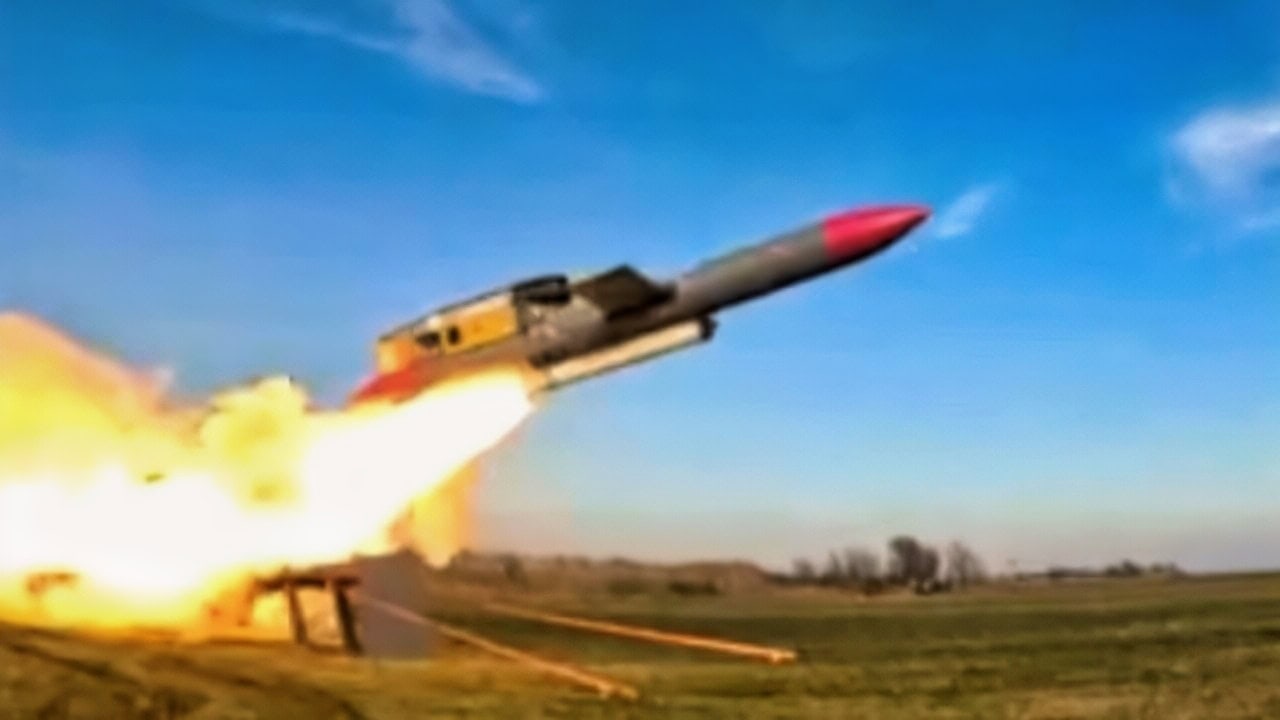
FP-5 Flamingo Cruise Missile. Creative Commons Image.
Since the war began with Russia’s invasion in 2022, Ukraine has acquired the well-deserved reputation as the global leader in unmanned combat systems technology.
Ukraine built that industry from almost nothing, then developed it at what could only be described as “blazing” speed.
In the years since the war began, Ukraine has deployed domestically produced long-range drones in combined attacks that employ these drones along with missiles to carry out strikes deep inside Russia.
Kyiv’s drone technology has impressed governments and defense manufacturers around the world so much that these nations are not only buying Ukraine’s drone designs – they are also hiring Ukrainian expertise to design and build them.
Pressuring Putin
Perhaps it is a coincidence that on the eve of the most important Jewish holiday, Zelenskiy is using his drone army to provide an up-close and personal demonstration to the Russian population of just what the real consequences of the war can be and will continue to be until Russia withdraws from Ukrainian territory.
Speaking with one Ukrainian war refugee while these attacks were taking place, this person said, “Now the residents of Moscow are going to understand what the people who live in Kyiv and other Ukrainian cities live with almost every day since the war began.”
Ukraine is hoping a renewed drone campaign can pressure Russian President Vladimir Putin into backing down in Ukraine and forcing Moscow to withdraw from the territory he has occupied.
Kyiv hopes suffering in Moscow and other Russian cities will pressure him into negotiating a peace settlement. But Putin has thus far shown no signs he intends to stop the invasion.
Moscow and Kyiv continue to hit one another with long-range strikes – moving the zone of conflict away from the largely stalemated front lines and into the cities, factories and ports that support Russia’s war effort.
Zelenskiy explained the strategy behind the deep strike attacks on Russia’s oil and logistics facilities. “These are billions of dollars that sustain the war machine,” he said, referring to the financial pressure that Kyiv is trying to impose on Russia’s economy.
The Ukrainian president also said he had spoken with US President Donald Trump on Sunday. He said the two agreed to meet next week at the annual opening of the United Nations General Assembly in New York.
About the Author: Reuben F. Johnson
Reuben F. Johnson has thirty-six years of experience analyzing and reporting on foreign weapons systems, defense technologies, and international arms export policy. Johnson is the Korea Fellow at the Casimir Pulaski Foundation. He is also a survivor of the Russian invasion of Ukraine in February 2022. He worked for years in the American defense industry as a foreign technology analyst and later as a consultant for the U.S. Department of Defense, the Departments of the Navy and Air Force, and the governments of the United Kingdom and Australia. In 2022-2023, he won two awards in a row for his defense reporting. He holds a bachelor’s degree from DePauw University and a master’s degree from Miami University in Ohio, with a specialization in Soviet and Russian studies. He lives in Warsaw.