

“Ajax” was once a proud name in the annals of British military history, but you wouldn’t know it from the United Kingdom’s newest war machine, which sports that moniker: its would-be next-generation armored fighting vehicle (AFV), the General Dynamics (UK) Ajax. Instead, the Ajax AFV is a pathetically prime example of how the British Army, which for so many years put the truism in the statement “The sun never sets on the British Empire,” is a shell of its former self. So then, what are the Ajax’s salient vices?
Ajax: Pound for Pound, It Costs too Many Pounds
In other words, a poor £-to-lbs. ratio, or to apply some Yank monetary slang here, not enough “bang for the buck.”
According to a 7 June 2026 report in The Telegraph (aka The Daily Telegraph, a British newspaper that dates back to 1855) titled “Army’s troubled Ajax may never reach battlefield,” authored by Tim Sigsworth, beneath the headline is a blurb stating “MPs challenge MoD to explain why £6.3bn programme has produced an armored vehicle that is ‘not fit for purpose.’”
In case anybody’s wondering, the Ajax AFV weighs 38 metric tons, or 83, 775 lbs., which equates to £75,201 per lb.
Mr. Sigsworth elaborates, among other things, by citing a report published by the UK Parliament’s Public Accounts Committee that unearthed embarrassing revelations, such as instructions to the Ajax’s crew members to mitigate the issues by conducting maintenance checks **literally every time** they stop the vehicle!
Those instructions conspicuously fail to explain how soldiers could conduct such checks while “operating Ajax for long periods in combat.”
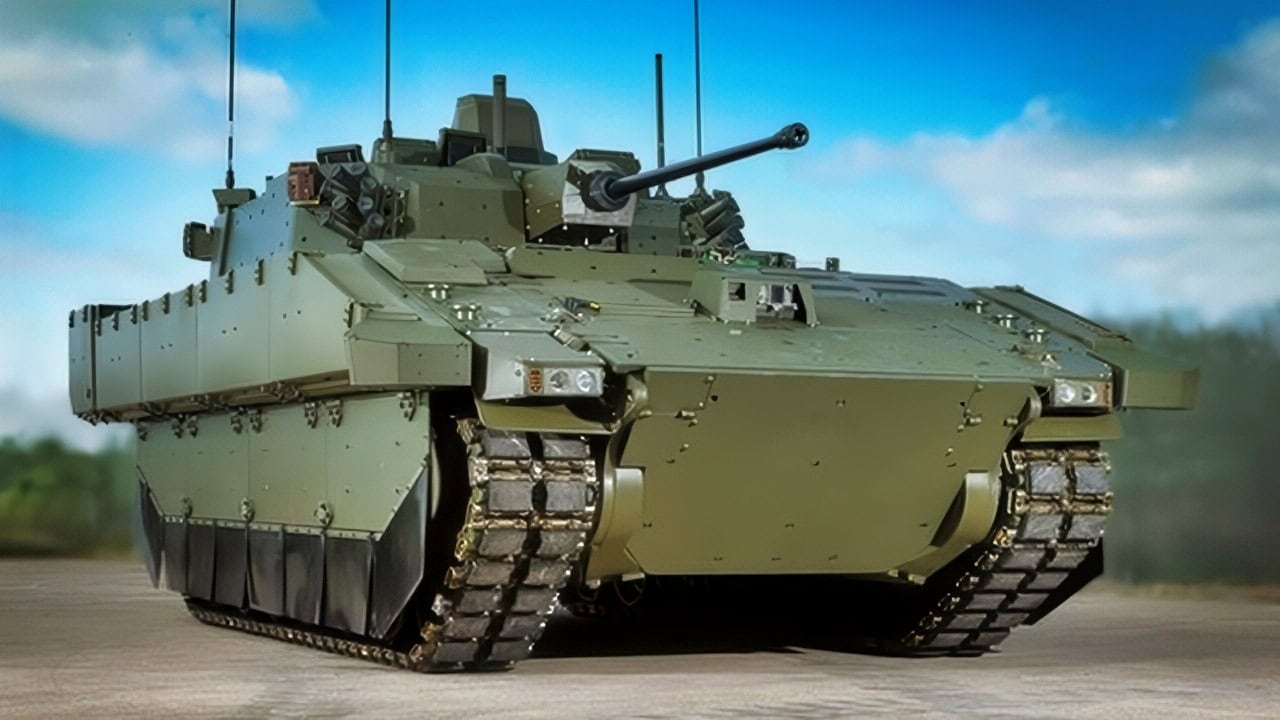
Ajax British Government Photo
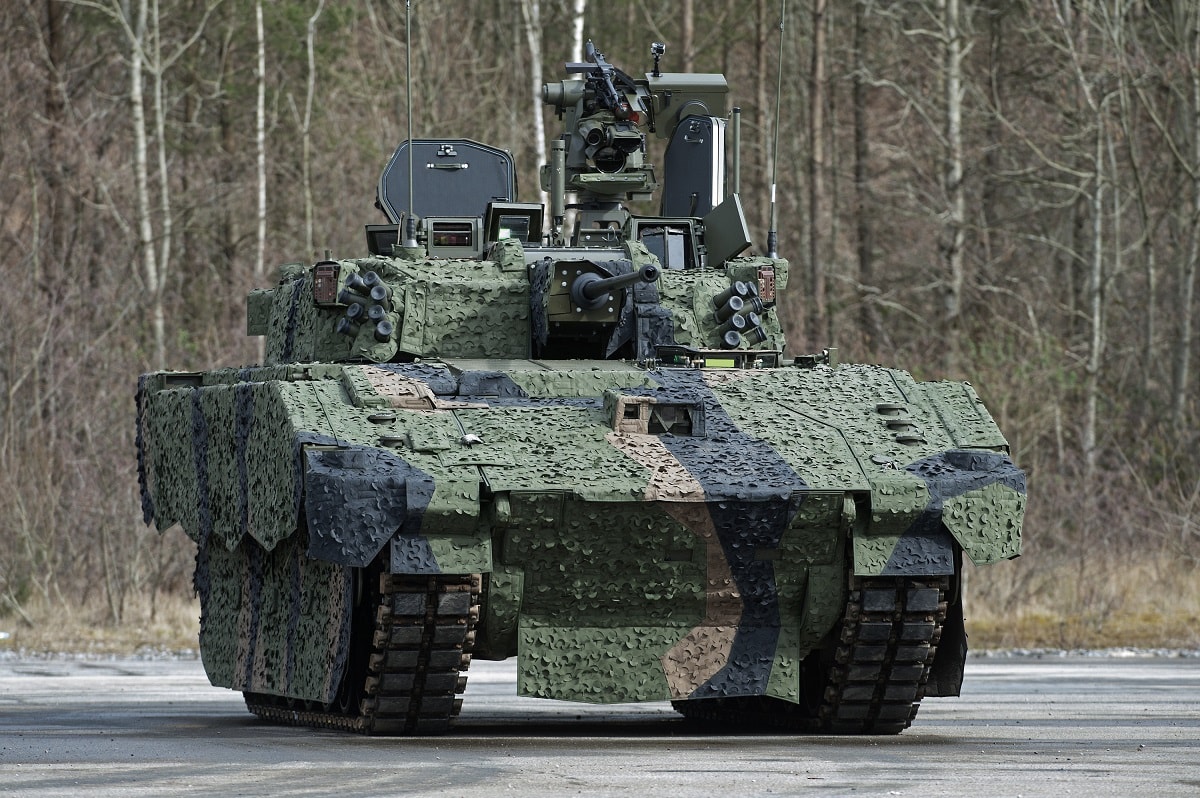
Pictured is the new AJAX prototype shown near its future assembly site in Merthyr Tydfil, Wales
WARNING: Operating the Ajax Could Be Hazardous to Your Health!
As if that weren’t bad enough, the Telegraph article also includes disturbing specifics about the AFV’s penchant for “leaving soldiers vomiting and with permanent hearing damage during field trials”
Just how bad are the health & safety issues affecting the British soldiers assigned to Ajax duty?
An estimated 310 such soldiers required hearing assessments, with 17 undergoing treatment for hearing loss.
An additional 33 troops fell ill during Exercise Titan Storm in November 2025—part of a wider national exercise involving over 5,000 UK military personnel— and one soldier was injured in December 2025 by noise and vibration.
Sigsworth goes on to quote the remarks of committee chairman Sir Geoffrey Clinton-Brown: “Our thoughts are with all those soldiers who reported symptoms from noise and vibration after operating these vehicles, and we were frankly astounded to hear officials explain that proper use of Ajax requires maintenance checks every time it is stopped…This is frankly an insult to intelligence, and much good may this advice do our fighting men and women if called upon to operate Ajax in combat.
The MoD [Ministry of Defence] must now explain how it will make Ajax fit for purpose, and how much this will cost.’”
Originally expected to go operational in 2017, the Ajax wasn’t finally cleared until November 2025…and then the trials were halted until April 2026…and even then, strict new controls were put in place, starting with “limited testing under highly controlled circumstances to rebuild user confidence,” per Sigsworth.
Ajax: Britain’s Bradley?
The technical woes and accompanying money pit afflicting the Ajax might remind some of our readers of the early teething problems that plagued the U.S. Army’s longstanding AFV, the Bradley Fighting Vehicle.
The Bradley program stalled in “development hell” for 17 years at a running cost of $14 billion to the U.S. taxpayers, maligned by the mainstream media as a death trap and satirized in the 1998 motion picture comedy “The Pentagon Wars,” which in turn was based on the 1993 non-fiction book by retired U.S. Air Force Colonel James G. Burton, fully titled The Pentagon Wars: Reformers Challenge the Old Guard.
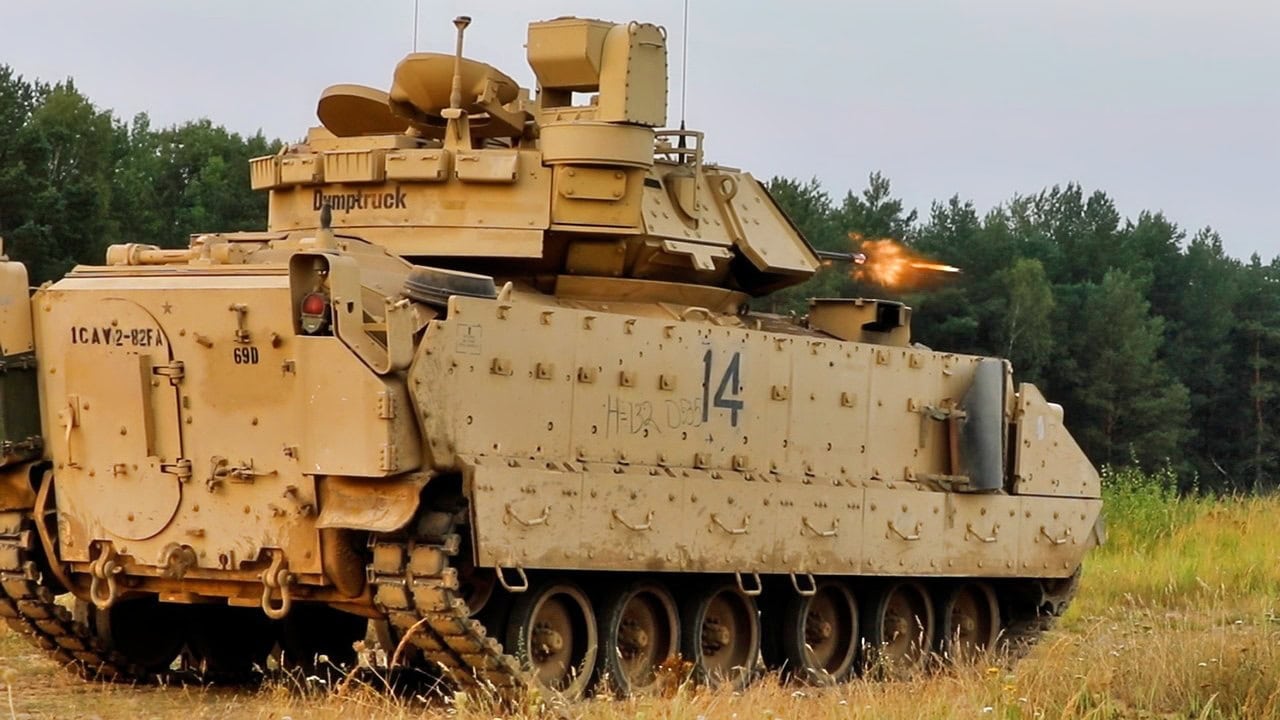
Troopers with 3rd Armored Brigade Combat Team, 1st Cavalry Division firing the 25mm canon on a Bradley fighting vehicle in order to zero the vehicles weapons systems at a range in Poland. Ranges such as these familiarize troopers with the vehicles systems in order to ensure combat readiness.
However, the Bradley’s builders eventually adapted, improvised, and overcame those setbacks, and that vehicle serving operationally for 45 years, with an impressive array of accomplishments along the way, such as (1) destroying more of Iraqi dictator Saddam Hussein’s main battle tanks (MBTs) than the vaunted M1 Abrams main battle tank during the 1991 Persian Gulf War aka Operation Desert Storm, and (2) the current Russia-Ukraine War, during which there is at least one recorded instance of a Ukrainian Bradley crew destroying one of Russia’s hyped-up T-90M MBTs.
Speaking of the M1 Abrams, it is, ironically enough, also a General Dynamics product, albeit by its U.S.-based General Dynamics Land Systems (GDLS) division, not the UK one.
However, as these words are being typed, the Ajax’s prospects for emulating the Bradley’s and the Abrams’ long-term perseverance and success story appear to be shaping up more like a Greek tragedy.
And speaking of ancient Greece, that makes for a convenient segue to our postscript…
What’s In a Name? The Proud History of the Ajax Name in His Majesty’s Armed Forces
The Brits drew the Ajax name from Ajax the Great, one of the greatest heroes of Greek mythology, the son of King Telamon and Periboea, who played a major part in the Trojan War.
Accordingly, the Royal Navy has had a total of eight warships bearing the moniker HMS Ajax. The most famous of the bunch was the Leander-class light cruiser (Pennant No. 22), whose claims to fame included:
-Becoming the first British warship to destroy an enemy vessel during World War II by sinking the German freighter Olinda on 3 September 1939; and
-Participating in the Battle of River Plate, which culminated in the destruction of the Kriegsmarine battleship Admiral Graf Spee.
From a cynically humorous standpoint, one could say that the Royal Navy has a wee bit of interservice rivalry bragging rights vs. the British Army, as in “Our Ajax is better than yours!”
About the Author: Christian D. Orr
Christian D. Orr is a Senior Defense Editor. He is a former Air Force Security Forces officer, Federal law enforcement officer, and private military contractor (with assignments worked in Iraq, the United Arab Emirates, Kosovo, Japan, Germany, and the Pentagon). Chris holds a B.A. in International Relations from the University of Southern California (USC) and an M.A. in Intelligence Studies (with a concentration in Terrorism Studies) from American Military University (AMU). He is also the author of the book “Five Decades of a Fabulous Firearm: Celebrating the 50th Anniversary of the Beretta 92 Pistol Series,” the second edition of which was recently published.