
Joint Sea-2026: Gathering of 055 and 052D, PLA North Sea Fleet Tests Sino-Russian Anti-Submarine and Air Defense Network
 Li Minghui
Joint Sea-2026 Assembles Type 055 and Type 052D, PLA North Sea Fleet Tests Sino-Russian Anti-Submarine and Air Defense Network
On July 6, the Sino-Russian "Joint Sea-2026" training commenced at a military port in Qingdao. This news may be overshadowed by the PLA's submarine-launched missile test on the same day, but from the equipment composition, it reveals more about the shortfalls the Northern Theater Navy is addressing: not just single-ship firepower, but whether air defense, anti-submarine, rescue, and supply can operate smoothly within a unified command structure.
Details of Participating Forces
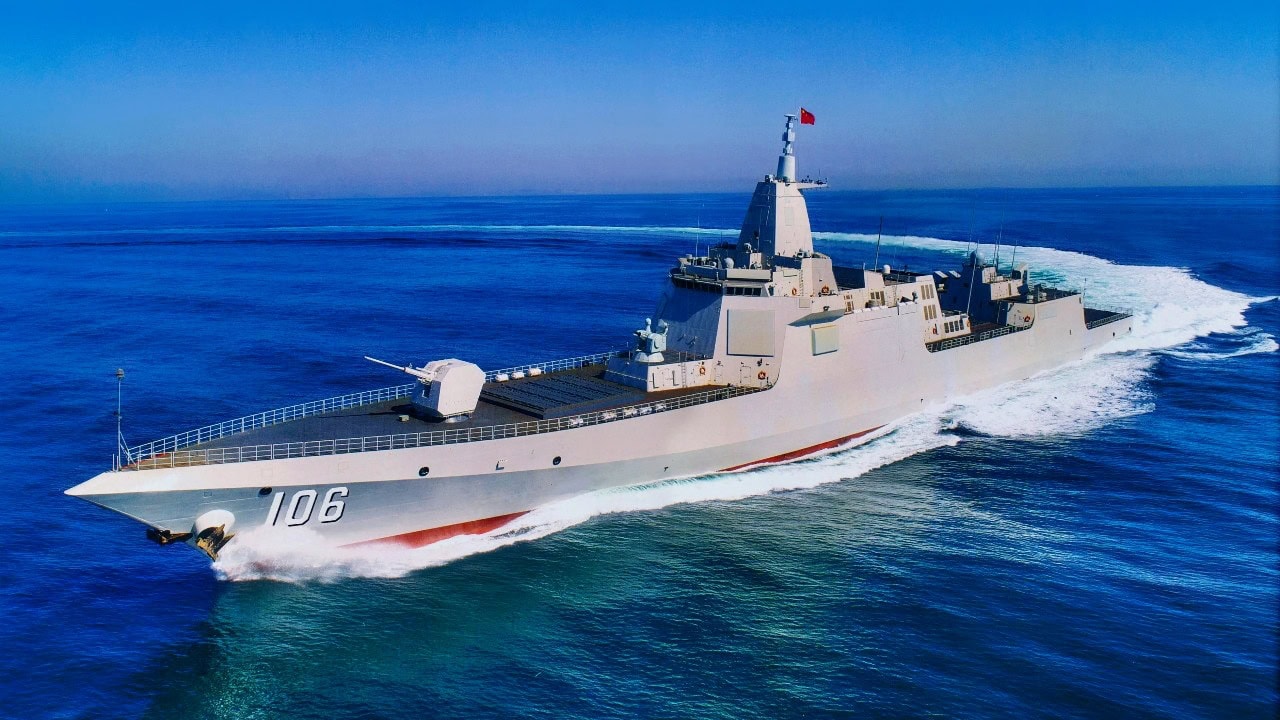
The English website of the Chinese Ministry of Defense disclosed on July 7 that the Chinese vessels include the improved Type 052D destroyer Kaifeng, Type 055 destroyer Anshan, Type 054A frigate Wuhu, 903A comprehensive supply ship Kekexili Lake, 926-type submarine support ship Yangcheng Lake, and a submarine. The Russian side is centered around the flagship of the Pacific Fleet, the cruiser "Varyag," along with the frigate "Sharp," the submarine "Ufa," and the rescue ship "Igor Belousov."
- The Type 055 is responsible for long-range area air defense and fleet command nodes, with 112 vertical launch cells as its solid foundation.
- The Type 052D undertakes medium to long-range air defense and anti-surface strike, with the improved platform being more suitable as a mass-produced model of the main destroyer.
- The presence of the Type 054A, 926-type rescue ship, and submarine indicates that the exercise involves not just "ship gunnery," but also anti-submarine search, submarine emergency support, and battle damage rescue.
The Real Value Lies in the Yellow Sea Scenario
This exercise took place in the maritime and aerial domain near Qingdao, with Russian sources stating it runs from July 6 to 13. The maritime phase includes joint reconnaissance, air defense and missile defense, anti-surface assaults, anti-submarine operations, search and rescue, and live-fire exercises. The Yellow Sea is not a distant blue-water area but a near-shore battlefield characterized by complex hydrology, high density of civilian vessels, and strong coverage from land-based aviation and radar. In simple terms, it resembles a training ground for high-intensity maritime operations within the first island chain.
What concerns me more is why the Chinese side showcased the Type 055, Type 052D, Type 054A, supply ship, rescue ship, and submarine together. Looking solely at tonnage, this is a highly standardized surface fleet; however, with the addition of the Russian submarine and rescue ship, the focus shifts from "showcasing large ships" to "validating how underwater targets can be detected, tracked, rescued, and protected." This is precisely the area the PLA Navy needs to repeatedly refine after its recent expansion. The speed of launching vessels can be explained by shipyard capacity, but gaining anti-submarine experience is much harder to achieve through sheer production.
Sino-Russian Coordination Still Comes at a Cost
Outsiders often view Sino-Russian joint exercises as political signals, which is certainly not incorrect. Defense Post quoted Chinese sources stating that after the exercise, some forces will also conduct joint patrols in relevant areas of the Pacific. However, from a technical perspective, cross-service, cross-language, and cross-data link coordination is not cheap. Ships can sail together, but tactical imagery, sonar contact interpretation, air situation distribution, and weapon authorization may not be inherently compatible.
This is also why I am reluctant to simply label "Joint Sea-2026" as the formation of a Sino-Russian maritime alliance. It resembles a limited but useful stress test: the North Sea Fleet uses its most mature destroyer and escort system to integrate with the Russian Pacific Fleet, which still has combat experience but is clearly operating aging platforms. Both sides complement each other while also exposing interface issues.
A detail that is easily overlooked is that the officials first emphasized "joint command" and "command tactical coordination," rather than highlighting the range of a specific missile type. This indicates that the exercise's focus is not on individual equipment but on whether the fleet can connect sensors, command chains, and rescue chains into a closed loop.
Future to Watch for Joint Patrol Routes
If the fleet only symbolically enters the western Pacific after the exercise, the impact will be limited; however, if it crosses the Miyako Strait, Tsushima Strait, or approaches anti-submarine hotspots around Japan, that would send a different signal. For the PLA, the Type 055 and Type 052D are no longer news; what remains unanswered is: how far can its anti-submarine chain operate stably in unfamiliar waters, mixed fleets, and high-noise environments?
The People's Liberation Army Navy and the Russian Pacific Fleet conducted the 'Maritime Joint-2026' exercise from July 6 to July 13, 2026, near Qingdao in the Yellow Sea. This joint operation focused on testing anti-submarine and air defense capabilities, involving multiple naval vessels from both nations. The exercise took place in a complex maritime environment, emphasizing the need for effective coordination between the two fleets.
- The joint exercise 'Maritime Joint-2026' commenced on July 6, 2026, in Qingdao.
- Chinese naval forces included the 055 and 052D destroyers, among others.
- The exercise aims to enhance anti-submarine and air defense capabilities.
- The operational area is characterized by complex hydrology and high civilian ship density.
- The exercise involves both Chinese and Russian naval units, indicating a collaborative effort.