
Lockheed lands mega deal to triple missile interceptor production
The U.S. government has committed nearly $54 billion to a single missile program in one contract, a number so large that even the man who runs one of the country’s leading defense outlets called it out publicly as an eye-watering figure Americans deserve to understand.
Lockheed Martin announced it received a seven-year, undefinitized contract action modification worth up to $53.86 billion from the U.S. government to accelerate production of PAC-3 Missile Segment Enhancement interceptors, the workhorse missile fired by Patriot air defense batteries to shoot down incoming aircraft, cruise missiles, and ballistic missiles. An undefinitized contract action is a Pentagon mechanism that lets work begin immediately while the final price and terms are still being negotiated, a tool the Department of War has increasingly used to move faster than its traditional, multi-year procurement process typically allows. Combined with a separate $4.7 billion contract awarded in April 2026 covering the program’s first year, the total value of this multiyear PAC-3 MSE agreement now stands at $58.62 billion, one of the largest single munitions commitments in recent Pentagon history.
PAC-3 MSE is not a new missile. It has served for years as the primary interceptor fired by the Patriot air defense system, the Army’s mobile network of radars and launchers that has protected American and allied forces from missile and drone attacks since the 1980s, and it has been used extensively in recent combat, including during Operation Epic Fury, the current U.S. military campaign responding to regional missile and drone threats, as well as in Ukraine’s ongoing defense against Russian strikes. What makes this contract newsworthy is not the missile’s capability but the sheer scale of investment now flowing into building more of them, faster, at a moment when demand from the U.S. military and allied nations has outpaced the defense industry’s ability to keep interceptor stockpiles filled.
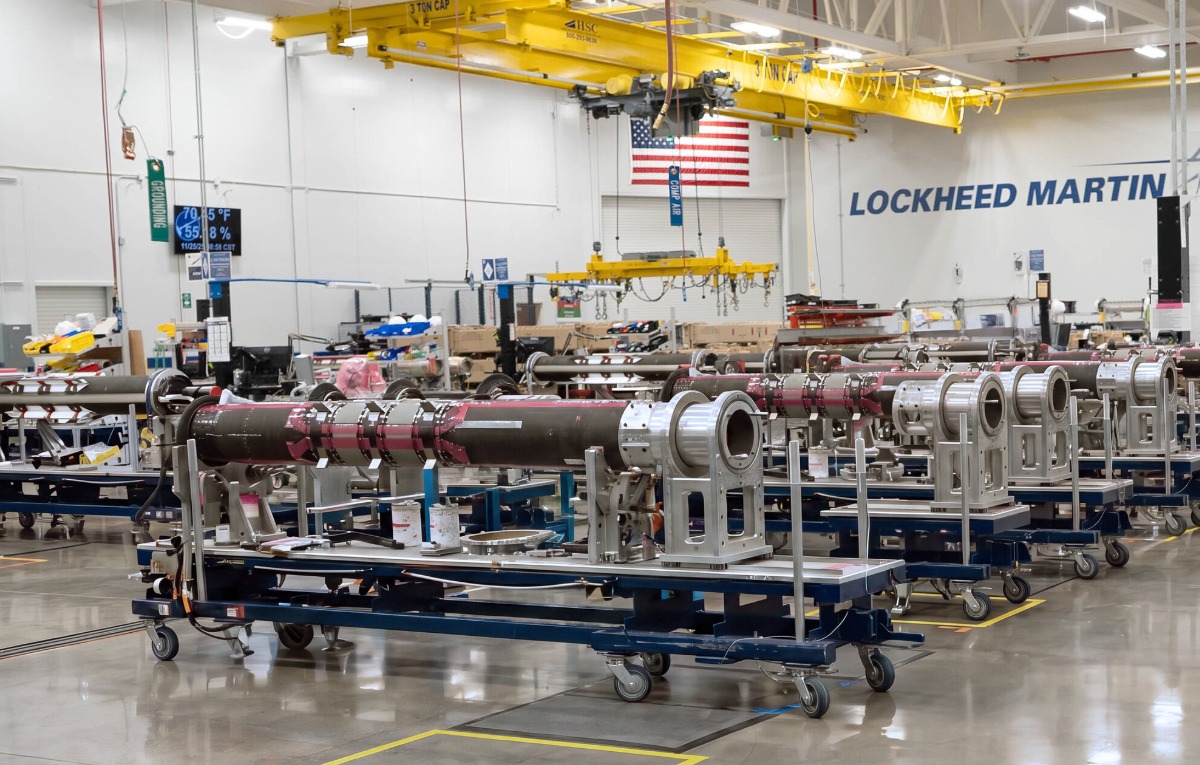
Lockheed Martin says the new funding will let it triple PAC-3 MSE production capacity by the end of 2030, a manufacturing scale-up centered heavily on the company’s Camden, Arkansas facility, which handles final assembly of complete PAC-3 MSE rounds. That expansion is expected to grow the Camden workforce by 50 percent, from roughly 1,200 employees to approximately 1,850, turning what has long been a relatively modest missile assembly operation into a significantly larger piece of the American defense industrial base.
Michael P. Duffey, the Under Secretary of War for Acquisition and Sustainment, framed the award as proof that the Pentagon’s newer approach to buying weapons is translating from policy into real industrial commitments.
“Today’s announcement turns concept into reality, providing industry with the long-term demand signals it needs to build a resilient supply chain, scale production, and deliver critical capabilities to our Warfighters at the speed of relevance,” Duffey said.
Lockheed Martin Chairman, President and CEO Jim Taiclet described the moment in more urgent terms, tying the contract directly to the company’s broader manufacturing investment strategy.
“This is a once-in-a-generation moment, and we are moving with wartime urgency to deliver the Arsenal of Freedom,” Taiclet said. “Lockheed Martin is sparing no effort with our investment, hiring and facility upgrades as we deliver on the government’s acquisition transformation.”
This PAC-3 MSE award is the second major multiyear contract Lockheed Martin has received under the Department of War’s Acquisition Transformation Strategy, a newer procurement framework designed to lock in long-term production commitments rather than negotiating smaller, year-by-year orders. It follows a $35 billion, seven-year contract the company secured in June 2026 to accelerate production of Terminal High Altitude Area Defense interceptors, known as THAAD, a separate missile defense system built to intercept ballistic missiles at higher altitudes than Patriot typically engages. Lockheed Martin says it is investing $8 billion to $9 billion of its own money through 2030 to modernize more than 20 U.S. facilities supporting this broader munitions expansion, having already broken ground this year on a new Munitions Production Center building in Troy, Alabama, supporting THAAD and the future Next-Generation Interceptor program, along with a dedicated Munitions Acceleration Center in Camden supporting PAC-3.
The sheer size of the dollar figure did not go unremarked upon in defense circles. Tyler Rogoway, editor-in-chief of The War Zone, wrote on social media that the spending amounts to an enormous sum directed toward weapons production, acknowledging that reaction is understandable given the scale involved.
“And yeah it’s an obscene amount of money spent on more weapons. I understand how people will feel that way, but these are defensive systems that have been bought and produced inefficiently for decades. This is buying in bulk when the cupboards are looking bare before the holidays. Leadership neglected this glaring reality, underinvesting in key munitions stockpiles for decades. This was extremely dangerous and could have gotten throngs of our troops killed. Finally this changes with this investment among many others,” Rogoway wrote.
Nearly $59 billion committed to a single interceptor program is an enormous sum by any measure, yet the argument behind it, that years of underinvestment left American and allied forces with dangerously thin missile stockpiles heading into a period of sustained regional conflict, has become increasingly difficult for defense officials and industry leaders to dismiss given the pace at which Patriot batteries have expended interceptors in recent operations.
Content preview only. Full article available at source. View Full Article
Lockheed Martin received a $53.86 billion contract from the U.S. government to accelerate production of PAC-3 Missile Segment Enhancement interceptors, aiming to triple production capacity by 2030. This contract, part of a broader investment strategy, will increase the workforce at the Camden, Arkansas facility by 50%. The funding addresses the urgent need for missile stockpiles amid rising demand from U.S. and allied forces.
- U.S. government committed nearly $54 billion to missile program
- Lockheed Martin to triple PAC-3 MSE production capacity by 2030
- Contract includes a $4.7 billion award for the first year
- Expansion will increase Camden workforce by 50%
- Investment aims to address understocked missile inventories