
Lockheed Martin wins $3B U.S. Army contract for Sentinel A4 radar
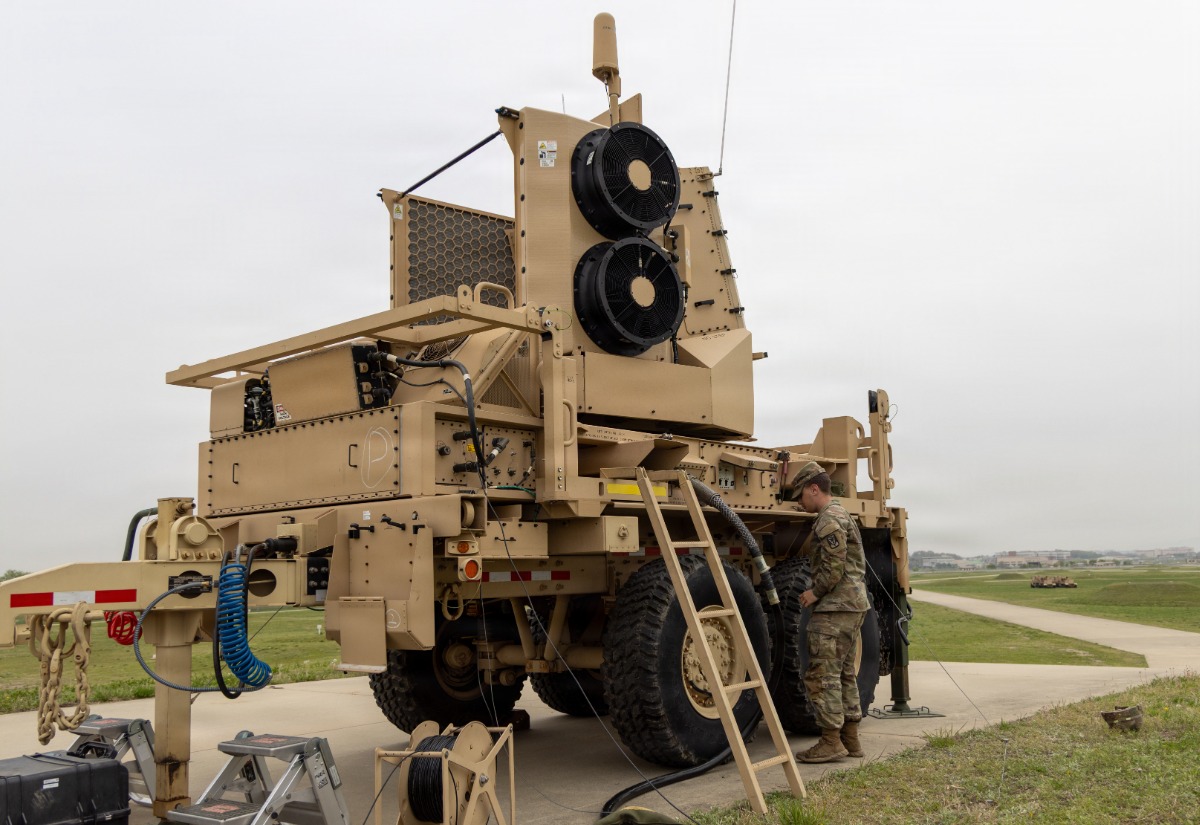
The U.S. Army awarded Lockheed Martin a $3 billion contract to produce additional AN/MPQ-64F1 Sentinel A4 radars and provide supporting engineering services, locking in production of the ground-based air surveillance system that serves as the primary airspace watchman for Army air defense units around the world.
The contract, awarded through Army Contracting Command at Redstone Arsenal, Alabama, runs through June 29, 2031, and represents the Army’s most significant Sentinel investment in years, keeping the production line active at Lockheed Martin’s facility in Liverpool, New York, through the back half of the decade.
The AN/MPQ-64 Sentinel is an X-band radar, meaning it operates in the 8 to 12 GHz frequency range that provides the combination of resolution and weather resistance best suited for detecting, tracking, and classifying airborne threats in a tactical environment, including small targets like commercial-size drones, rocket artillery, mortars, aircraft, helicopters, and cruise missiles. The system sits on a trailer that a single vehicle can tow, sets up in roughly 15 minutes, and covers a 360-degree surveillance area with a range of approximately 75 km (47 miles) against aircraft-size targets, though its effective detection envelope against smaller UAS threats is considerably shorter depending on the target’s radar cross-section.
The A4 variant that this contract funds is the latest and most capable iteration in the Sentinel’s evolutionary line, incorporating a new active electronically scanned array antenna replacing the previous mechanically rotating dish. That change, from spinning antenna to AESA, is the same fundamental technology shift driving modernization across virtually every radar category in the American military inventory, because an AESA radar can electronically steer its beam to any point in its coverage sector in microseconds rather than waiting for a physical antenna to rotate into position, allowing it to simultaneously track multiple targets moving in different directions while also cuing interceptors with far greater precision than older mechanically scanned systems. The A4 also adds enhanced counter-drone capability, which Lockheed Martin and the Army have specifically highlighted as a priority given how rapidly the unmanned aerial threat has evolved since the original Sentinel design was fielded in the 1990s.
The Sentinel A4’s role inside the Army air defense architecture connects it to every kinetic and electronic weapon the service uses to protect forces from aerial threats. The Patriot missile battery, which intercepts ballistic missiles and aircraft at long range, depends on its own dedicated AN/MPQ-65 radar for fire control, but relies on networked Sentinel systems to extend its situational awareness and fill gaps in its own radar coverage. The Avenger air defense system, a vehicle-mounted Stinger missile and .50-caliber gun combination designed for close-in air defense, similarly depends on cueing from surveillance radars like Sentinel to know where to point. The Marine Corps’ Marine Air Defense Integrated System, known as MADIS, which uses the Ground/Air Task-Oriented Radar as its detection layer, represents a parallel architecture serving the same fundamental function: knowing where the threat is before it reaches the defended area, with enough time to engage it.
The specific importance of Sentinel A4 in 2026 derives from a threat environment the original AN/MPQ-64 was never designed to face at scale. When the Sentinel entered service in 1995, the primary threat model was Warsaw Pact-era aircraft and cruise missiles: large, fast, high-altitude targets with significant radar cross-sections that the original system detected comfortably. The proliferation of small commercial drones modified for military use, the emergence of dedicated military first-person-view attack drones costing a few hundred dollars, the increasing use of loitering munitions by non-state actors and state forces alike, and the threat of coordinated swarm attacks have collectively presented a detection problem that the original Sentinel architecture handles less efficiently than its designers anticipated. The A4 upgrade specifically addresses that gap, with its AESA antenna enabling the beam agility and waveform flexibility needed to detect, track, and classify objects with much smaller radar signatures than the traditional aircraft threats the system was originally optimized for.
Content preview only. Full article available at source. View Full Article
The U.S. Army awarded Lockheed Martin a $3 billion contract for the production of additional AN/MPQ-64F1 Sentinel A4 radars and engineering services. This contract, which runs through June 29, 2031, aims to enhance the Army's air defense capabilities by providing advanced radar systems designed to detect and track various airborne threats. The production will take place at Lockheed Martin's facility in Liverpool, New York.
- U.S. Army awarded Lockheed Martin a $3 billion contract for Sentinel A4 radars.
- The contract runs through June 29, 2031.
- The Sentinel A4 radar is designed for detecting and tracking airborne threats.
- The A4 variant includes an AESA antenna for improved performance.
- The contract supports the production line at Lockheed Martin's facility in Liverpool, New York.