
Mali 2026 — Anéfis changes hands again after 15 strikes on the Gao-Kidal road
 Marie Dubois
Mali 2026 — Anéfis changes hands again after 15 strikes on the Gao-Kidal road
In Anéfis, on the track connecting Gao to Kidal, the battle did not last a full week before changing form. On July 10, the Azawad Liberation Front (FLA) acknowledged that it had begun to withdraw from this locality in northern Mali, following the arrival of a convoy from Gao and joint operations of the Malian army with the Russian Africa Corps. Bamako claims to have conducted 15 airstrikes in twenty-four hours, destroyed 12 combat vehicles, and killed approximately 100 insurgents. This toll cannot be independently verified. But the operational fact is clear: the junta has managed to reopen, at least temporarily, the Gao-Anéfis axis.
This is a tactical victory. Not yet a strategic victory.
A pivotal city, not just a point on the map
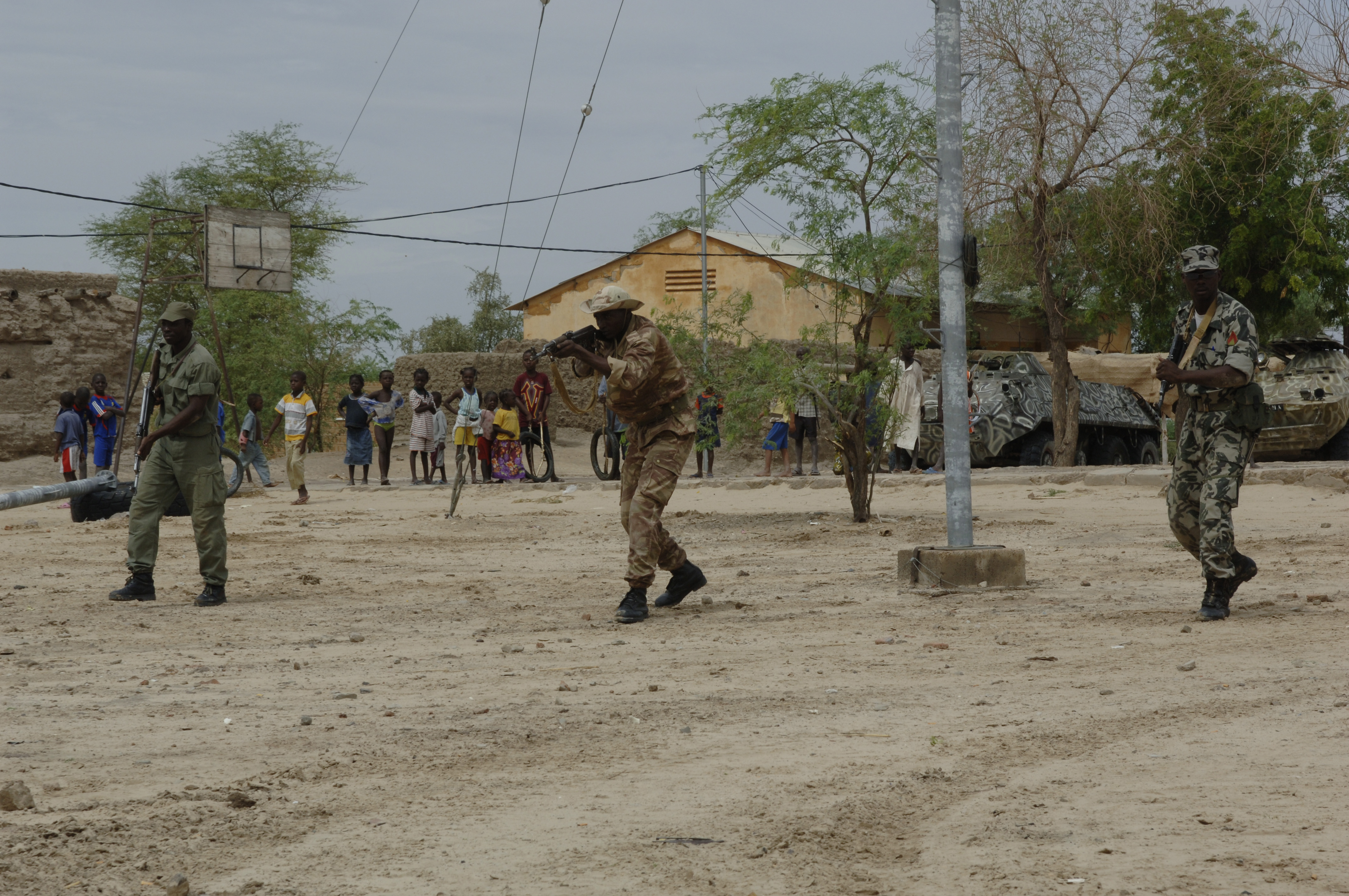
Anéfis matters because it is located between Gao, the main loyalist city in the north, and Kidal, which was recaptured in the spring by FLA fighters. In a straight line, Kidal is about a hundred kilometers away; on the ground, with the tracks, dry riverbeds, ambushes, and now the rains, this distance becomes a small military campaign. In the Sahel, whoever controls the road does not just control the asphalt or laterite. They control the flow of reinforcements, the evacuation of the wounded, fuel, ammunition, and the ability to convince their own men that they will not be abandoned.
The attacks on July 4 targeted Anéfis, Aguelhok, Gao, Sévaré, and Kenieroba, according to the Malian army and several international media outlets. The FLA confirmed its involvement. The Jama'at Nusrat al-Islam wal-Muslimin (JNIM), a coalition affiliated with al-Qaeda, claimed responsibility for strikes against several positions. Reuters reported that it could not verify all of JNIM's claims, and caution is warranted. In this war, each side publishes its victories faster than it counts its dead.
The Africa Corps becomes a backup force again
Since the official end of Wagner and the takeover by the Africa Corps, Moscow wants to show that it is not only providing palace protection. Anéfis is precisely the wrong place for a communication war. The convoys coming from Gao can be observed, slowed down, and harassed. The FLA claims to have attacked two columns this week. The Malian army, on the other hand, asserts that the second convoy arrived at night and that the road is secure. Both claims can coexist: a convoy can pass while revealing the vulnerability of the axis.
On the ground, a Russian force embedded within a Malian framework does not have the same advantages as a national army that has been established for a long time. It brings firepower, better-trained crews, and sometimes superior fire discipline. It also brings a heavy political signature. For the Tuareg separatists, presenting the battle as a resistance to foreign presence is a recruitment multiplier. For JNIM, the temporary alliance with the FLA allows them to exploit the same geography without sharing the same political project.
FLA and JNIM, a useful but unstable cooperation
The FLA wants to secure an Azawadian space in the north, with Kidal as a symbolic center. JNIM wants to weaken the Malian state and extend a religious authority that is anything but secular. Their military cooperation does not erase this contradiction. It suspends it. When the goal is to cut the Malian army off from its bases, wear down its convoys, and prove that Bamako does not control the north, their interests converge.
The novelty of July is therefore not just the temporary capture or loss of Anéfis. It is the insurgents' ability to make multiple fronts work together: pressure in the north, fire around Gao, explosions in Sévaré, attacks against Kenieroba south of Bamako. This forces the Malian high command to choose between concentration and dispersion. Concentrating resources on Anéfis exposes the center. Dispersing resources to reassure Bamako weakens the column that must hold the Kidal road.
The figures from Bamako should be read as a signal
The Malian statement on 15 airstrikes, 12 vehicles destroyed, and nearly 100 insurgents killed is important, even if the figures remain to be confirmed. It first indicates that Bamako has engaged in a sequence of intense fire, likely to break the rhythm of ambushes before the convoy's passage. It then suggests that the army wants to turn Anéfis into a national demonstration: after the setbacks of April and the loss of Kidal, an image of regaining the initiative was needed.
But an airstrike does not hold a track. It can open a window. After that, posts, patrols, mechanics, human intelligence, and local relays are needed. This is where Sahelian armies often fail: they win the visible engagement, then lose the space between two engagements. From experience, a column that arrives after several ambushes has already consumed part of its moral strength. It thinks about retreating even before unloading.
The rain will decide as much as politics
The rainy season is coming as a third actor. It complicates heavy movements, degrades secondary tracks, and makes evacuations slower. For the FLA and JNIM, this may limit large coordinated operations but favor short strikes against isolated vehicles. For Bamako and the Africa Corps, this necessitates pre-positioning fuel and ammunition before certain roads become mere muddy traps.
The next phase will be played out less in statements than on three points: maintaining a sustainable garrison in Anéfis, the frequency of convoys between Gao and the north, and the insurgents' ability to strike without exposing themselves to airstrikes. If the Malian army has to send a large column every week to resupply the same position, then Anéfis is not secure. It is only visited under escort.
In northern Mali, holding a city means nothing if the adversary chooses the time at which the road opens and closes.
Sources
- Associated Press, July 11, 2026, Malian announcement on the lifting of the Anéfis blockade.
- Reuters via WHBL and Straits Times, July 10, 2026, FLA withdrawal after the arrival of the Gao-Anéfis convoy.
- France 24, July 4, 2026, coordinated attacks against Anéfis, Gao, Aguelhok, Sévaré, and Kenieroba.
- RFI, July 6, 2026, military and political context of the FLA and JNIM's capture of Anéfis.
On July 10, 2026, the Malian army conducted 15 airstrikes, destroying 12 combat vehicles and reportedly killing around 100 insurgents. The Azawad Liberation Front (FLA) began withdrawing from Anéfis following these strikes and the arrival of a convoy from Gao. This operation temporarily reopened the Gao-Anéfis route, marking a tactical victory for the Malian forces amid ongoing conflict in the region.
- Malian army conducted 15 airstrikes in 24 hours.
- 12 combat vehicles were destroyed.
- Approximately 100 insurgents were killed according to Malian sources.
- The FLA began withdrawing from Anéfis after the arrival of a convoy from Gao.
- The situation in Anéfis is critical for control between Gao and Kidal.