
Mali retakes Kidal without combat — the Russian Africa Corps turns a political success into a military gamble
 Marie Dubois
Mali retakes Kidal without combat — the Russian Africa Corps turns a political success into a military gamble
In Kidal, in the Adrar des Ifoghas, Bamako claims to have regained control of the city without major confrontation. The announcement on October 10, 2026, relayed by Malian sources and several specialized media, is not just a territorial victory. It mainly shows how the Malian junta and Moscow want to transform a military gray area into proof of regained sovereignty.
However, caution is warranted. The withdrawal or relocation of armed groups does not equate to their defeat, and the operational assessment remains incomplete. In Kidal, the decisive question is not the flag raised on an administrative building, but the ability to hold the roads, water points, and access routes to Tessalit and Aguelhok.
Kidal, a symbol more than a garrison
Kidal is not an isolated position that can be secured with a company and a few armored vehicles. The city is over 1,500 kilometers from Bamako, in an area where control is measured in escorted convoys and logistical relays. The route to Gao crosses a vast theater of operations, with few infrastructures and a rainy season that complicates movements. Therefore, a temporary military presence can create an image of control without permanently altering the balance of power.
The political value of the announcement is nonetheless real. Kidal has long represented the failure of the Malian state to impose its authority in the North. Regaining it without visible battle allows Bamako to present the reconquest as the culmination of its break with France, MINUSMA, and previous political arrangements. For the junta, it is a powerful narrative domestically.
The role of the Africa Corps remains the real question
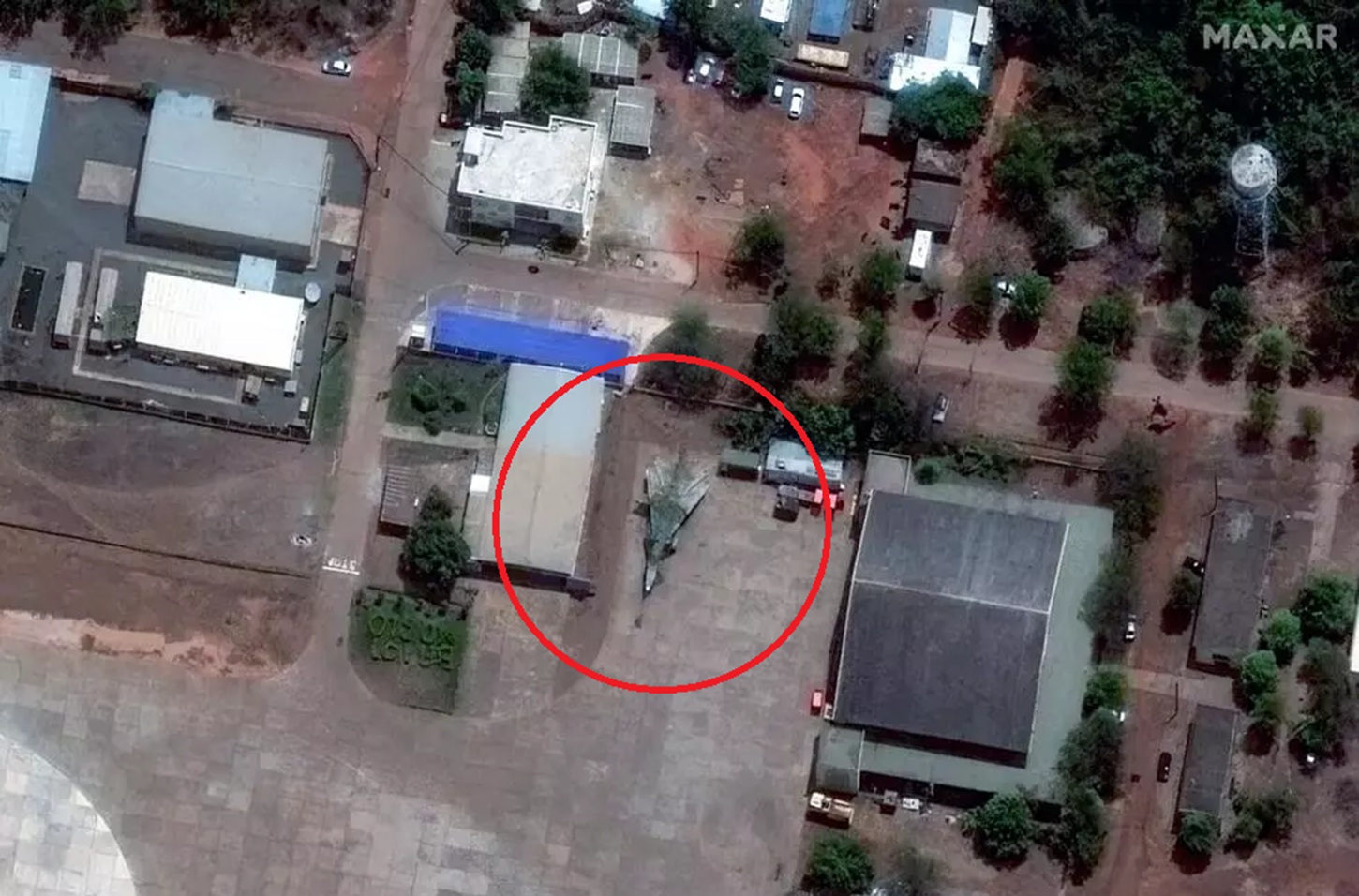
Open sources describe an increased Russian involvement in securing and striking in Mali, while Moscow presents the Africa Corps as the organized successor to Wagner. The photograph of a Su-24 aircraft associated with Malian operations recalls the sought-after logic: to give Malian forces a firepower and intelligence capability that they cannot yet produce on their own.
But air support does not address the central problem of Kidal. A strike can disrupt a column or repel an attack. It provides neither human intelligence, nor local administration, nor a control network over secondary routes. On the ground, jihadist groups and Tuareg networks can withdraw from the city, blend into the camps, and reappear several dozen kilometers away. This is the difference between taking Kidal and holding the Adrar.
The available reports also diverge on the exact nature of the retaking: some mention an entry without combat, while others refer to a maneuver prepared after the departure of opposing forces. This divergence is not secondary. It indicates that strategic communication still precedes independent verification.
A gain for Bamako, a risk for Moscow
For Russia, Kidal offers an ideal African showcase. Moscow can argue that its local partners are reclaiming their territory without the return of Western forces. The success, even if limited, feeds the comparison with Barkhane and strengthens the argument that Sahelian security must be provided by sovereignist military regimes and their Russian allies.
The potential cost is high. If the Africa Corps becomes the visible guarantor of the state's presence in the North, every attack on a Malian convoy or every Russian loss becomes a direct test of Moscow's credibility. Russia does not need to control every village to influence the theater, but it must avoid being associated with a reconquest that cannot last.
A city can be retaken in a day. A corridor can only be governed with patrols, relays, and local informants.
The next test will be on the axes
The most immediate threat may not be in the center of Kidal, but on the axes connecting the city to Gao, Tessalit, and Aguelhok. Armed groups have no interest in delivering a frontal battle if they can cut off supplies, tax transporters, or strike an isolated convoy. Malian mobility will therefore be more important than the ceremony of retaking.
Analyses published by SOFREP, Eurasia Review, and Business Insider Africa converge on one point: the Russian presence expands the geopolitical competition around the Sahel, but it does not automatically replace the functions of the state. In Kidal, the next indicator will be concrete: how many days can Bamako keep a road open without concentrating all its forces in a single city?
If convoys are still moving in the coming weeks, the retaking will have operational significance. If attacks shift to the approaches of Kidal, the announcement of October 10 will remain primarily a communication victory. In the Adrar des Ifoghas, the terrain always ends up correcting the statements.
Sources
- SOFREP, Russia’s Africa Corps Retakes Kidal, October 10, 2026.
- Fakti.bg, Mali announces retake of Kidal without a fight, October 10, 2026.
- Eurasia Review, Sahel Juntas Depend On Russia, But At What Cost?, October 10, 2026.
- Business Insider Africa, analysis of the deployment of the Africa Corps and Russian mining interests in Africa, October 9, 2026.
Mali regained control of Kidal on October 10, 2026, without major combat, marking a significant political victory for the Malian junta. The Africa Corps, associated with Russian military support, is involved in securing the area. However, the operational effectiveness remains uncertain as jihadist groups may still pose a threat to supply routes and regional stability.
- Mali regained control of Kidal without major combat.
- The operation is seen as a political success for the Malian junta.
- The Africa Corps is involved in military operations in Mali.
- Kidal's control is crucial for maintaining supply routes in the region.
- The situation remains fluid with potential for jihadist groups to re-emerge.