
NATO 2026 relies on drones and AI — Europe's counteroffensive begins with a capability gap
 Dr. Klaus Weber
NATO 2026 focuses on drones and AI — Europe's counteroffensive begins with a capability gap
NATO faces an uncomfortable contradiction in October 2026. Its top military commander wants to demonstrate Russia's ability to counterattack, while the alliance simultaneously admits that Ukraine has learned faster about drones, autonomous navigation, and cost-effective reconnaissance than most European armed forces. Reports from France 24 on October 12 and about the visit of military representatives from all 32 NATO countries to Kyiv on October 7 therefore mark more than just a new round of communication. They show the attempt to translate operational experience into a common deterrent capability.
The Ukraine effect is a capability problem
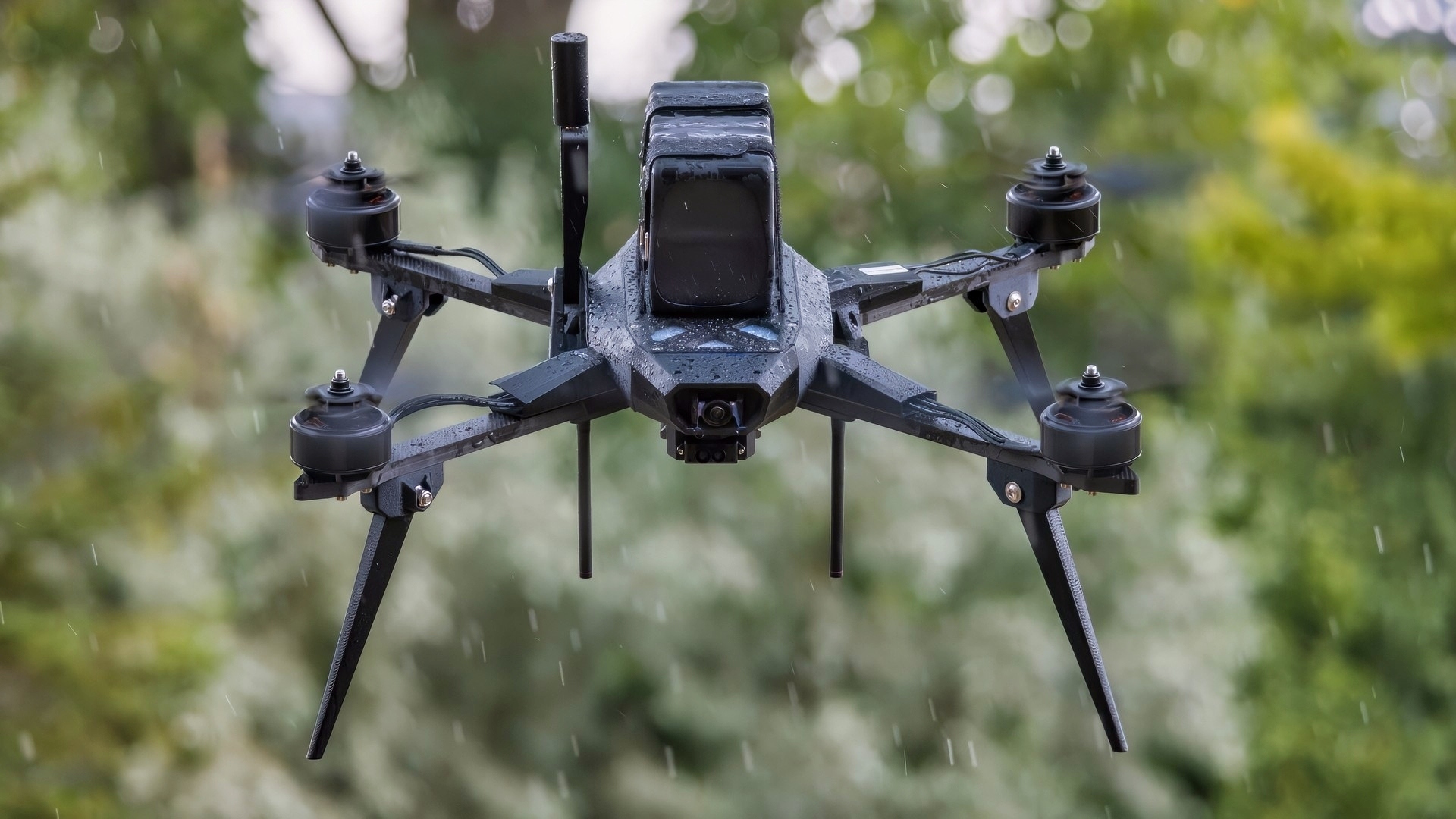
The crucial lesson of the Ukraine war is not merely that drones are useful. It is that the military advantage can shift within months. An unmanned system requires a camera, a data link, navigation software, and a robust logistics chain. However, the more demanding capability lies in adaptation: a system must also function when the opponent disrupts the satellite link, detects the frequencies, or the software becomes outdated within a few weeks.
That is precisely why the reference to Ukrainian deep-strike drones that can operate offline is strategically more important than the next product announcement from a European manufacturer. A system with electro-optical or infrared sensors, inertial navigation, and pre-programmed mission data can continue to operate under electronic warfare. It is not autonomous in the political sense; it is more resilient in the tactical sense. This distinction is too often blurred in European procurement debates.
From demonstration to counteroffensive
When the NATO Supreme Commander warns Russia of the alliance's ability to counterattack, it is initially a message of deterrence. However, deterrence does not work through rhetoric alone. It requires visible deployment plans, available ammunition, protected communication networks, and units that can act within days rather than months. The term "counterattack" therefore demands a capability for target reconnaissance and a chain of effects, not just additional platforms.
Here lies Europe's institutional weakness. NATO command structures can distribute responsibilities, but they do not produce drones, data links, or trained operators. The delegation of all 32 member states to Kyiv is politically significant because it recognizes the war as a common learning laboratory. However, it does not replace a common architecture. Without uniform standards for data formats, electronic signatures, spare parts, and training, the Ukrainian wealth of experience remains nationally fragmented.
AI is not a substitute for industrial capacity
The current enthusiasm for artificial intelligence carries a known risk. Algorithms can optimize flight paths, prioritize targets, and analyze sensor data more quickly. However, they do not solve the problem that Europe can produce too few systems in a short time. A drone with good software remains worthless if batteries, camera modules, or secure radios are not available. Equally crucial is the ability to withdraw faulty models and update their training data under combat conditions.
The NATO narrative of a "Theory of Victory" with drones and AI can therefore only be convincing if it is translated into procurement. Open interfaces, standardized payloads, and contracts that actually bring small and medium-sized enterprises into the supply chain are needed. The Ukraine war has shown that a cost-effective system is not cheap if it becomes unusable due to proprietary software, missing spare parts, or slow certification. Europe's problem is not a lack of inventors, but the gap between invention and military scaling.
The transatlantic division of labor remains unresolved
For Germany and the EU, this debate is particularly sensitive. Washington expects more responsibility from Europe; European governments simultaneously speak of strategic autonomy. However, an autonomous European pillar of NATO cannot consist solely of European summits and American reconnaissance data. It must finance its own sensors, satellite access, electronic warfare, and production capacities. Otherwise, the announced counteroffensive will become a European crew for American information and weapon systems.
This does not mean that Europe should reject American technology. Interoperability with the United States remains militarily indispensable. But interoperability is a technical characteristic, not a strategy. Those who only purchase compatible systems without being able to prioritize, repair, and reproduce themselves remain dependent. The debate about drones and AI is therefore fundamentally a debate about ownership of data, control over software, and access to industrial capacity.
More than a maneuver is required
NATO must draw three concrete consequences from the Ukrainian experiences. First, it needs a common minimum architecture for unmanned systems and electronic warfare. Second, exercises must test the entire chain of effects, from reconnaissance to target decision to resupply. Third, the European industry must be enabled with multi-year procurement guarantees to replace and further develop systems, not just to demonstrate prototypes.
The contradiction remains. Europe's armed forces need the Ukrainian speed now, but they have European procedures, American dependencies, and national procurement interests. Drones and AI can reduce the costs of a counteroffensive. However, they cannot overcome institutional inertia. Therefore, those who announce a NATO capability for counterattack against Russia must first prove that Europe can not only speak together but also learn, produce, and act together.
Sources
- France 24, October 12, 2026, "NATO top commander to warn Russia over alliance’s ability to counter-attack".
- Ukrainska Pravda, October 7, 2026, report on the visit of military representatives from all 32 NATO member states to Kyiv.
- Business Insider, October 7, 2026, analysis of offline-capable Ukrainian deep-strike drones and NATO interest in cost-effective swarm drones.
- NATO, October 7, 2026, background page on integrated air and missile defense.
NATO's top military commander warned Russia about the alliance's counter-attack capabilities in October 2026, acknowledging Ukraine's rapid advancements in drone technology. A delegation of military representatives from all 32 NATO member states visited Kyiv to discuss operational experiences and deterrence strategies. The report emphasizes the need for a unified approach to unmanned systems and electronic warfare to enhance European defense capabilities.
- NATO acknowledges Ukraine's advancements in drone technology and autonomous navigation.
- The NATO commander warns Russia about the alliance's counter-attack capabilities.
- A delegation of military representatives from all 32 NATO member states visited Kyiv.
- The report emphasizes the need for a common architecture for unmanned systems and electronic warfare.
- The debate over drones and AI highlights Europe's industrial capacity challenges.