
Nanning and Hengyang Ships Complete 5-Day Visit to Hong Kong, PLA Navy's 052D and 054A Combination Signals Normalization
 Li Minghui
Nanning and Hengyang Ships Complete 5-Day Visit to Hong Kong, PLA Navy 052D and 054A Combination Signals Normalization
On the morning of July 6, the PLA Navy's Nanning and Hengyang ships left Hong Kong, concluding their 5-day visit. On the surface, this appears to be a public open event coinciding with the 29th anniversary of Hong Kong's return, featuring citizens boarding the ships, students visiting, and officials giving speeches, which can easily be categorized as "patriotic education." However, what concerns me more is the detail that the navy sent not an older ship with a stronger ceremonial color, but a 052D-class guided missile destroyer and a 054A-class guided missile frigate.
This combination is quite typical. The 052D is responsible for area air defense, fleet command, and long-range strikes, while the 054A is tasked with anti-submarine warfare, escorting, and medium to low-intensity missions. The two ships entering the port together can showcase modern vessels without sending overly strong political signals like a 10,000-ton destroyer or an aircraft carrier would. In simple terms, this is a "strong enough but not exaggerated" display window.
Why Look at 052D and 054A Together
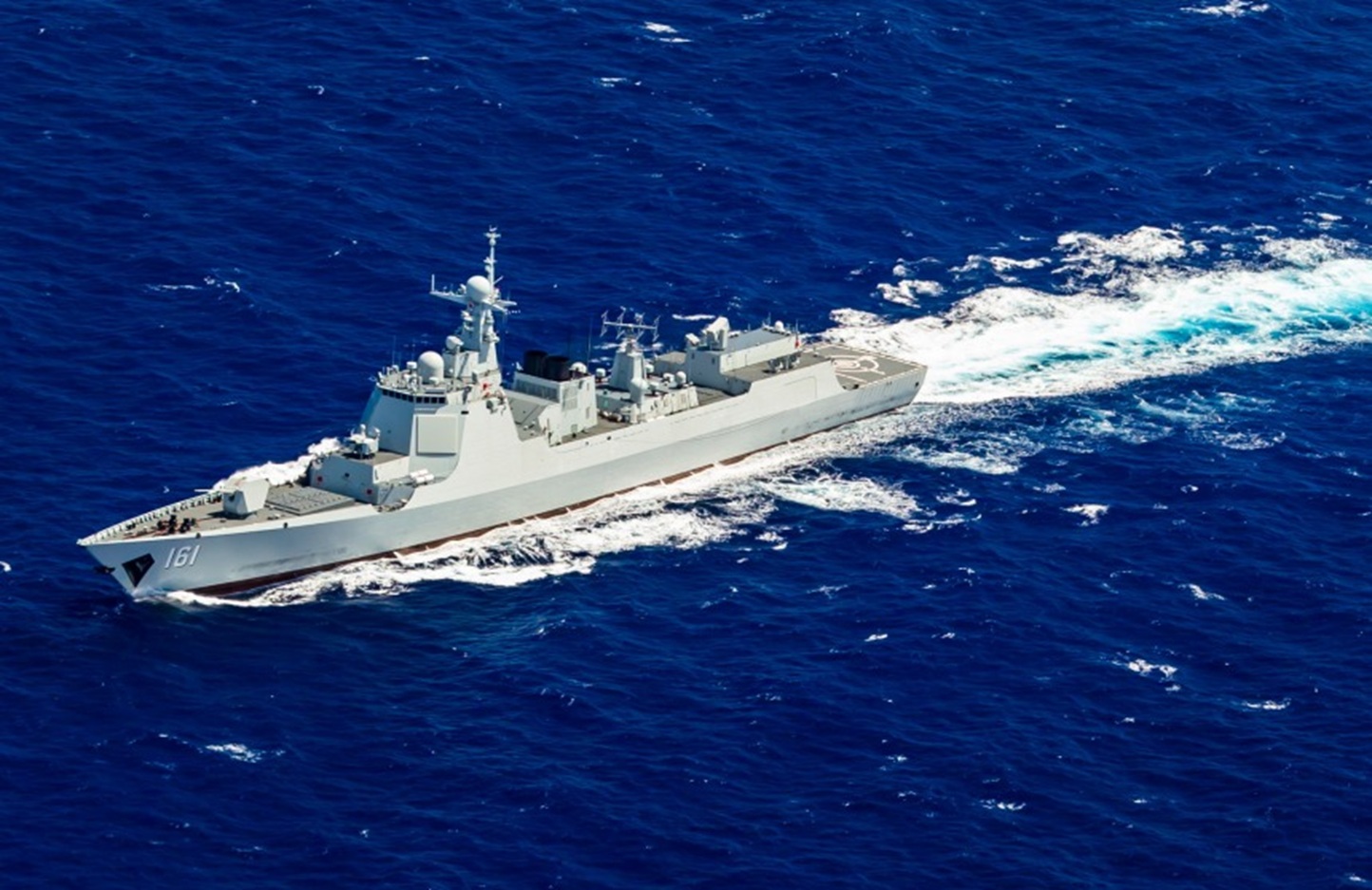
Public information shows that the 052D-class has a full-load displacement of about 7,500 tons, equipped with a 64-cell vertical launch system, 346A active phased array radar, and a 130mm naval gun, capable of carrying HQ-9 series air defense missiles, YJ-18 anti-ship missiles, and anti-submarine weapons. It is not the largest surface ship in the Chinese navy, but it is already sufficient to take on the role of a "backbone ship" in most missions.
The 054A-class operates under a different logic. It has a full-load displacement of about 3,960 tons, typically equipped with a 32-cell vertical launch system, YJ-83 anti-ship missiles, a 76mm naval gun, and onboard helicopter capabilities. When discussing the Chinese navy, external observers often focus on aircraft carriers and the 055, but what truly maintains a daily presence are often the more numerous, lower-cost, and flexible mission frigates like the 054A.
- The value of the 052D lies in integrating area air defense, anti-ship, and land strike capabilities into a destroyer that can be mass-produced.
- The value of the 054A lies in taking on anti-submarine, escort, patrol, and fleet replenishment roles at a lower platform cost.
- The combination of the two showcases the Chinese navy's norm of "high-end ships accompanied by mid-range ships" rather than a single ship showing off its capabilities.
The Training Rhythm Behind the Hong Kong Visit

The South China Morning Post reported that the two ships entered Hong Kong on July 3 via the Lei Yue Mun and Victoria Harbour, docking at the Stonecutters Island military camp, and then departed on July 6 through Victoria Harbour and the eastern waters. Hong Kong officials emphasized that this visit allowed citizens to gain a closer understanding of domestically produced destroyers and national defense construction. While the official narrative is certainly important, from the navy's perspective, port visits themselves also serve as a form of low-intensity comprehensive training.
Ships entering and exiting busy port areas must manage navigation channels, tugs, weather, security, and coordination with shore authorities; open visits test crew members' boundaries of confidentiality, display processes, and safety controls. For a navy that operates far from shore, these are not trivial tasks. The navies of the United States, Japan, and France have long regarded port visits as part of diplomatic and logistical training, and the Chinese navy is now catching up in this regard.
A detail that is easily overlooked is that the more frequently a ship can execute "non-combat" tasks, the more it indicates that the ship, personnel, and support systems have transitioned from showcase displays to regular operations.
The Real Issue is Production Capacity and Maintenance
I do not believe that a single visit to Hong Kong will change the military balance in the Western Pacific. What is more interesting is that it reminds us once again that the modernization of the PLA Navy has entered its second phase: it is no longer about whether there are advanced ships, but whether those advanced ships can be deployed at sea reliably, rotated, maintained, and then deployed again.
The 052D has already seen dozens of ships enter service, and the number of 054A ships has also exceeded 40. The benefits of this scale are evident: there is greater flexibility in fleet scheduling, training standards are easier to unify, and maintenance parts costs can be spread out. However, there are also shortcomings. The ongoing support for phased array radar, gas turbines, vertical launch systems, and onboard helicopter capabilities is more challenging for the industrial system than simply launching new ships. Once the number of vessels increases, what may become truly scarce is not the hulls, but qualified crew members, electronic equipment lifespan management, and shipyard repair capabilities.
From this perspective, the visit of the Nanning and Hengyang ships to Hong Kong is newsworthy not because "two warships have arrived," but because it presents to the public a developing norm of the Chinese navy: the 052D is responsible for supporting the mid-to-high-end combat framework, while the 054A fills the daily task space. The next question worth asking is whether, after the Fujian, 075, 076, and more 055 ships join the rotation, this rhythm of port visits, open-sea training, and maintenance support can maintain the same level of stability.
The Nanning and Hengyang ships of the People's Liberation Army Navy completed a 5-day visit to Hong Kong on July 6, coinciding with the 29th anniversary of Hong Kong's return. The visit featured a 052D destroyer and a 054A frigate, showcasing China's naval capabilities while serving as a public relations event. This activity reflects the ongoing modernization and operational readiness of the Chinese navy.
- Nanning and Hengyang ships completed a 5-day visit to Hong Kong.
- The visit coincided with the 29th anniversary of Hong Kong's return.
- The ships included a 052D destroyer and a 054A frigate.
- The visit served as a public relations event and low-intensity training for the navy.
- The report highlights the ongoing modernization of the Chinese navy.