
NATO's Arctic Sentry 2026 with 30,000 Soldiers Shows Europe's Northern Gap
 Dr. Klaus Weber
NATO's Arctic Sentry 2026 with 30,000 Soldiers Shows Europe's Northern Gap
30,000 soldiers in Northern Norway is an impressive number. However, they do not yet constitute an Arctic defense capability. This is precisely the problem with NATO's new Arctic Sentry narrative: The alliance can politically signal to Washington that Europe and Canada are taking the High North more seriously. However, it cannot quickly procure the icebreakers, submarines, underwater sensors, satellites, drones, and winterized logistics chains that would turn an exercise into a permanent deterrence architecture.
The immediate impetus is not just Russia. According to Reuters reports from June 26, NATO allies have assured President Donald Trump that they will take more responsibility for Arctic security. The political function of this commitment is obvious: It aims to ease the transatlantic strain caused by the dispute over Greenland while also demonstrating that European alliance partners can deliver more than just budget promises. But the strategic question is more uncomfortable: Who can remain present in the Arctic for months when the weather, distance, and infrastructure become adversarial forces themselves?
Arctic Sentry is Politically Faster than Militarily
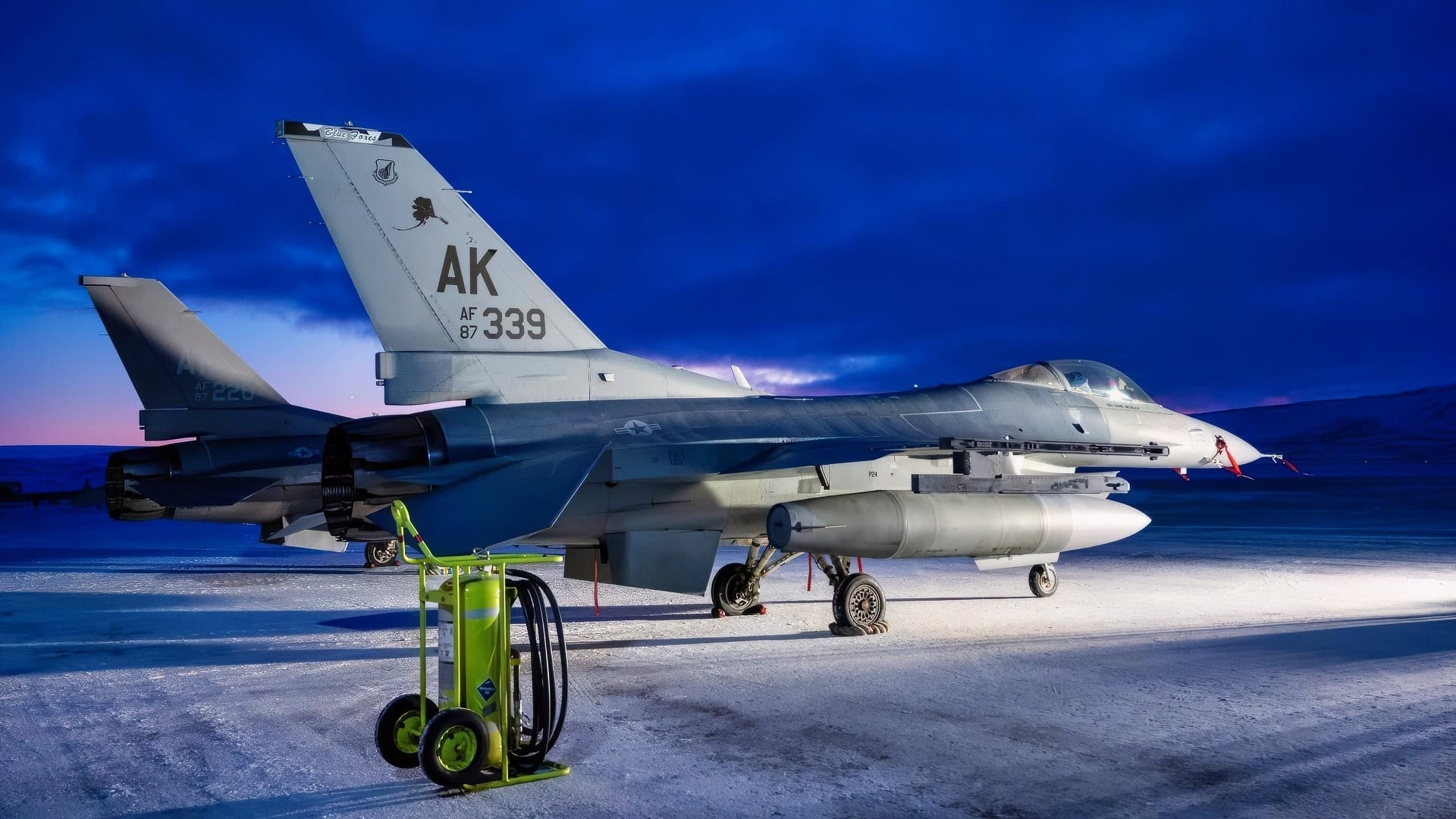
Arctic Sentry was outlined by NATO Secretary General Mark Rutte as a new northern activity even before the defense ministers' meeting in February. The exercise in Norway shows that the alliance has organizationally taken up the issue. However, an exercise is a snapshot. The Arctic demands permanence: ports, fuel, winterized ammunition, radar lines, communication during ionospheric disturbances, maritime patrol aircraft, and ships that operate not just in summer.
This is where the Arctic differs from many European debates about defense spending. An additional brigade in Lithuania or Poland can build on existing railways, roads, and depots. In the High North, a large part of the operational prerequisites must first be created or modernized. Those who promise deterrence there are simultaneously promising infrastructure policy, industrial policy, and mastery of geography.
Russia's Advantage has Grown Institutionally
Russia did not discover this space because NATO is now discussing it again. Moscow has been reactivating Soviet infrastructure for years, expanding bases, and has placed its Northern Fleet on the Kola Peninsula at the center of strategic deterrence. There, nuclear submarines, long-range weapons, and air defense are concentrated in a geographical density that is immediately relevant to Norway, Finland, Sweden, Canada, and the United States.
The Russian advantage lies not only in more ships or more aircraft. It lies in administrative continuity: The Russian state treats the Arctic as a military space, energy area, and northern route all in one. Western democracies often separate these responsibilities among defense ministries, coast guards, transportation departments, environmental agencies, and regional governments. This is legally plausible but operationally slow. In the Arctic, slowness is costly.
The actual capability gap lies not between NATO and Russia on a PowerPoint slide, but between political commitment and Arctic endurance.
The New NATO Geography after Finland and Sweden
With Finland and Sweden, NATO has changed the map of the North. The alliance now has a more cohesive northern flank, increased air force cooperation, and better operational depth in the Baltic and Barents Sea regions. The Nordic states have already begun to coordinate parts of their air forces more closely. This is militarily sensible because Russian movements in the Kola region do not stop at national jurisdictional boundaries.
But here too, Weber's old rule applies: Integration is not synonymous with capacity. Finland brings experience, Sweden brings location and industry, Norway brings sea access and Arctic routine, Canada brings space and strategic depth. However, this does not automatically create a common procurement plan. Without standardized sensor architecture, a common maintenance logic, and coordinated rules of engagement, the northern flank remains an impressive map image with many national footnotes.
Canada and Europe Buy Time, Not Security
Canada has announced a billion-dollar Arctic strategy: airfields, infrastructure, and ice-capable ships are to be modernized. Finland and the United States are working on new icebreakers. Norway is investing in more frigates and submarines. The United Kingdom is increasing its presence in Norway and is once again using the High North as a cold-weather school for amphibious forces. These measures are important. But they are not a quick response to a Russian presence that has been built up over years.
The time factor is crucial. An icebreaker is not a munitions package that can be procured within a few weeks. Submarines, satellite constellations, underwater sensors, and polar-capable logistics take years. When NATO leaders announce billion-dollar contracts after the summit, it sounds like capability. However, in the Arctic, a contract often only marks the beginning of a capability, not its availability.
Why the 5 Percent Framework Only Partially Addresses the Problem
The new NATO spending framework of 3.5 percent of GDP for core defense plus 1.5 percent for security-related investments seems to fit well with the Arctic. Ports, sensors, communication networks, and energy supply can be elegantly categorized under resilience and infrastructure. But this creates the next institutional temptation: States can finance Arctic infrastructure without building an operational military system from it.
Germany knows this problem from the special fund. Money creates procurement leeway, but not priorities. For the Arctic, this means: If each state plans its own sensors, ships, drones, and bases, NATO will have more activity but not necessarily more deterrence. The Arctic punishes fragmentation more severely than Central Europe because distances are greater, weather windows are smaller, and reserves are scarcer.
The Transatlantic Irony
The political purpose of Arctic Sentry is partly to show the United States that Europe and Canada can take on responsibility. At the same time, the High North remains the area where Europe can least replace the American role. Strategic early warning, nuclear deterrence, underwater reconnaissance, and long-range communication still heavily depend on U.S. capabilities. Rutte can reassure Washington; he cannot moderate away American infrastructure.
This makes the Arctic a test case for European defense reality. In Ukraine, it is becoming evident whether Europe can deliver munitions and air defense quickly enough. In the High North, it will show whether Europe can institutionally organize long-term geographical vulnerability. The first problem is industrial. The second is structural.
Conclusion
Arctic Sentry is necessary, but its success will not be measured by the number of soldiers in an exercise. What matters is whether NATO states have common sensors, ice-capable platforms, resilient Nordic logistics, and clear command structures in five years. Until then, the Arctic remains a space where Europe promises more responsibility than it can currently operationally bear.
The paradox is uncomfortable: Without American pressure, Europe would likely have continued to push the Arctic gap aside. With American pressure, Europe must now close a gap that is currently showing how dependent it still is on the United States.
NATO conducted the Arctic Sentry 2026 exercise with 30,000 soldiers in Northern Norway to enhance its military presence in the Arctic. The exercise highlights logistical challenges, including the need for icebreakers and winterized logistics. Russia has been strengthening its military infrastructure in the region, creating a strategic challenge for NATO. The exercise also serves a political purpose, demonstrating European and Canadian commitment to Arctic security.
- NATO's Arctic Sentry 2026 involves 30,000 soldiers in Northern Norway.
- The exercise aims to enhance NATO's presence in the Arctic region.
- Logistical challenges include the need for icebreakers, submarines, and winterized logistics chains.
- Russia has been reactivating Soviet-era infrastructure in the Arctic.
- NATO's commitments are politically motivated to show responsibility to the U.S.