
BALTOPS 2026 Shows NATO Its Drone Boat Problem
 Alexandra Reeves
BALTOPS 2026 Shows NATO Its Drone Boat Problem
NATO navies do not need another conference panel about unmanned systems. They need to find small, cheap, hard-to-read boats before those boats get close enough to matter. That is why a modest U.S. Navy item from BALTOPS 2026 deserves more attention than the usual exercise press release.
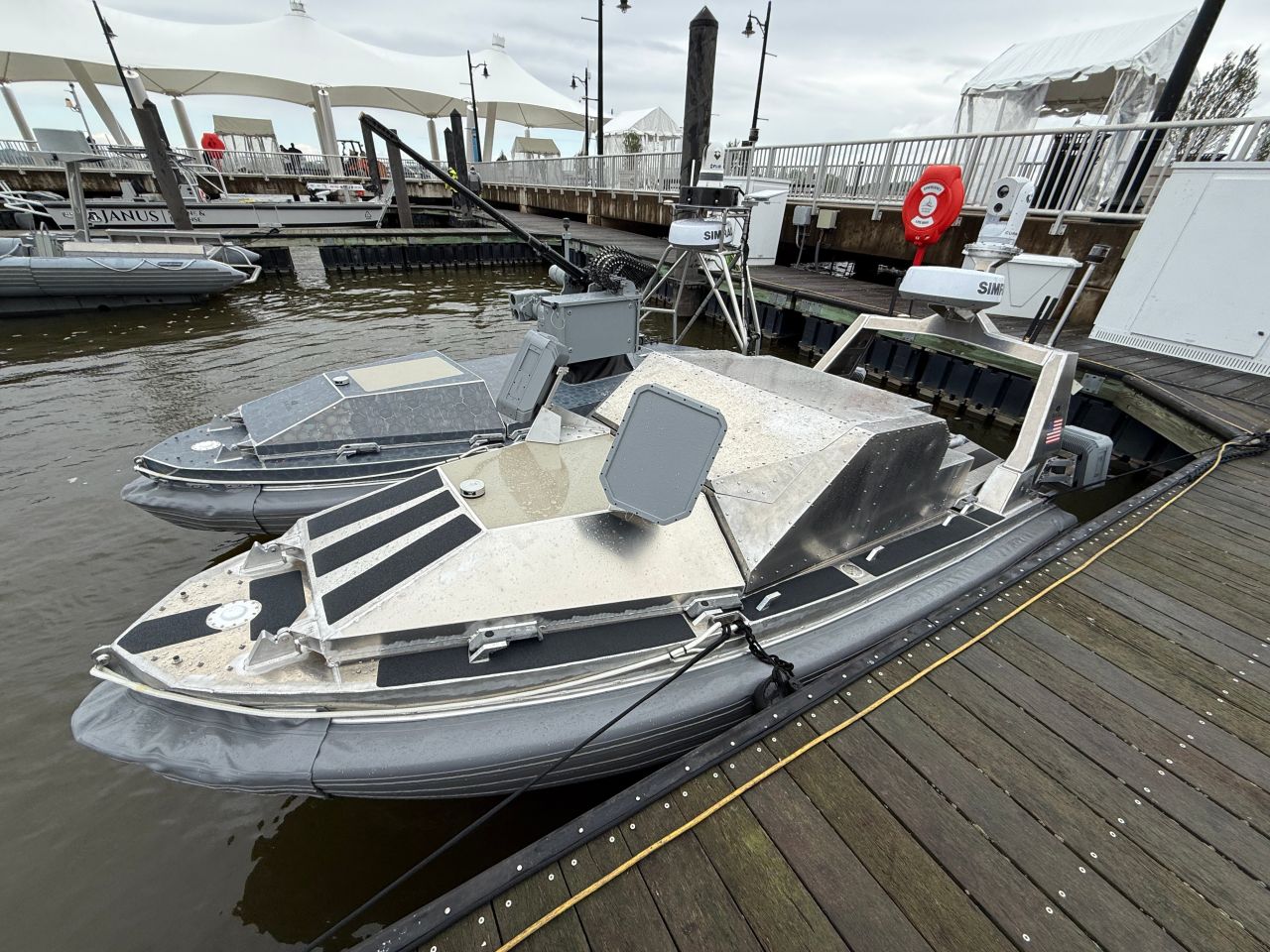
According to the U.S. Navy, sailors from Unmanned Surface Vessel Division 32, or USVDIV-32, used Global Autonomous Reconnaissance Craft during Exercise Baltic Operations 2026 to give NATO ships realistic counter-unmanned surface vessel training. In plain English: allied crews were asked to defend themselves against small robotic craft behaving like inbound threats in one of Europe’s most politically loaded bodies of water.
That sounds technical. It is not. It is about whether NATO can protect ports, anchorages, logistics ships and high-value naval units in waters where Russia does not need a blue-water fleet to create trouble.
The Baltic Is a Bad Place to Learn Slowly
The Baltic has become fashionable shorthand for NATO advantage. Finland and Sweden are inside the alliance. Denmark controls the approaches. Poland and the Baltic states have pushed hard on defence spending. Russia’s Baltic Fleet is strategically boxed in compared with the Northern Fleet.
That framing is not wrong, but it is too comfortable. The Baltic is also shallow, crowded, infrastructure-heavy and politically sensitive. It is full of commercial traffic, undersea cables, energy links, ferry routes and naval choke points. Those are exactly the conditions in which small unmanned surface vessels become more than a novelty.
Ukraine has already shown the strategic value of unmanned maritime systems in the Black Sea, where inexpensive naval drones helped force a much larger Russian fleet to rethink how and where it operates. The Baltic is different, but the lesson travels: a navy does not have to sink many ships to change behaviour. It only has to make commanders uncertain about what is approaching them.
What USVDIV-32 Actually Brought
The Navy says USVDIV-32 was established earlier this year as one of its newest unmanned operational units. Its sailors operate and maintain unmanned vessels, with the Global Autonomous Reconnaissance Craft, or GARC, described as the platform they have used most often over the past couple of years.
During BALTOPS 2026, the unit deployed GARCs as an opposing force. That gave allied ships a chance to practise spotting the craft, reading its behaviour and responding before it reached dangerous proximity. Lt. Sarah Weinstein, USVDIV-32’s commanding officer, put the problem neatly: the first hard part is simply spotting the USV and understanding the telltale signs that it is inbound.
That sentence should worry naval planners. Western fleets have spent decades optimising sensors, weapons and training against missiles, submarines and aircraft. A small unmanned boat is a different sort of target. It may be cheap enough to use in numbers, small enough to complicate detection, and ambiguous enough to slow the decision to engage in crowded waters.
The Hardware Is Becoming More Deployable
The GARC story is not just about one exercise. Naval News reported in May that BlackSea Technologies had demonstrated GARC during NATO’s Arctic Sentry 2026 activity in Ramsund, Norway, alongside U.S. 6th Fleet, U.S. Unmanned Surface Vessel Squadron 3 and the Royal Norwegian Navy. That matters because NATO is not testing these craft only in benign waters. It is pushing them into the High North and the Baltic, the two European maritime theatres where Russian pressure is most plausible.
Naval News also reported useful detail on the BlackSea family of unmanned surface vessels. The company’s larger Comet is roughly 13.1 metres long, can carry up to 10,000 pounds including fuel, and is rated at 1,000 nautical miles of endurance with a 3,000-pound payload at 40 knots in Sea State 3. Chaser, also described as GARC Block II, is smaller and can be deployed from a 20-foot shipping container, with roughly 600 to 800 nautical miles of endurance at 20 knots.
Those numbers are not magic. They are enough. Container deployability and several hundred nautical miles of endurance mean the launch problem becomes easier, the geography becomes wider, and the defender’s uncertainty grows. For NATO, that cuts both ways. These systems can help alliance forces train, scout and complicate Russian planning. But similar systems in hostile hands can threaten the same ports and vessels NATO depends on.
The Personnel Shift Matters More Than the Press Release
The most interesting part of the U.S. Navy article may be the least dramatic: the new robotics warfare specialist rating. The Navy quoted Chief Petty Officer Christian Butler saying most, if not all, commands will likely need some robotics warfare specialist component because unmanned systems are only going to grow in scale.
That is the real institutional signal. A navy can buy platforms faster than it can build habits. Creating specialists means the service is admitting unmanned systems are not a side project for clever officers between normal jobs. They are becoming part of fleet work.
NATO has a harder version of that problem. It does not need one navy to understand drone boats. It needs many navies to recognise them, communicate about them, classify them and respond under shared rules. A German frigate, a Polish patrol craft, a Danish command element and an American unmanned unit cannot each improvise their own answer in the Baltic and call that interoperability.
The Russian Lesson Is Obvious
Everyone likes to say the Baltic is now a NATO lake. Russia will not accept that description passively. It still has Kaliningrad, coastal missiles, electronic warfare, sabotage options and enough naval presence to create uncertainty. Moscow does not need to win sea control across the Baltic to make NATO operations more expensive. It only needs to threaten the points where alliance reinforcement becomes visible and vulnerable.
That is why BALTOPS 2026’s counter-USV training is not a niche drill. It is a small preview of the defence problem NATO will face in every contested littoral: more objects in the water, shorter decision windows, more pressure on watchstanders, and political risk attached to every shot fired near civilian traffic.
Here is the uncomfortable part. NATO is probably better at demonstrating unmanned systems than defending against them at scale. BALTOPS suggests the alliance knows this, which is good. But knowing is not the same as having enough sensors, doctrine, rules of engagement, electronic warfare tools and trained crews across the fleet.
What to Watch Next
The next useful indicator is whether counter-USV training becomes routine rather than episodic. Watch for NATO exercises that integrate unmanned surface threats into port defence, convoy escort, mine countermeasures and amphibious operations. Watch whether smaller Baltic navies get access to the same training, not just the large allied units that make good photographs. And watch whether robotics warfare specialists remain an American experiment or become part of a broader alliance manpower model.
BALTOPS 2026 did not prove NATO has solved the drone boat problem. It proved the alliance has finally started rehearsing the problem in the right water. That is progress. It is also a reminder that Russia and everyone else are rehearsing too.
NATO navies conducted counter-unmanned surface vessel training using Global Autonomous Reconnaissance Craft during BALTOPS 2026 in the Baltic Sea. The U.S. Navy's Unmanned Surface Vessel Division 32 (USVDIV-32) played a key role in this exercise, focusing on improving detection and response capabilities against unmanned threats. The training highlights the strategic importance of unmanned systems in modern naval operations.
- NATO navies trained against unmanned surface vessels during BALTOPS 2026.
- U.S. Navy's USVDIV-32 used Global Autonomous Reconnaissance Craft for training.
- The Baltic Sea presents unique challenges for naval operations due to its geography and political sensitivity.
- The training aims to improve detection and response to unmanned threats.
- The integration of robotics warfare specialists is becoming essential for naval operations.