
NATO's Fighter Jets Are Losing the Drone Cost War in 2026
 Alexandra Reeves
NATO's Fighter Jets Are Losing the Drone Cost War in 2026
NATO can shoot down a drone. The uncomfortable question is whether it can afford to do so every night.
That question moved from Ukrainian trench logic into alliance air-defence planning this week. Reuters reported on September 28 that NATO's top military commander, U.S. Air Force General Alexus Grynkewich, warned that Russia's aim is to break the will of Ukraine's supporters. At the same time, reporting from Business Insider described allies using fighter aircraft against drones while exploring a Ukraine-inspired system that would put cheaper interceptors and electronic warfare closer to the threat.
Those are not separate stories. They describe the same strategic problem: Moscow does not need to destroy NATO's air forces to weaken the alliance. It only needs to make the cost of defending European airspace politically exhausting.
The arithmetic is already wrong
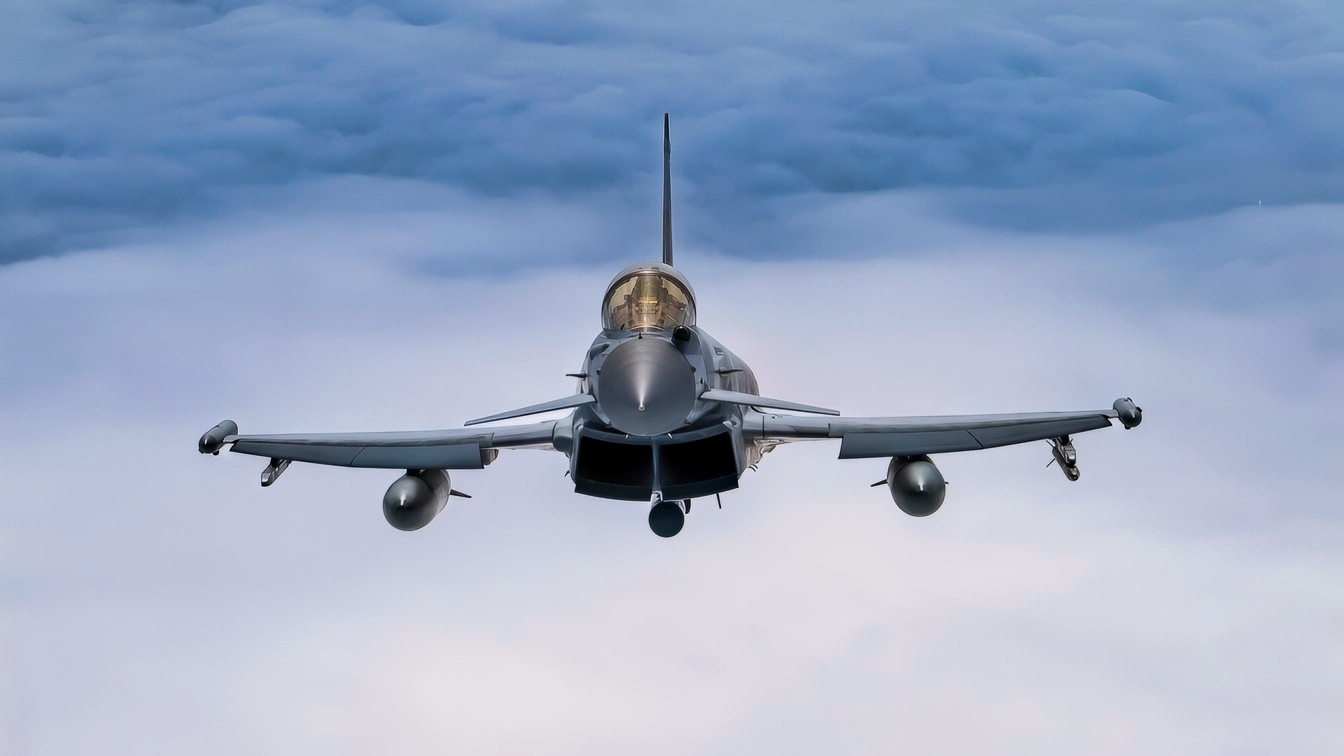
A fighter is an excellent sensor and a fast response platform. It is also a brutally expensive way to deal with a one-way attack drone. A NATO fighter sortie consumes fuel, maintenance hours, pilot time and a slice of a limited readiness pool. The drone may cost a fraction of that. Even when the missile fired is not the most expensive part of the engagement, the operational bill is still asymmetric.
The problem becomes sharper when the attacker uses large numbers. Ukraine has spent years learning that air defence is not simply a question of whether an interceptor works. It is a question of whether the defender can keep enough launchers, operators and ammunition alive through repeated waves. A system that succeeds tactically but empties its magazines faster than Russia empties its drone stocks is not a shield. It is a delayed breach.
NATO's recent experience over Poland and the Baltic region has exposed the same tension in a less forgiving political environment. Alliance aircraft can react quickly, but every scramble creates a choice between protecting national airspace, preserving aircraft for a higher-end contingency and signalling resolve to Moscow. There is no unlimited pool of F-16s, Eurofighters or pilots waiting outside the hangar.
Ukraine is offering the missing layer
Ukraine's answer has not been one miracle weapon. It is a layered network: radar and acoustic detection, electronic warfare, mobile machine guns, short-range missiles, interceptor drones and software that turns battlefield observations into faster targeting. United24 Media reported on September 28 that four NATO countries are quietly building their own drone forces after discussions with Ukrainian commanders, including Colonel Robert Brovdi, known as Madyar.
That matters because interceptor drones change the cost curve. They do not make air defence free, and they will not replace fighters against cruise missiles or aircraft. But they can give a defender a cheaper option against the slow, low-flying and relatively expendable systems Russia uses to probe coverage and saturate decision-making.
The technical challenge is less glamorous than buying another high-end missile. An effective counter-drone force needs persistent sensors, secure data links, trained crews and rules that allow local units to act before a target becomes a national-level crisis. Ukraine has been forced to compress that entire kill chain because it has no alternative. NATO still tends to distribute it across separate budgets, commands and acquisition programmes.
That bureaucratic separation is now a vulnerability. A radar unit may see the target, an air-policing command may classify it, a national headquarters may authorize a response, and a fighter may finally launch. The sequence is defensible in peacetime. Against a mass raid, it is simply too slow and too expensive.
Russia's objective is political, not just military
Grynkewich's warning about breaking allied will should be read literally. Russia's drone campaign is not only about damaging power stations or military sites. It tests whether European governments can explain recurring interceptions, temporary airspace closures and rising defence bills to voters who are not at war.
This is where the conventional NATO advantage can become a trap. The alliance has exquisite aircraft and powerful command networks, but it also has publics that expect every military response to be proportionate, controlled and affordable. Russia can exploit that expectation with weapons designed to create constant friction rather than one spectacular strike.
There is a second risk. If NATO relies mainly on fighters, Moscow learns the pattern of the response. It can vary routes, fly decoys, mix reconnaissance drones with attack drones and force aircraft to remain airborne longer. The result is not necessarily a catastrophic penetration. It is fatigue. Fatigue is exactly the kind of pressure that erodes political confidence without crossing the threshold that would trigger a dramatic alliance response.
What NATO should do next
- Build a dedicated low-cost layer. Counter-drone units should have their own funding, sensors, electronic-warfare tools and interceptor drones rather than borrowing equipment from every other mission.
- Stop treating Ukraine as a lessons-learned presentation. Ukrainian operators should be embedded in exercises and acquisition teams, with authority to challenge requirements written for a different war.
- Reserve fighters for the targets only fighters can defeat. Fast jets should handle aircraft, cruise missiles and the most dangerous drones, not become NATO's default answer to every radar track.
- Measure endurance, not just interceptions. The relevant question after an exercise is how many nights the system can sustain the same tempo, not whether it produced a clean engagement video.
The alliance has the engineering talent to build this architecture. What it lacks is urgency proportional to the arithmetic. NATO's fighter jets can win individual engagements against drones, but Russia does not need to win those engagements to gain an advantage. It only needs to make the defence bill, the alert cycle and the political argument harder every week.
The next test will be whether NATO turns Ukraine's improvised counter-drone ecosystem into a permanent allied capability before the next mass raid. If it does not, Europe may discover that its most advanced aircraft are being used to defend the wrong layer of the sky.
Sources
- Reuters, September 28, 2026, reporting on General Alexus Grynkewich's assessment of Russia's campaign against Ukraine's allies.
- Business Insider, September 28, 2026, reporting on NATO fighter use against drones and Ukraine-inspired air-defence methods.
- United24 Media, September 28, 2026, reporting on four NATO countries developing national drone forces after engagement with Ukrainian commanders.
- NATO, official news and policy materials on alliance air policing and integrated air and missile defence.
NATO's fighter jets are struggling to effectively counter the cost-effective drone threats posed by Russia in 2026. General Alexus Grynkewich highlighted the political implications of this challenge, as NATO faces increasing operational costs and the need for a more sustainable defense strategy. Four NATO countries are developing their own drone forces, inspired by Ukraine's layered defense approach, to address these challenges.
- NATO's fighter jets are struggling to counter the cost-effectiveness of Russian drones.
- General Alexus Grynkewich warned about the political implications of Russia's drone strategy.
- Four NATO countries are developing their own drone forces inspired by Ukraine's methods.
- NATO's reliance on expensive fighter jets for drone defense is politically and operationally unsustainable.
- Ukraine's layered defense strategy includes various low-cost counter-drone measures.