
NATO’s Reported Russia Strike Plan Exposes Europe’s 2026 Taurus and Storm Shadow Gap
 Dr. Klaus Weber
NATO’s Reported Russia Strike Plan Exposes Europe’s 2026 Taurus and Storm Shadow Gap
Brussels — 5 November 2026. A reported NATO concept that envisages conventional strikes against Russian military-industrial sites and supply lines in the depth of Russian territory would be strategically consequential precisely because Europe does not yet possess the means to execute it repeatedly. The central question is not whether a Storm Shadow can reach a target. It is whether the Alliance can identify, approve, allocate and replace enough weapons to make such a threat credible after the first days of a war.
The reporting must be handled with care. The Wall Street Journal reportedly described work on a new NATO defence plan on 4 November; its account has been relayed by Kyiv Post, Ukrainska Pravda and other outlets. No NATO document publicly released as of 5 November confirms the reported provisions, their status, or their approval. This is therefore an analysis of the reported concept and the capability gap it exposes—not evidence that NATO has adopted a strike order.
A plan is not yet an OPLAN
The distinction is institutional rather than semantic. Since 2020, NATO’s Deterrence and Defence of the Euro-Atlantic Area concept and the subsequent regional plans have connected force generation, command arrangements and graduated response planning. A genuine operational plan would attach missions, authorities, targets, force packages and readiness requirements to a contingency. A capability-demand signal, by contrast, identifies what forces the Alliance would need without committing national assets or authorising their use.
The public record supports the second description more readily than the first. NATO’s 2023 Vilnius Summit communiqué confirmed that the Alliance had approved new regional plans, but it did not publish a Russia-strike annex. If the WSJ account is accurate, the current work may be a planning option or a force-and-capability requirement nested within the graduated response system. It cannot be described publicly as an approved OPLAN. Any transition from staff planning to an actual strike decision would require political control through the North Atlantic Council, with the relevant nations retaining authority over their forces and munitions. The reported plan is not a substitute for that decision.
The inventory problem behind the rhetoric
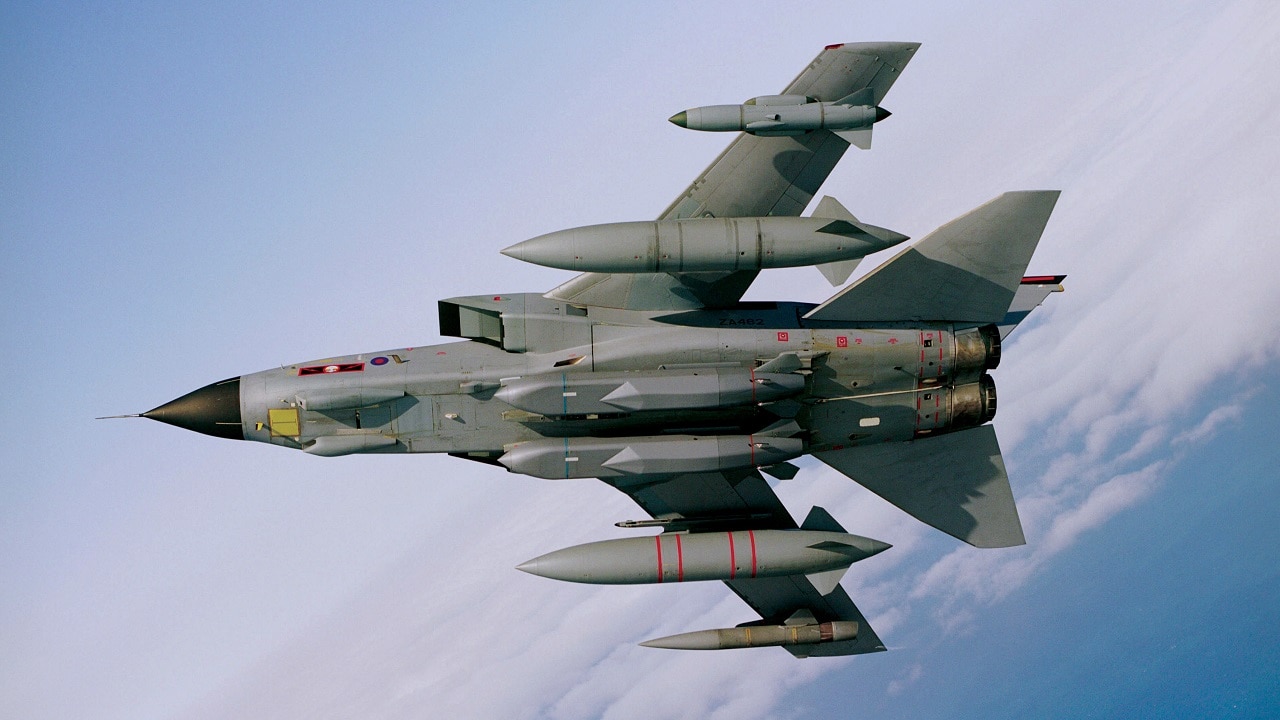
Europe’s familiar missiles illustrate the difference between range and campaign endurance. Storm Shadow/SCALP is commonly credited with a range above 250 kilometres; Taurus KEPD 350 is designed for roughly 500 kilometres. Both can strike high-value fixed targets. Neither fact establishes a European capacity for an extended suppression campaign against dispersed Russian logistics, repair facilities and production nodes.
Precise national war stocks are classified, so public production figures, announced orders and transfers cannot be converted honestly into an available inventory. That is itself the relevant conclusion. A few hundred weapons, even if available, are a strategic reserve; they are not a demonstrated multi-week campaign stock once training rounds, testing, maintenance, national caveats and contingency reserves are deducted. JASSM-ER reaches beyond 900 kilometres, but it is a US-controlled family and depends on US export, integration and sustainment decisions. PrSM Increment 1 offers a nominal range beyond 500 kilometres, but it is principally a US Army capability rather than a fielded European deep-strike mass.
The deeper shortage is the kill chain. Long-range weapons require persistent intelligence, surveillance and reconnaissance; target validation; mission-data preparation; electronic-order-of-battle knowledge; damage assessment; and a secure command chain able to retask quickly. Much of Europe still relies on US space, signals-intelligence, data-fusion and targeting enablers. A launcher and a missile are visible. The targeting cycle is where dependency becomes operational.
European cooperation remains a timetable not an arsenal
The European Long-Range Strike Approach, launched by France, Germany, Italy, Poland, Sweden and the United Kingdom in 2024, is politically relevant because it recognises the shortfall. But a letter of intent is not a jointly fielded weapon. The current debate around deep-precision-strike joint development, including the dilemmas identified in Carnegie and Table.Briefings analysis, is familiar: partners must decide whether they are buying a common missile, sharing development risk, harmonising launch platforms, or merely coordinating separate national programmes. Those choices determine workshare, export control and sovereignty over target data. They also take longer than a planning cycle.
Nordic defence companies’ push for regional consolidation, reported by Reuters on 5 November, is an industrial response to the same problem. It could improve supply chains, specialist labour and order books. Yet consolidation across small national markets can also preserve fragmentation if procurement remains nationally sequenced and intellectual property stays fenced in. More corporate scale does not automatically yield a common missile, a common stockpile or a common release authority.
Escalation control cannot be delegated to a document
Conventional strikes on Russian territory would test thresholds that Russian nuclear doctrine deliberately leaves imprecise. The aim of a NATO defence plan would be deterrence by convincing Moscow that an attack has costs beyond the frontline. Its risk is that Moscow interprets attacks on strategic industry, command nodes or enabling infrastructure as a challenge to regime survival. The answer cannot be an automatic trigger hidden in a plan. It requires political thresholds, target categories excluded in advance, and a clear North Atlantic Council process for revisiting escalation at each stage.
That dependence is sharper under the current transatlantic uncertainty. Democratic control of the US Congress may create oversight and funding leverage, but it cannot manufacture European ISR, missile production or nuclear assurance. A Trump administration that has made Ukraine policy less predictable gives European capitals an incentive to insure themselves through sovereign deep-strike capacity. It also makes them more cautious: autonomous capability acquired to reduce reliance on Washington still has to operate inside an Alliance whose nuclear and intelligence backbone remains substantially American.
What to watch next
Readers should look for three observable signals rather than infer adoption from anonymous reporting. First, do NATO defence-ministerial or summit texts acknowledge a deep-precision-strike requirement, while carefully distinguishing it from an approved strike plan? Second, does a joint project obtain concrete European Defence Fund or EDIP financing, a lead customer and a production decision? Third, do Germany, the United Kingdom, France, the Nordics and Poland announce purchase quantities, delivery schedules and replenishment contracts rather than only research partnerships?
The paradox is blunt. A reported NATO plan can improve deterrence only if Russia believes the Alliance can act on it. Europe needs the option because its geography makes rear-area sanctuaries dangerous. But until stocks, ISR and political release arrangements catch up, “deep strike” remains less an operational promise than a demanding invoice for European defence integration.
Sources and verification note
- The Wall Street Journal Europe, 4 November 2026 reporting as relayed by Kyiv Post, Ukrainska Pravda and other outlets. NATO has not publicly confirmed the reported plan details.
- NATO Vilnius Summit Communiqué, 11 July 2023, on regional plans and the Alliance’s deterrence-and-defence posture.
- MBDA Storm Shadow/SCALP product information.
- TAURUS Systems KEPD 350 product information.
- Reuters, 5 November 2026, on Nordic defence-industry consolidation.
NATO is reportedly developing a concept for conventional strikes against Russian military-industrial sites, as of November 5, 2026, but lacks the necessary capabilities for sustained operations. The report emphasizes Europe's current missile capability gaps and the need for political control in decision-making regarding military actions. No official confirmation from NATO has been provided regarding this plan.
- NATO is reportedly considering conventional strikes against Russian military-industrial sites.
- Europe lacks the capability to execute such strikes repeatedly as of 2026.
- The report highlights a gap in European missile capabilities and logistics for sustained operations.
- NATO has not confirmed the details of the reported strike plan.
- Political control is required for any transition from planning to actual strikes.