

Summary and Key Points: Rumors surrounding the SR-72 Darkstar persist, but the lack of recent public updates raises two competing explanations: extreme secrecy or a quiet fade-out driven by cost and performance risk.
-The core barrier is technical: sustaining hypersonic flight demands breakthroughs in thermal management, composite materials, and stable aerodynamics, including controlling turbulent flow that can disrupt trajectory.
-Even if weaponized hypersonics advance, a reusable hypersonic aircraft is a heavier lift.
SR-72 Darkstar: The Mach 6 Jet That Vanished Into Secrecy
Strategically, a Mach 6 platform could transform ISR and strike by outpacing radar tracking and slipping through defended airspace, potentially complementing stealth systems like the F-47 and F/A-XX through networking and targeting.
It’s hard to imagine that a sixth-generation jet capable of reaching hypersonic speeds in flight could be cancelled. Yet the rumored SR-72 “Son of Blackbird” (or known as the SR-72 Darkstar as well) aircraft seems to have dissipated into a mist of uncertainty. Virtually no new information on the aircraft has emerged in recent years.
That absence of updates could signal one of two possibilities: For one, perhaps the SR-72 is such a top-secret project that Pentagon developers refuse to offer any speculation.
Alternatively, it is possible that the platform under development has not performed as promised and has been cancelled or is fading out of planning reality.
It is difficult to determine if the SR-72 in fact exists.
Technical Complications for the Son of Blackbird?
Establishing and sustaining stable hypersonic flight remains a challenge.
The Pentagon is close to bringing hypersonic weapons such as its ground-fired Long Range Hypersonic Weapon into operation. Years of study on composite materials, thermal management, and air boundary layer research and experimentation seem to have finally yielded operational hypersonic weapons for the Army.
Likewise, the Navy is on track to arm its destroyers and submarines with hypersonic weapons.
But delivering a larger platform such as a drone or manned aircraft that can operate at hypersonic speeds is a different level of challenge—leading scientists have long maintained that human beings cannot survive the heat generated by hypersonic speed. Scientists at the Army Research Laboratory have experimented with new combinations of materials, hoping to discover a combination capable of supporting hypersonic flight.
Flight trajectory is also very difficult—a turbulent air flow surrounding a hypersonic projectile or platform can cause molecules to reposition and disrupt the flight path trajectory.
Weapons developers therefore seek to engineer hypersonic weapons and future platforms capable of generating a smooth, or laminar, air flow surrounding a hypersonic vehicle.
It is also possible the platform was cancelled for cost or performance reasons. It might not have been progressing as hoped for by Pentagon developers. Developing and producing such exquisite technology has likely been extremely expensive, and Pentagon weapons developers may have simply wanted to move their funding to another or weapon system closer to delivery.
Keep the SR-72 Darkstar or Son of Blackbird?
Could the arrival of the ultra-strealthy F-47 and the upcoming F/A-XX lead Pentagon decision makers to re-evaluate the merits of producing the hypersonic SR-72 Darkstar?
The tactical merits of the aerial surveillance, targeting, and attack options at hypersonic speed that the DarkStar could bring cannot be underestimated.
Fast-arriving sixth-generation aircraft such as the F-47 are expected to travel at speeds of at least Mach 2 and incorporate a new generation of stealth technology—capabilities that would be ideally complemented by a platform traveling at Mach 6—manned or otherwise.
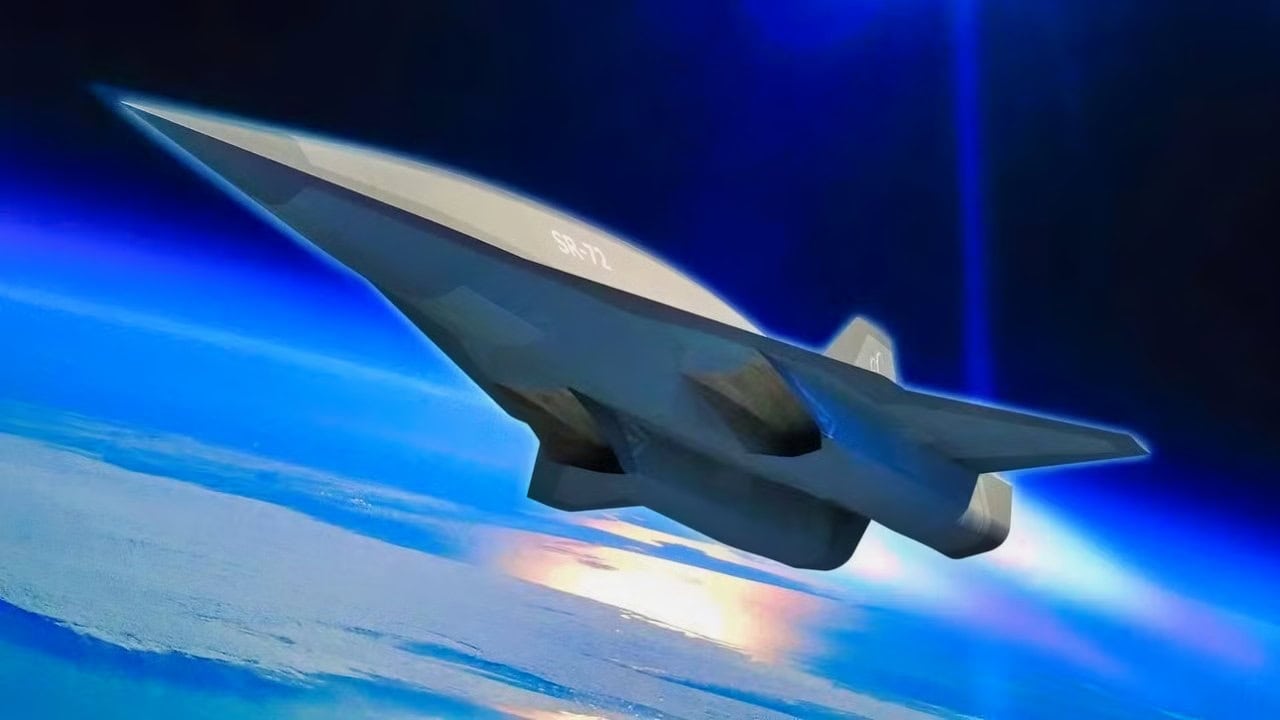
SR-72 Darkstar. Image Credit: Lockheed Martin.
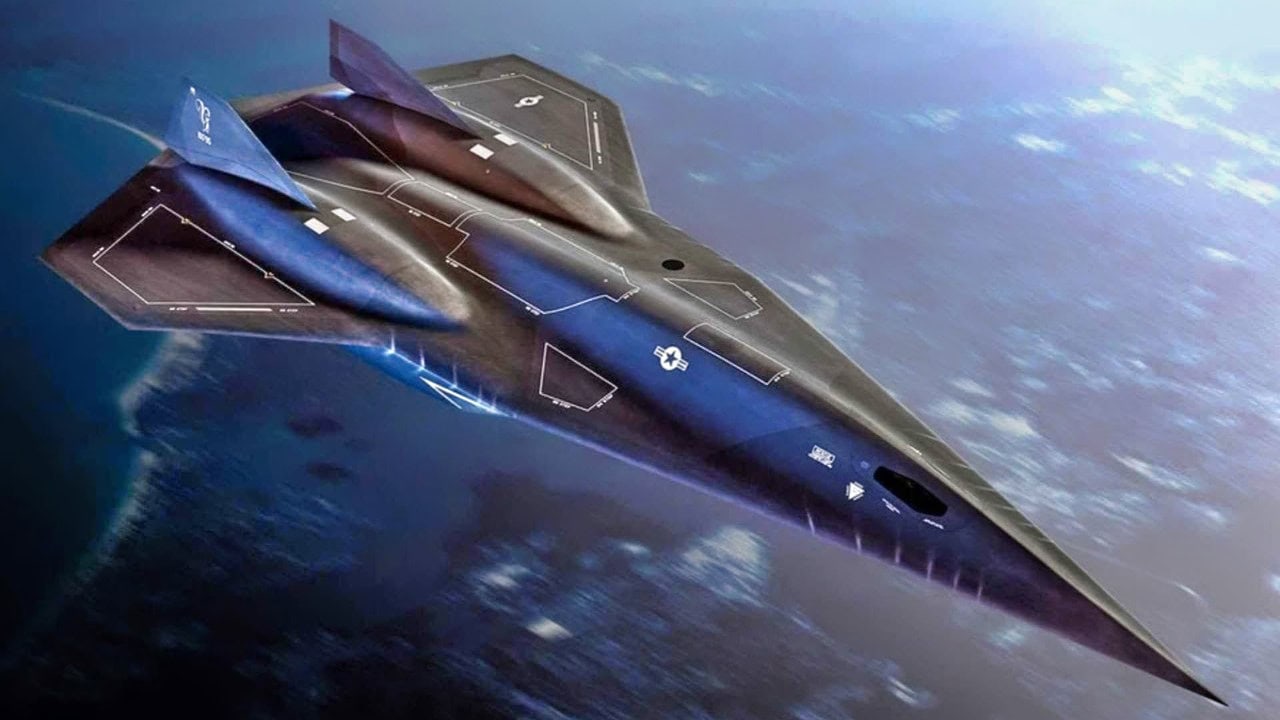
SR-72. Image Credit: Creative Commons.
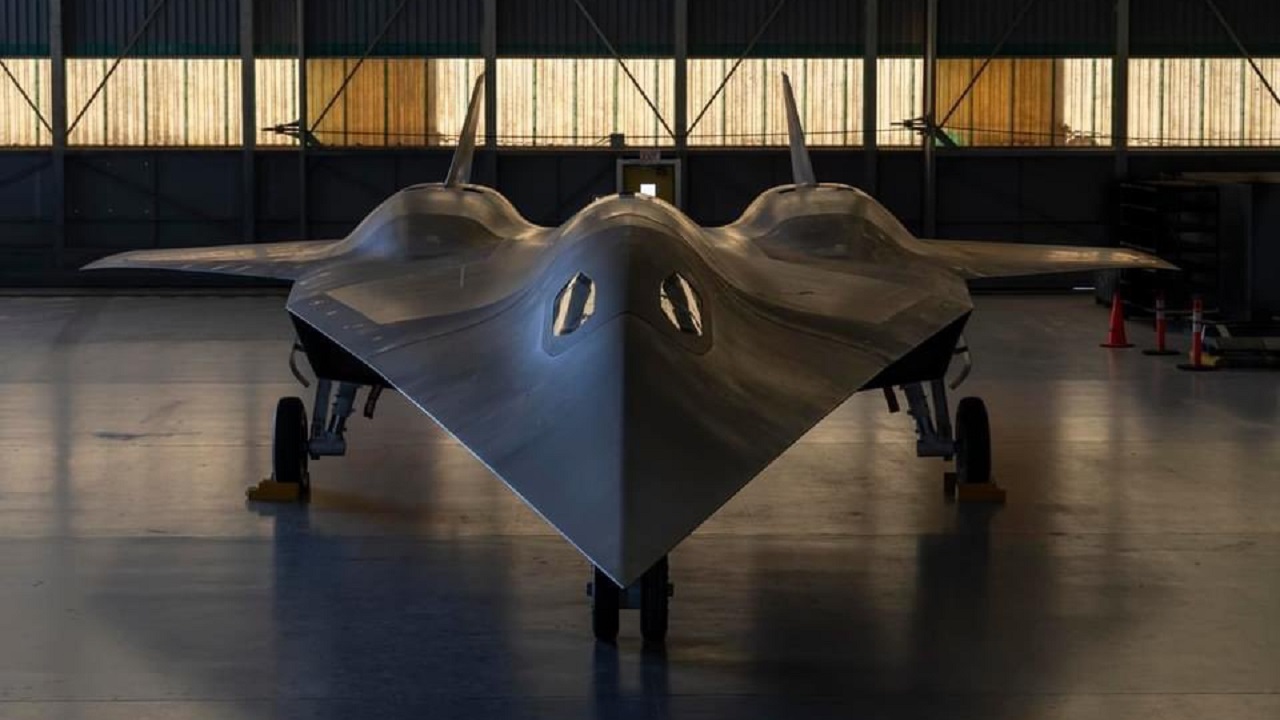
SR-72. Image Credit: Lockheed Martin.
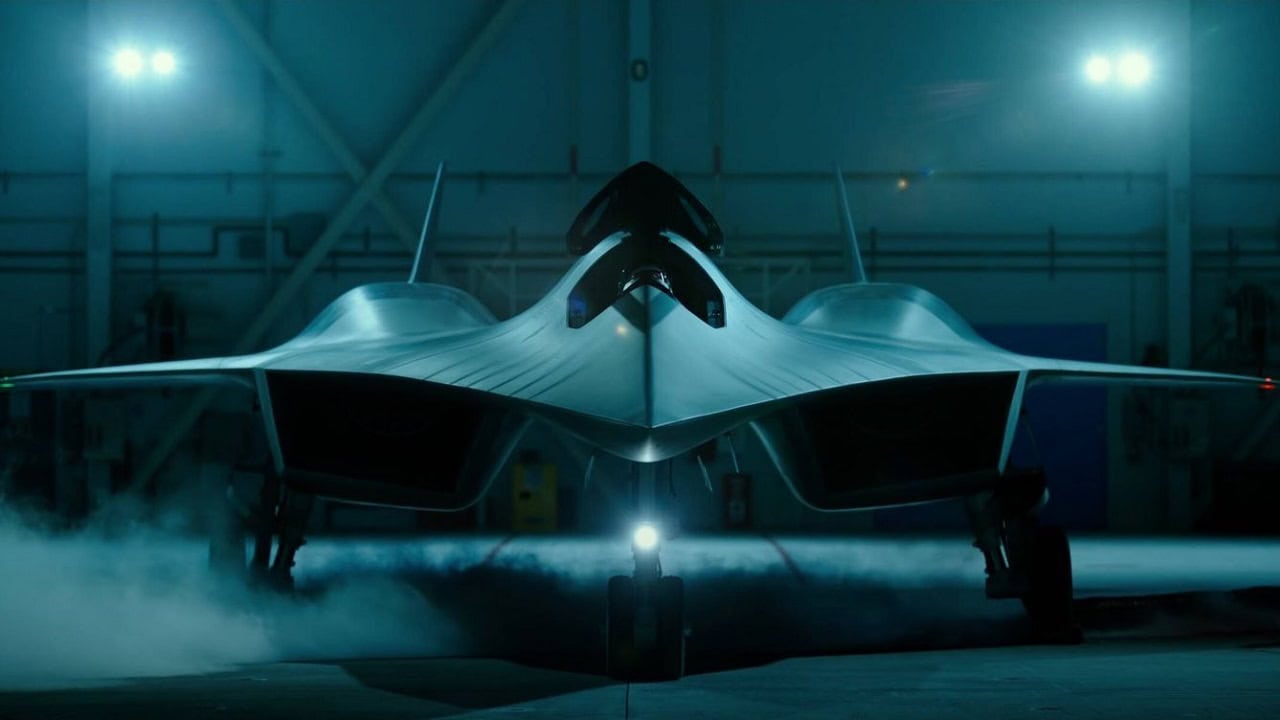
SR-72 Darkstar. Image Credit: Computer Generated Image.
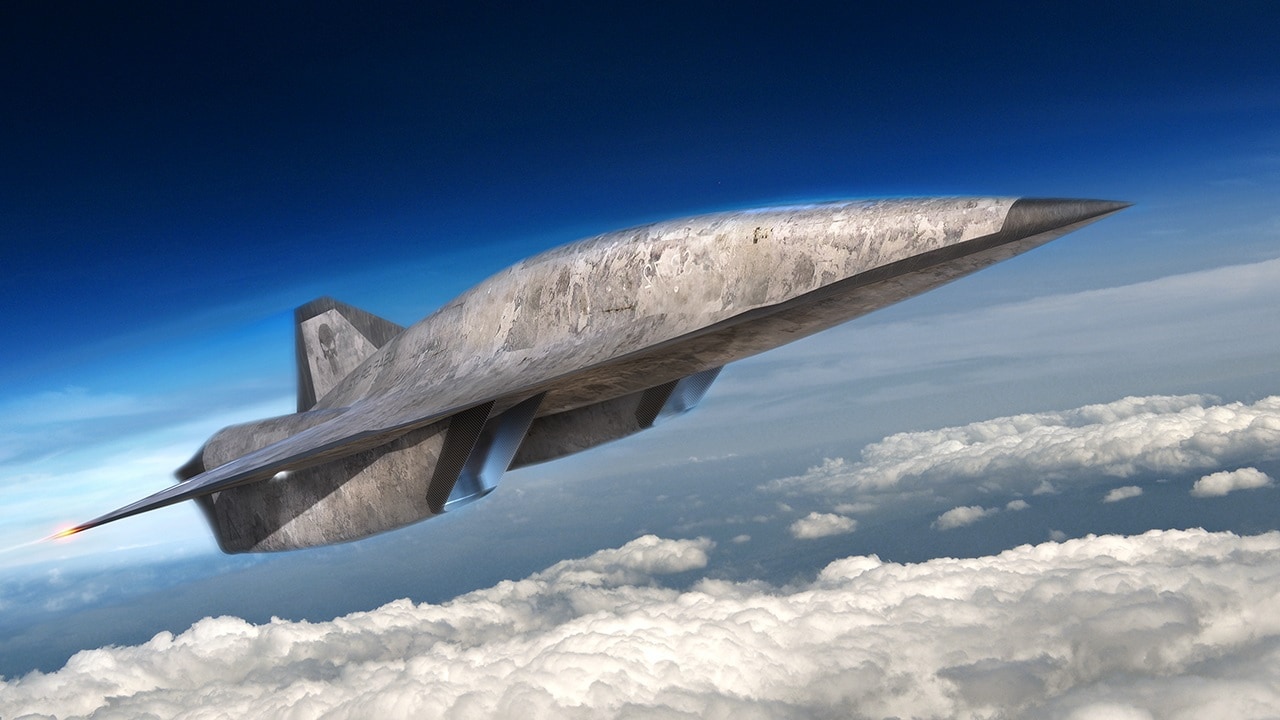
SR-72 artist rendering. Image Credit: Creative Commons.
Consider the simple, self-evident value of pure speed in war. A hypersonic platform could conduct attack missions and intelligence, reconnaissance, and surveillance (ISR) operations at speeds seemingly impossible for enemy air defenses to track or target.
A projectile traveling at hypersonic speeds can be extremely difficult, if not impossible, for any ground-based radar to establish a continuous target track, simply because it can travel too quickly from one radar field of view to another. This of course holds true for hypersonic drones and manned jets as well.
The ability to fly, survey, network, and attack at hypersonic speeds would only increase the detection challenges for ground-based air defenses.
Air Attack at Mach 6
A hypersonic drone could enter enemy airspace, gain critical intelligence, and exit much too fast for an adversary to detect, thus helping secure rapid-strike capability.
Hypersonic speed would not only increase survivability for pilots but would add additional dwell time for extended attack options.
If networked sufficiently, a hypersonic drone and stealthy attack fighter could complement one another in air combat operations.
A hypersonic drone could enter enemy airspace and perform key targeting to identify areas of attack, locate enemy air defenses, and guide a manned hypersonic SR-72 Darkstar platform to integrate human decision-making at hypersonic speeds.
About the Author: Kris Osborn
Kris Osborn is the President of Warrior Maven – Center for Military Modernization. Osborn previously served at the Pentagon as a highly qualified expert in the Office of the Assistant Secretary of the Army—Acquisition, Logistics & Technology. Osborn has also worked as an anchor and on-air military specialist at national TV networks. He has appeared as a guest military expert on Fox News, MSNBC, The Military Channel, and The History Channel. He also has a Masters Degree in Comparative Literature from Columbia University