
NORAD intercepts 2 Russian maritime patrol aircraft near Alaska, Canada
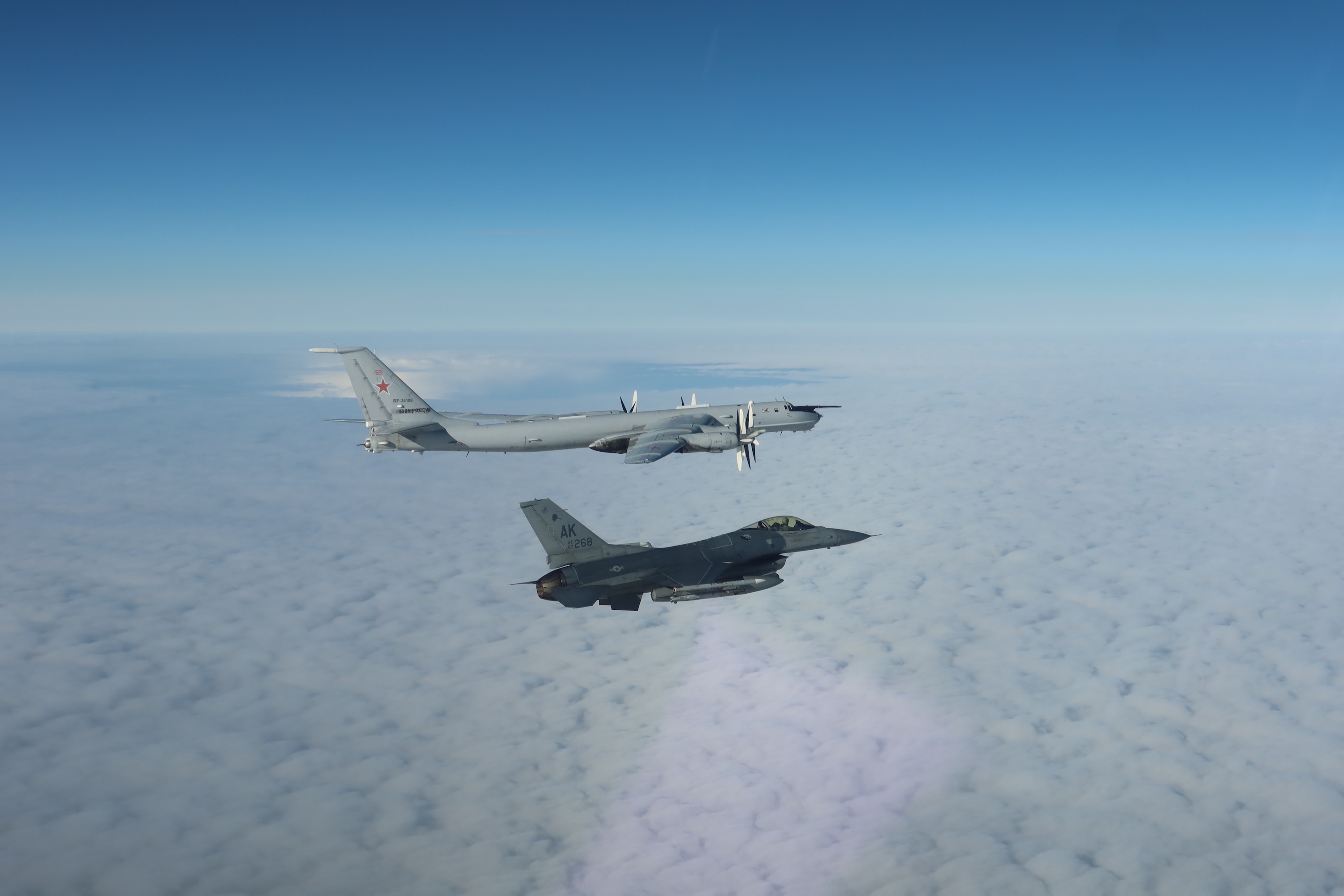
The North American Aerospace Defense Command detected and tracked two Russian Tu-142 maritime patrol aircraft operating within the Alaskan and Canadian Air Defense Identification Zones on Wednesday.
The command dispatched two U.S. Air Force F-35 Lightning II fighter aircraft, two F-22 Raptors, four KC-135 Stratotankers, one E-3 Sentry AWACS aircraft, two Canadian CF-18 Hornets and one CC-150 Polaris tanker to positively identify, monitor and intercept the Russian aircraft, according to a NORAD release.
The Russian aircraft remained in international airspace and did not enter American or Canadian sovereign airspace.
“This Russian activity in the Alaskan and Canadian ADIZ occurs regularly and is not seen as a threat,” NORAD stated in the release.
The Tu-142 is a long-range Russian maritime patrol and antisubmarine warfare aircraft developed by the Soviet Union and operated by the Russian Navy, capable of conducting extended overwater missions.
An ADIZ begins where sovereign airspace ends and extends into international airspace, requiring identification of approaching aircraft in the interest of national security, according to NORAD.
The intercept follows a similar event last month, when on Feb. 19, NORAD tracked five Russian military aircraft, including two Tu-95 bombers, two Su-35 fighters and an A-50 early warning aircraft, operating near Alaska’s ADIZ. Two U.S. F-16s and two F-35s, supported by one E-3 and four KC-135s, escorted the formation until it left the area. All aircraft remained in international airspace and were not considered a threat, NORAD stated.
NORAD, headquartered at Peterson Space Force Base in Colorado, employs a layered defense network of satellites, ground-based and airborne radars and fighter aircraft to detect and track aircraft and determine appropriate responses.
NORAD detected and tracked two Russian Tu-142 maritime patrol aircraft operating within the Alaskan and Canadian Air Defense Identification Zones on Wednesday. U.S. Air Force and Canadian Armed Forces dispatched multiple aircraft to intercept and monitor the Russian aircraft, which remained in international airspace and were not deemed a threat. This incident follows a similar event last month involving five Russian military aircraft.
- NORAD tracked two Russian Tu-142 aircraft in ADIZ
- U.S. and Canadian aircraft were dispatched to intercept
- Russian aircraft did not enter sovereign airspace
- This activity is regular and not considered a threat
- Similar event occurred last month with multiple Russian military aircraft