
Over 1000 Ukrainian Drones Reached Moscow During the Elections — Vulnerability of Russian Air Defense in 2026
 Dmitri Volkov
More than 1000 Ukrainian Drones Reached Moscow During the Elections — Vulnerability of Russian Air Defense in 2026
More than a thousand Ukrainian drones, according to reports from the Associated Press and other international outlets, were launched at Russian targets over the weekend of September 19–20. The Russian capital and the Moscow region came under attack on the last day of the State Duma elections. In the official narrative, this appears as yet another "massive attack," which the air defense system reportedly repelled almost entirely. In military reality, however, what matters more is that the Ukrainian side demonstrated the ability to force Russian defense to simultaneously cover the front, oil infrastructure, and the political center of the country.
Scale is More Important than Interception Rates
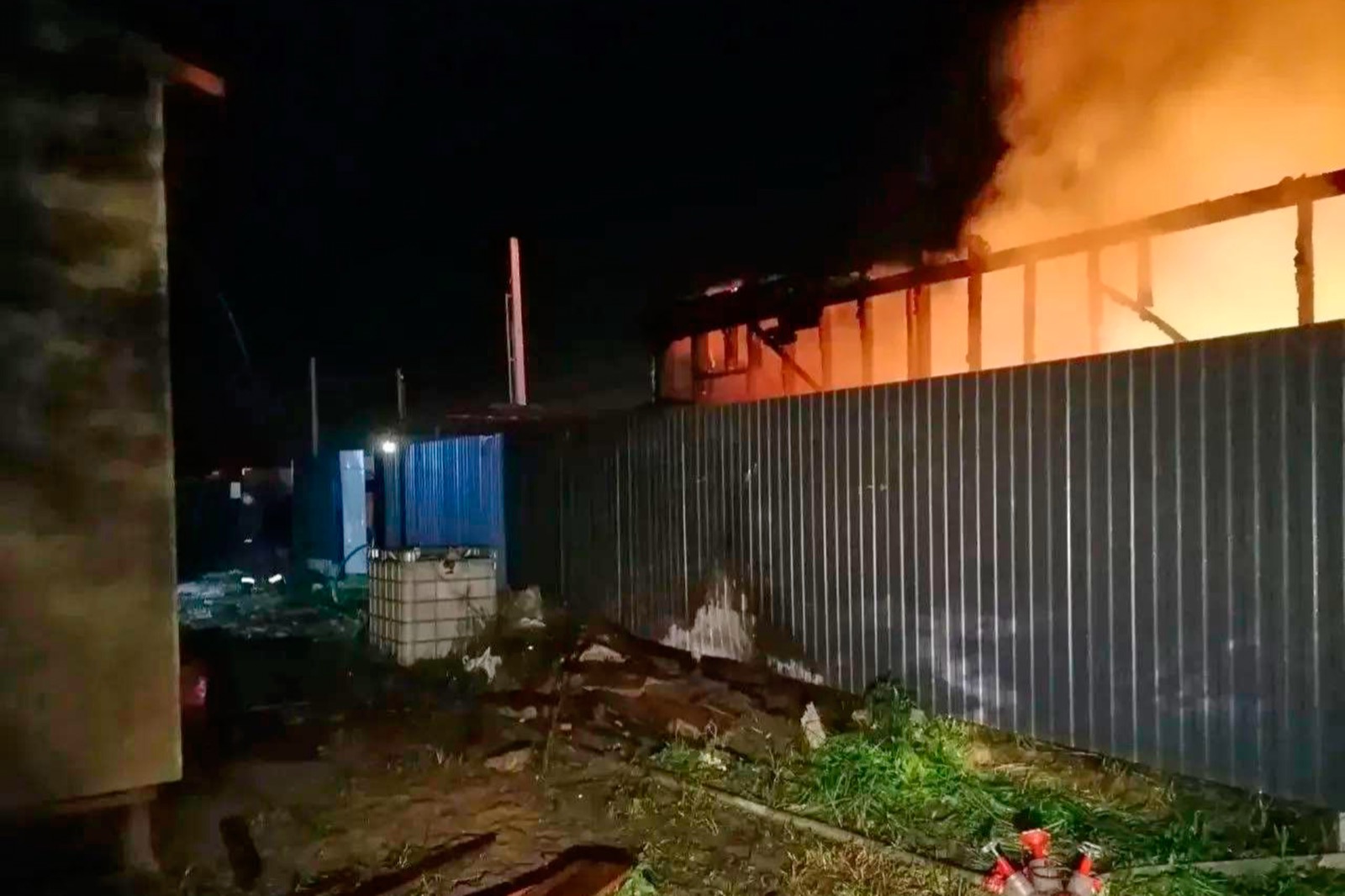
Moscow reported intercepting a significant portion of the targets, while Ukrainian sources claimed it was the largest attack on the Russian capital to date. These figures cannot be mechanically added or compared: the parties use different counting methodologies, and independent verification of each episode is impossible. But even a minimally cautious conclusion is evident. For defense, it does not matter decisively how many devices were destroyed far from the target if hundreds of objects simultaneously create an overload of detection channels, calculations of anti-aircraft systems, and civil aviation.
The Russian air defense was built around the layered architecture of the S-300, S-400, "Pantsir," and radar systems. It is effective against a limited number of predictable targets and expensive missiles, but a mass raid of cheap long-range UAVs changes the economics of interception. Launching a Ukrainian drone is significantly cheaper than a missile interceptor. Therefore, Kyiv's task is not to break through every layer but to force Moscow to expend expensive munitions, redeploy systems, and reveal radar positions. This is no longer a duel of individual systems but a competition of production cycles.
Election Turned Strike into a Psychological Pressure Operation
The timing of the attack has its own significance. On election day, the Kremlin sought to demonstrate the country's manageability and the absence of a direct threat to the central regions. Arrivals, fires, and air traffic restrictions in the Moscow region undermined this demonstration of normalcy, even if the material damage was limited. In Soviet and Russian military tradition, influencing the political will of the opponent has always been regarded as a separate outcome of a strike. Now the same principle is applied to Russian society.
This does not mean that Ukrainian drones can paralyze state governance. The Russian political system is centralized enough to continue the elections, hide inconvenient details, and declare the attack a terrorist act. However, centralization has a downside: the more power ties its legitimacy to control over territory and airspace, the more costly each public episode of penetration becomes. The Kremlin can ban independent filming, but it cannot eliminate the need to protect thousands of kilometers of infrastructure.
The Problem is Not Just with Drones
The Russian army is forced to choose between several incompatible tasks. The front requires constant coverage of headquarters and warehouses, border areas need protection from small drones, while Moscow and oil refineries require increasingly dense defense. Removing a system from one direction creates a gap in another. In 2024–2025, Moscow compensated for individual breaches by enhancing electronic warfare and mobile fire groups. But electronic suppression depends on terrain, frequencies, and navigation stability, and mobile groups cannot replace a continuous radar field.
Here, institutional weakness manifests itself, rather than a lack of a specific missile. The Russian doctrine long assumed that strategic depth was protected by distance and control of the airspace of neighbors. Ukraine has shattered this assumption through the serial use of long-range devices and reconnaissance via open channels. If previously a single strike on Moscow could be interpreted as an exception, then an attack involving over 1000 drones turns the exception into a repeatable burden on the system.
What This Means for the War in 2026
In the near term, Russia is likely to strengthen the defense of the capital, expand the surveillance network, and simultaneously increase strikes on Ukrainian energy and cities. Such a response is already evident in reports of intentions to intensify attacks on Kyiv. However, mirror escalation does not solve the underlying problem: it does not make Russian air defense cheaper and does not reduce the number of objects that need to be protected. Each new battery around Moscow draws resources from the front, and each additional strike on Ukraine increases the political motivation to continue long-range attacks.
The main effect of the operation is not the destruction of a single object, but the change in the distribution of risk. The Russian leadership must now consider that elections, military holidays, and major state events can become convenient moments to demonstrate vulnerability. Official statements about the near-total destruction of targets will continue, but they do not answer the question of the cost of interception and how many systems had to be withdrawn from the front line. Russian air defense will retain significant combat capability. However, in 2026, it will no longer guarantee the strategic inviolability of the capital — and this limitation will accumulate if Russia does not find an industrially cheap way to close the sky.
Sources
- Associated Press, Ukraine fires over 1,000 drones at Russia, including largest-ever attack on Moscow, September 20, 2026.
- The Guardian, Ukraine war briefing, September 21, 2026.
- Institute for the Study of War, Russian Offensive Campaign Assessment, September 20, 2026.
- Ukrainian Truth, data on the Russian attack with 172 drones and air defense operations, September 21, 2026.
Over 1000 Ukrainian drones attacked Russian targets in Moscow and Moscow Oblast during the State Duma elections on September 19-20, 2026. The attack highlighted vulnerabilities in Russian air defense systems, which struggled to manage the simultaneous threat posed by numerous drones. This operation aimed to exert psychological pressure on the Russian government during a significant political event, demonstrating a shift in the dynamics of drone warfare and air defense effectiveness.
- Over 1000 Ukrainian drones were launched at Russian targets during the elections.
- The attack occurred on September 19-20, 2026, coinciding with the State Duma elections.
- Russian air defense claimed to intercept a significant portion of the drones, but the attack demonstrated vulnerabilities in their defense system.
- The operation aimed to create psychological pressure on the Russian government during a critical political event.
- The scale of the attack indicates a shift in the dynamics of air defense and drone warfare.