
Patriot and €4.9 Billion 2026 — Europe's E5 Air Defense for Ukraine Remains Incomplete
 Dr. Klaus Weber
Patriot and €4.9 Billion 2026 — Europe's E5 Air Defense for Ukraine Remains Incomplete
On October 26, the Council of the European Union mobilized €4.9 billion from the European Peace Facility for Ukraine. At the same time, France, Germany, Italy, Poland, and the United Kingdom promised additional air defense and new winter aid packages in Paris. The political message is clear. The military substance is not. Europe is increasing its payments, but it has not yet created a joint air defense capability that could reliably meet Ukraine's needs this coming winter.
The New European Commitment
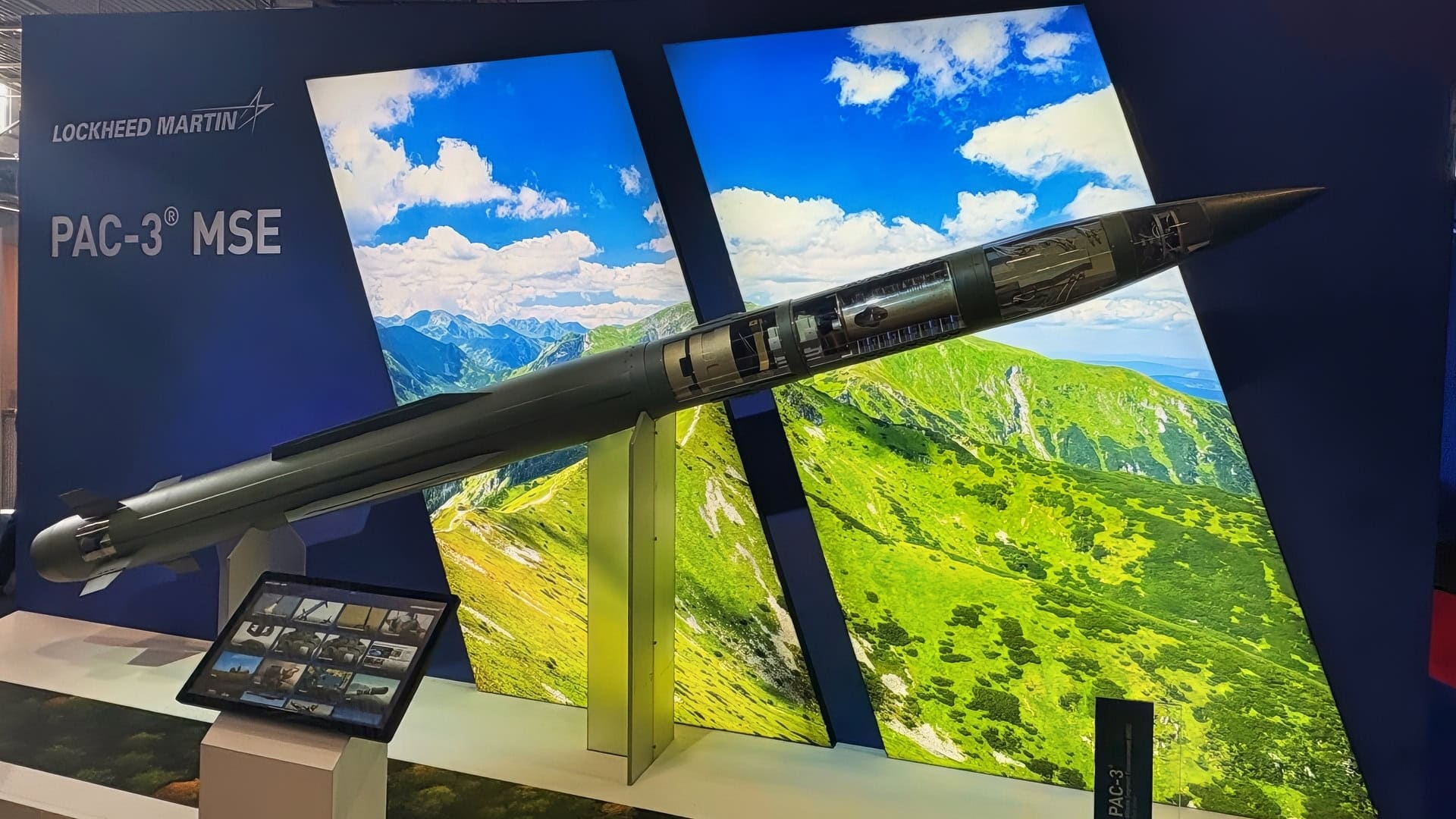
The E5 group stated in Paris that it would strengthen Ukrainian air defense and work with Kyiv on a complementary system to the existing, predominantly American Patriot batteries. Boris Pistorius referred to winter packages while emphasizing that Washington must continue to provide military supplies, reconnaissance, and satellite data. It is in this aside that the strategic core lies. Europe promises more, while the crucial enablers continue to come from the United States.
The €4.9 billion from the EPF is politically significant, but it should not be confused with €4.9 billion of new air defense. According to the Council, the decisions partly serve to reimburse already delivered military aid and additionally finance the EU Military Assistance Mission in Support of Ukraine. This is an important funding mechanism, but not an immediate delivery of interceptors, radars, or fire control systems. Allocations are not deliveries.
Patriot Remains Europe's Structural Weakness
The European debate on strategic autonomy continues to fail due to a simple technical fact. Patriot is not a single vehicle that can be ordered on short notice and sent to the front. A battery requires radar, launchers, command and control, trained crews, spare parts, and above all, a continuous supply of PAC-3 interceptors. The production of this ammunition is limited, and the United States retains control over key components, export licenses, and supply priorities.
This creates an institutional paradox. Germany, France, Italy, Poland, and the United Kingdom can jointly formulate political statements and mobilize funds. However, they cannot operate a fully European Patriot chain without American approval. The E5 coordination improves the distribution of scarce resources but does not replace a joint procurement policy, European missile production, or integrated command. Europe acts as a coalition of buyers, not as a defense producer.
The Industrial Response Comes Too Late
The European Commission is trying to close this gap with long-term industrial policy. The EU-Ukraine defense industry partnership agreed upon in July 2026 aims to expand joint drone and defense drone production by the end of 2026. For anti-ballistic missiles, a target of 2028 is even mentioned. This makes sense, but it describes a timeline that does not align with the Ukrainian winter problem. Russian attacks on energy facilities require interception capability in weeks and months, not in two years.
Ukraine brings operational experience that Europe's defense industry urgently needs. Its armed forces have adapted drones, electronic warfare, and distributed sensors under real combat conditions. However, innovation is not the same as mass. A successful defense drone can counter part of the threat; it does not replace Patriot against ballistic missiles or American satellite reconnaissance. Those who want to turn the Ukrainian experience into a European air defense must finance testing, standardization, and series production simultaneously.
What Needs to Change Strategically
First, the E5 group needs a common priority list ordered by military effectiveness rather than national visibility. Second, European states must disclose their stocks of Patriot missiles and create a binding rotation plan for Ukraine. Third, the EU must evolve the EPF from a reimbursement instrument to a multi-year procurement instrument. A reimbursement to member states may be politically necessary; however, it does not create an additional battery.
Fourth, the EU-Ukraine partnership should not remain limited to drones. European companies must gain access to Ukrainian test data while Kyiv is integrated into joint development programs of the European Defence Fund and the future European Defence Industry Programme. This would be a concrete contribution to European defense capability. Another summit without a joint production decision would merely be symbolic politics.
The European Dilemma
The Paris E5 summit and the €4.9 billion show that Europe has become politically more capable. However, they also show that capability and ability are not identical. Europe can coordinate the financing of aid, organize the reimbursement of already delivered systems, and make additional promises. In the critical bottleneck — the timely production and provision of modern interceptors — it remains dependent on Washington.
The bitter conclusion is therefore not that European support is worthless. It is that Europe has managed its dependency better by now. More money is necessary, but it is still not air defense. Ukraine needs Patriot, radar, and ammunition this winter; Europe is currently delivering mainly procedures, reimbursements, and timelines. It is this very difference between political promise and military availability that will determine the credibility of European strategic autonomy.
Sources
On October 26, 2026, the E5 Group, comprising France, Germany, Italy, Poland, and the United Kingdom, pledged to enhance Ukraine's air defense capabilities and mobilized €4.9 billion in support. Despite these commitments, Europe remains reliant on the U.S. for essential military supplies, particularly Patriot missile systems, as it struggles to establish a cohesive air defense strategy. The report emphasizes the urgency of addressing Ukraine's immediate defense needs amid ongoing Russian attacks.
- The EU mobilized €4.9 billion for Ukraine on October 26, 2026.
- The E5 Group pledged to enhance Ukraine's air defense capabilities.
- European nations are dependent on the U.S. for critical military supplies.
- The report highlights the gap between political promises and military readiness.
- The EU aims to develop a defense industry partnership with Ukraine by 2026.