
Patriot Missiles for Ukraine 2026 — Europe's Stockpiles Become a Strategic Reserve
 Dr. Klaus Weber
Patriot Missiles for Ukraine 2026 — Europe's Stockpiles Become a Strategic Reserve
A Time-Pressured Exchange
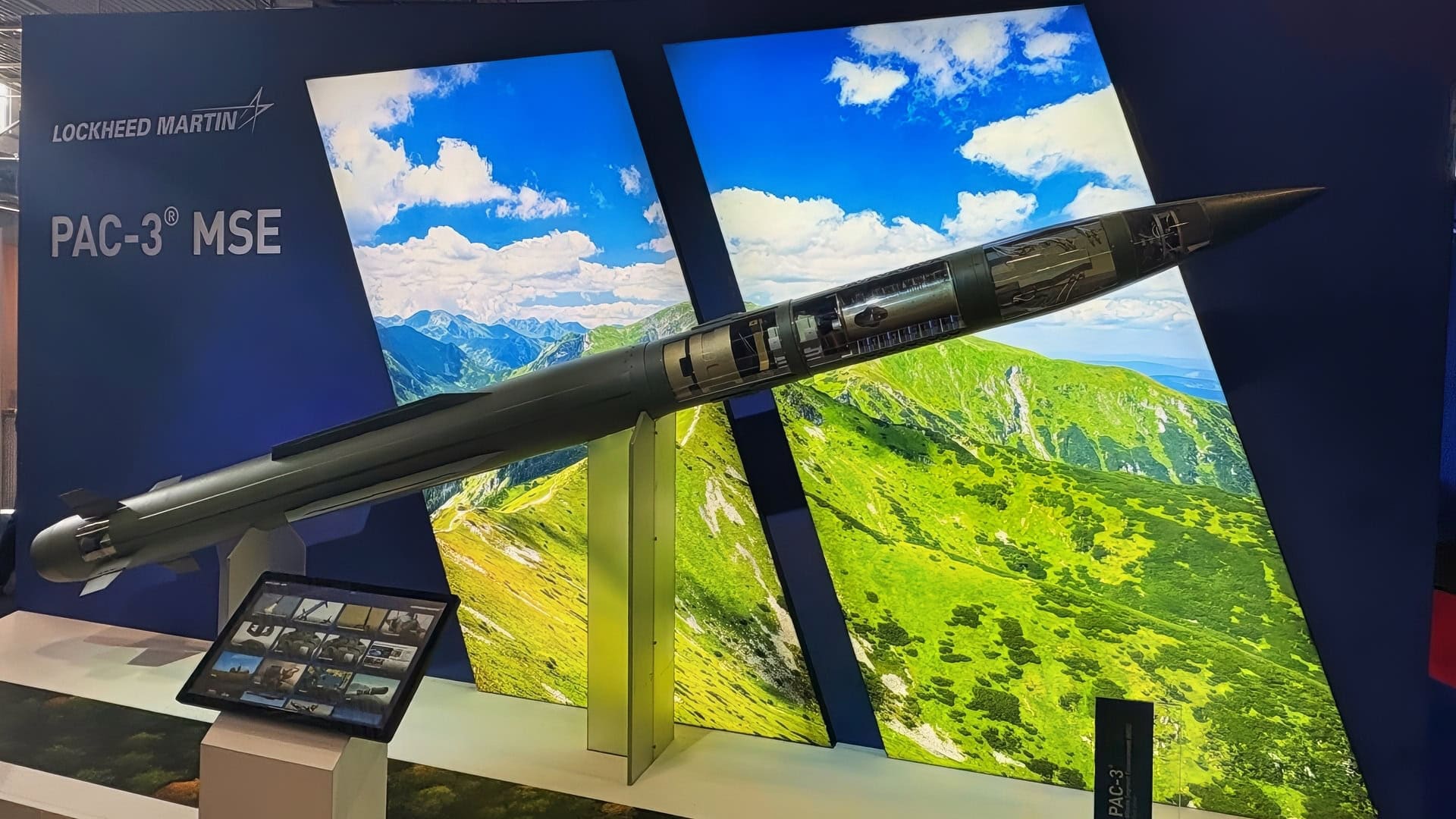
Ukraine is demanding Patriot interceptors from EU countries' existing stockpiles and offers to replace them later with missiles already contractually promised. This proposal from Ukrainian Defense Minister Yevhen Chmara at the EU Defense Ministers' meeting on September 29, 2026, is more than an urgent request for ammunition. It exposes Europe's defense policy conflict: Member states have systems but not enough ready reserves; they have credits but lack immediately available production capacity.
According to Defence Industry Europe, the missiles provided will be replaced by future deliveries from existing contracts. Politically, this sounds reasonable. Militarily, it is a credit against an uncertain industrial future. A PAC-3 MSE missile sitting in a European magazine tonight protects a Ukrainian city tomorrow night. A missile scheduled for production in 2027 does not.
Why Patriot Cannot Simply Be Redistributed
Patriot is not a single gun but a networked system consisting of AN/MPQ-65 radar, fire control center, launchers, and various guided missiles. The PAC-3 MSE is particularly relevant against ballistic targets. It employs a hit-to-kill approach and must directly hit a small, fast-moving target with high precision. This makes the missile expensive, complex, and not easily replaceable in the short term by any European alternative.
This creates a double risk for European operators. Those who give up missiles initially reduce their own depth. Those who do not give them up accept that Russian ballistic and aerodynamic attacks will overstretch Ukrainian air defense. The question is not whether Europe wants to show solidarity. The question is which threat it considers politically more acceptable: the immediate protection of Ukraine or a later gap in its own stockpiles.
The answer is further constrained by the American supply chain. PAC-3 MSE is manufactured in the United States; European users cannot double the production rate by their own decision. Even if Washington promises future deliveries, export approvals, prioritization, production lots, and American domestic needs remain decisive. Europe's so-called strategic autonomy thus ends with the question of who is actually allowed to build the replacement missile.
The $27 Billion Gap
Chmara linked the missile request to other priorities: air-to-air missiles, portable air defense systems, ammunition for Ukrainian F-16s, and affordable interception solutions against jet-powered Shahed drones. According to the Ukrainian Ministry of Defense, about one-third of the additional Ukrainian defense needs of $27 billion is accounted for by advance payments for drones, whose delivery is scheduled for early 2027. Therefore, the Ukrainian government is calling for EU credit funds planned for 2027 to be advanced and remaining SAFE funds to be used for Ukrainian procurement.
Here lies the crucial difference between financing and capability. Advance payments can utilize factories, order components, and stabilize supply contracts. However, they do not produce a PAC-3 MSE if the production line is already at capacity. The Commission's planned use of European SAFE funds for joint projects with the Ukrainian industry will only become militarily relevant if procurement, certification, and delivery occur faster than the Russian offensive campaign. Money is necessary; it does not gain time.
Europe's Institutional Problem
The proposal also shows that the EU still does not organize its instruments according to the logic of an air defense alliance. Member states purchase Patriot systems nationally, manage their ammunition stockpiles nationally, and decide nationally on transfers. However, the threat is cross-border. A Russian attack on Ukrainian energy and logistics nodes directly affects refugee movements, supply security, and the security situation at the EU's eastern border.
The NATO Air and Missile Defense can improve coordination, situational awareness, and deterrence. However, it does not replace common European stocks. This is precisely why the Patriot initiative is politically sensitive: it makes it clear that Europe does not have a common stock for a central defense need but rather national residual stocks. This is not a strategic reserve but a collection of national insurances.
Therefore, the EU must distinguish between three decisions. First, Ukraine needs immediate missiles, including a controlled release from European stockpiles. Second, the transferring states need binding and financed replacement deliveries. Third, Europe must develop an industrial strategy for interceptors that covers not only drones but also ballistic threats. Mixing these levels in a SAFE credit program produces a political promise but not yet air defense.
The Strategic Conclusion
The demand from Kyiv is militarily plausible and politically uncomfortable. It forces Germany, the Netherlands, Poland, Romania, and other Patriot operators to honestly assess the value of their own stockpiles. A system without enough PAC-3 MSE missiles is not a full capability; it is a launch platform with a limited shelf life.
Europe can reject Ukraine's request and protect its stockpiles. Then it may protect its accounting but not its security order. It can agree and hope for later US deliveries. Then it buys time for Ukraine but remains industrially dependent. The real test, therefore, is not whether Europe gives up some missiles. It is whether it turns this emergency into a common stock and its own production capability. Europe's dilemma remains: more money can finance the shortage, but only industrial capacity can end it.
Ukraine requested Patriot missiles from EU states during a defense ministers' meeting on September 29, 2026, offering to replace them later. This highlights Europe's defense policy conflict, as member states have systems but insufficient ready reserves. The PAC-3 MSE missile is particularly vital for Ukraine's air defense against ballistic threats, emphasizing the need for a coordinated European response to the ongoing conflict.
- Ukraine demands Patriot missiles from EU states for immediate defense needs.
- The proposal includes a plan to replace the missiles later with contracted deliveries.
- European states face a dilemma between immediate support for Ukraine and maintaining their own defense capabilities.
- The PAC-3 MSE missile is crucial for Ukraine's air defense against ballistic threats.
- The EU lacks a coordinated air defense strategy, relying on national stockpiles.