
Pentagon's 6-Month Review 2026 Shows Why NATO Europe Needs More Than Leopard 2
 Dr. Klaus Weber
Pentagon's 6-Month Review 2026 Shows Why NATO Europe Needs More Than Leopard 2
Six months. That is the timeframe that Pete Hegseth has given for the American review of troop presence, stationing, and bases in Europe. The number sounds administrative, almost harmless. In fact, it is the first serious timekeeper for a question that European governments have been answering rhetorically for years but have institutionally avoided: Can NATO Europe sustain conventional deterrence if Washington no longer treats its forces as a permanent security pension?
On July 29, Defense News reported that the Pentagon has formally begun the Europe force posture review announced by Hegseth in June. Elbridge Colby, Under Secretary of Defense for Policy, described the goal as an irreversible transition to European primary responsibility for conventional defense. Neither Hegseth nor Colby announced specific troop withdrawals, base closures, or relocations. This is precisely what makes the process politically significant: It is not the decision that is new, but the review mechanism that prepares future decisions.
Why the Review Is More Than an American Budgeting Tool
Hegseth's speech in Brussels on June 18 was unusually direct. He spoke of a return to NATO 3.0, of Europe's leadership role in its own conventional defense, of assured access, basing, and overflight rights. He pointed out that the U.S. has already reduced its troop strength in Europe to pre-2022 levels, with the redeployment of a brigade combat team in the previous year and a further reduction of 5,000 soldiers this year. This is not isolationism in the classical sense. It is conditionality of protection.
For Europeans, this distinction is uncomfortable. As long as Washington only spoke of burden-sharing, European capitals could respond with GDP percentages. Since the Hague Summit, the 5 percent target has been in the air, divided into 3.5 percent core defense and 1.5 percent security-related infrastructure. But a one percent target does not move a command post, fill an ammunition depot, or replace an American transport aircraft. At best, it creates fiscal space. Whether that translates into military capacity depends on procurement, personnel, maintenance, and command structure.
The European Capability Concept Remains Too Narrow
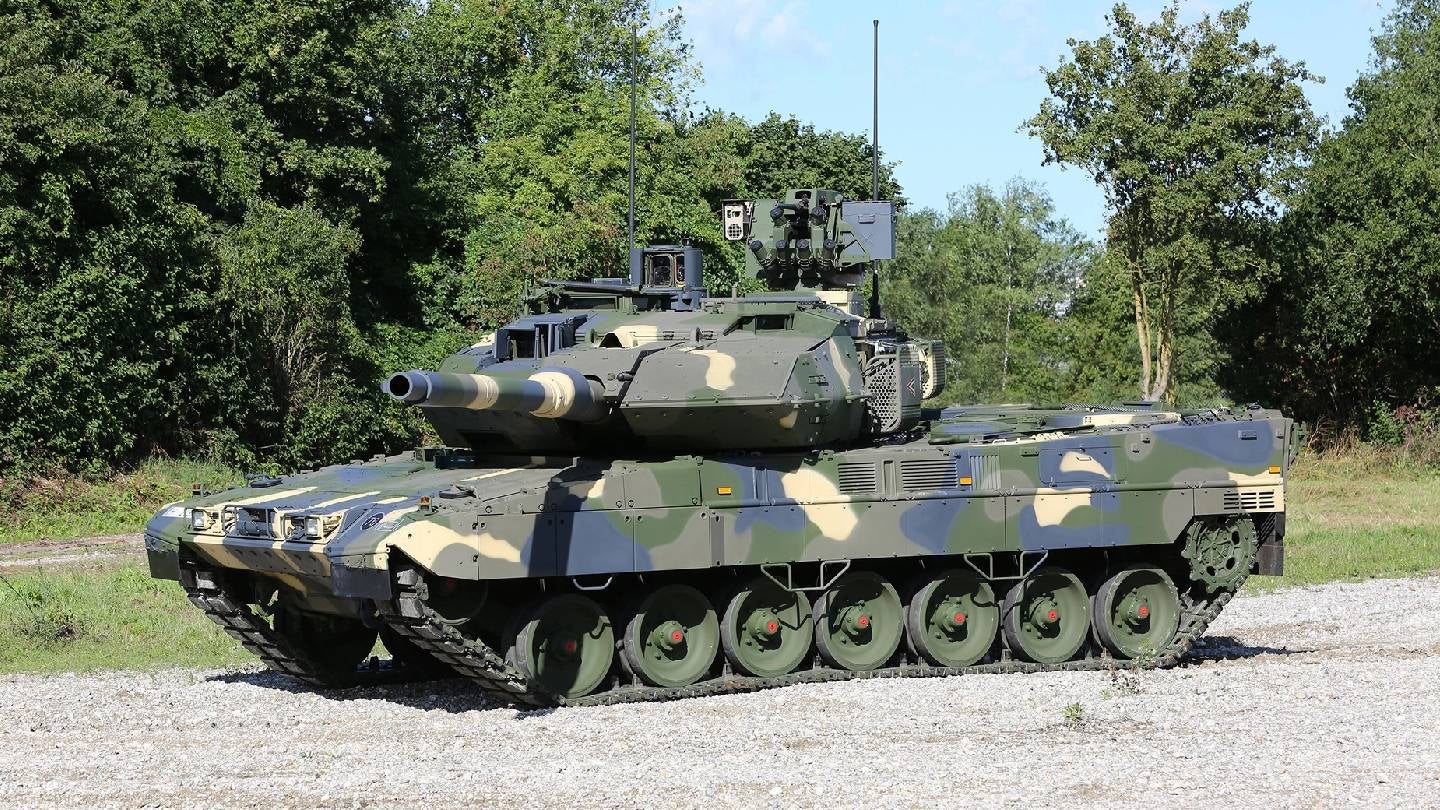
The image of the Leopard 2 is useful here because it simultaneously shows strength and deception. Europe has modern battle tanks, air defense systems like IRIS-T and SAMP/T, artillery, naval capabilities, and a growing defense industry. However, capability is not identical to platform ownership. A brigade on NATO's eastern flank needs spare parts, ammunition, engineers, air defense, reconnaissance, digital command capability, medical chains, and strategic transport. In many European armed forces, these unglamorous links are thinner than procurement brochures suggest.
The American review therefore aims at more than troop numbers. If the U.S. contributes less to the NATO force model, European units must not only be politically named but also be operationally ready. This is an institutional test. Germany can spend special funds, France can demand sovereignty, Poland can procure large quantities, and Finland can contribute mobilization capability. But NATO defense only emerges when these national logics are translated into planable, interoperable forces.
Ukraine Shows the Costs of Incorrect Division of Labor
The air war over Ukraine provides a precise counterexample to European self-soothing. RUSI analyzed at the end of July that Ukrainian F-16s have now shot down more than 2,500 Geran and Gerbera drones. At the same time, this deployment consumes flight hours, air-to-air ammunition, and maintenance capacity to an extent that is not sustainable for a small fleet. Defense News reported on July 30 that Ukraine operates about 39 F-16s out of around 79 pledged aircraft, supplemented by a few Mirage 2000-5 and Soviet legacy models.
The lesson is not that F-16s are unsuitable. On the contrary: precisely because they are flexible, they are overused. For waves of drones, which Russia, according to RUSI, feeds with more than 6,000 one-way attack drones per month, cheap SHORAD layers, flak, MANPADS, and intercept drones are often more efficient. High-quality combat aircraft should intercept cruise missiles, conduct precision strikes, and tie down Russian air power. If the division of tasks is organized incorrectly, the best platform becomes wear and tear.
This is where NATO relevance lies. Europe likes to discuss new major systems, but less so about the massing of cheap defense means, personnel commitments, spare parts cycles, and ammunition consumption. A European primary responsibility for conventional defense does not mean that Berlin, Paris, or Warsaw will receive more flags in NATO committees. It means that Europe must maintain its own escalation, air defense, and logistics chains under constant strain.
Germany Is at the Center of the Test
For Germany, the review is particularly uncomfortable. Geographically, industrially, and politically, the Federal Republic is the central hub for American and allied reinforcement. Ramstein, Grafenwöhr, Wiesbaden, Bremerhaven, and the transport corridors to the east are not abstract alliance symbols. They are the operating system of European defense. If Washington conditions access, basing, and overflight rights more strongly, then German reliability will no longer be measured solely by defense spending, but by approval capability, infrastructure speed, and military readiness.
The special fund has masked many procurement problems but has not eliminated them. It has enabled contracts but has hardly changed the planning and approval culture. The Bundeswehr can order additional Leopard 2, F-35, IRIS-T, and ammunition. But if barracks, depots, rail loading, cyber resilience, and personnel replenishment grow slower than political promises, the turning point remains a budget category.
The Real Decision Happens Before the Result Report
European governments will be tempted to wait out the six months and then respond to American recommendations. That would be the old reflex. Strategically wiser would be to formulate their own European offers before the review is completed: Which American tasks can realistically be Europeanized within two years? Which remain indispensable American tasks until 2030? Which capability gaps are so critical that joint procurement must take precedence over national industrial policy?
An honest list would be politically painful. It would show that Europe is spending more money but continues to depend heavily on the U.S. for air defense against ballistic missiles, strategic transport, space reconnaissance, command architecture, and ammunition sustainability. It would also show that not every European procurement wish is equally urgent from a defense policy perspective. But without this prioritization, the American review will define Europe's agenda instead of the other way around.
The upcoming NATO debate will not be decided between Atlantists and autonomists. It will be decided between states that can institutionally organize responsibility and states that can only finance responsibility as rhetoric.
The paradox remains: Europe needs American pressure to become less dependent on America. But once that pressure is translated into troop withdrawals, the room for adjustment will become smaller. More Leopard 2, more F-35, and higher percentages are necessary. They are just not a substitute for a European defense system that functions under strain.
Sources
- Defense News, July 29, 2026, Pentagon has kicked off review of US force posture in Europe.
- U.S. Department of War, June 18, 2026, Remarks by Secretary Pete Hegseth at the 2026 NATO Defense Ministerial.
- RUSI, July 2026, Four Years On, An Update on the Air War Over Ukraine.
- Defense News, July 30, 2026, Ukraine’s F-16s are being worn out from intercepting Russian drones.
The Pentagon initiated a review of U.S. force posture in Europe, emphasizing the need for European nations to take primary responsibility for their conventional defense. This review follows a reduction of 5,000 troops and aims to prepare for future military decisions. The ongoing air war in Ukraine underscores the necessity for Europe to enhance its military capabilities and logistics to effectively respond to threats.
- Pentagon's review aims to transition to European primary responsibility for defense.
- U.S. troop levels in Europe have been reduced to pre-2022 levels.
- European nations need to enhance their military capabilities and logistics to support NATO.
- The air war over Ukraine highlights the need for effective defense systems against drone attacks.
- Germany's role is central to NATO's defense strategy in Europe.