
PLA Air Force Intelligent Strike Planning System Exposed, Hundreds of Tactical Units Coordinating Strikes Enter Live Fire Testing Phase
 Li Minghui
PLA Air Force Intelligent Strike Planning System Exposed, Hundreds of Tactical Units Coordinated Strikes Enter Live Fire Testing Phase
On August 2, CCTV Military revealed a detail that is easily overlooked by clickbait titles in the fourth episode of "Winning," titled "Sky and Space Sword": the intelligent planning strike system developed by the team of Deng Jianping at a certain Air Force base has passed final live-fire testing and has been put into use in multiple Air Force missions. The South China Morning Post followed up on August 3, stating that this system is used to generate operational plans for actions involving over 100 units, capable of filtering targets, allocating firepower, and coordinating attack waves. In my opinion, this is more noteworthy than simply showcasing a new aircraft, as it exposes the real pressure the PLA Air Force faces in shifting from platform expansion to task chain compression.
AWACS Rear Cabin and Algorithm System on the Same Chain
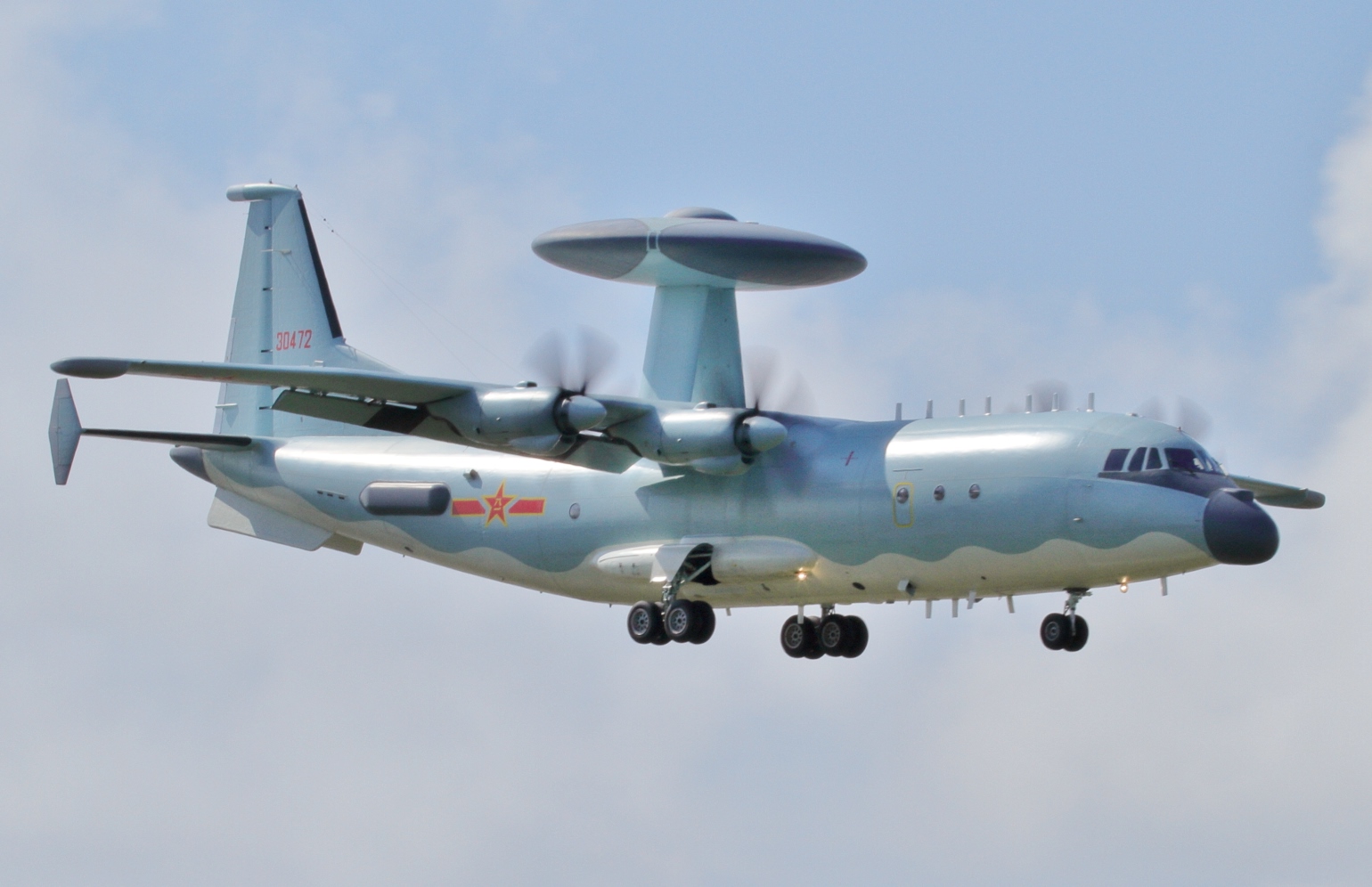
CCTV's original text places two scenes together: one is the airborne combat support Wang Weihong of the KJ-500A AWACS, who, under strong electromagnetic interference and mixed conditions of real and false low-altitude targets, judges the blue side's offensive intentions from weak signals; the other is the intelligent planning strike system in the desert Gobi. This arrangement is not random. The AWACS addresses the visibility and distribution of the situation, while the intelligent planning system resolves how to string together targets, firepower, penetration, and damage assessment into an executable strike chain after visibility is established.
In simple terms, the Air Force has been most easily discussed by outsiders regarding platforms like the J-20, J-16, and H-6K; however, in large-scale operations, the more aircraft there are, the more the problem resembles a scheduling system: which of the hundreds of targets to strike first, how to stagger dozens of formations, and how many minutes separate suppression of air defense, seizing air superiority, striking nodes, and assessing damage. CCTV's use of the phrase "hundreds of tactical units coordinating strikes to the second" is heavily promotional, but it indeed points to the bottleneck of modern air combat.
This System Solves Not Speed, But Accuracy
Deng Jianping stated in the program that the hardest part is not writing code or creating models, but thoroughly understanding battlefield logic; any slight error in the logic of the entire strike chain involving targets, firepower, penetration, and damage assessment could affect victory or defeat. This statement is more substantial than the phrase "AI empowerment." Airstrike planning is not a simple sorting problem; it must incorporate aircraft range, weapon range, enemy radar on/off patterns, electronic suppression windows, aerial refueling, return and diversion plans, and ammunition stockpiles into the same table. Any overly optimistic parameter could lead to subsequent waves colliding with already restored air defense firepower.
- CCTV disclosed a scale of hundreds of targets, dozens of formations, and hundreds of tactical units.
- The system has completed live-fire testing, and all munitions detonated successfully.
- The South China Morning Post quoted the program stating that the system has been used multiple times in training, with functions including target prioritization, attack wave coordination, and task allocation.
This number may not seem as exciting as "the first flight of a certain type of aircraft," but it is closer to the real workload in war. The U.S. Air Force has long relied on air operation centers, mission planning systems, and data links to package long-range bombing, electronic warfare, air superiority fighters, and unmanned platforms together. If the PLA Air Force wants to simultaneously handle airfields, air defense positions, ports, command nodes, and maritime targets in the Taiwan Strait, South China Sea, or Western Pacific, it must compress human staff operations under machine-assisted planning.
It Also Exposes the PLA Air Force's Weaknesses
I do not agree with the simplistic interpretation of this disclosure as "the Chinese Air Force's AI has matured." On the contrary, CCTV's choice to reveal this system indicates that human planning for large-scale air operations can no longer keep pace with training scales. Hundreds of targets and dozens of formations are not future concepts but current problems encountered in exercises. In other words, as the number of platforms increases, the weaknesses have shifted from aircraft performance to algorithms, data quality, communication resistance to interference, and command authorization.
The intelligent planning system has another challenge: whether the data it ingests is sufficiently realistic. The targets, flight paths, electromagnetic environments, and damage assessments on the exercise field can ultimately be preset; in real combat, the opponent will turn off their systems, deceive, relocate, disguise, and also attack their own communication nodes. If the system overly relies on static models, it can easily lose rhythm after the first round of strikes. To put it in the words of Li Minghui, it’s like equipping a sports car with a powerful navigation system, but if the road condition data is ten minutes late, no matter how fast the car is, it may take the wrong exit.
What It Means for the Taiwan Strait and Western Pacific
This disclosure, when viewed alongside recent reports of training in the Hong Kong Sea and South China Sea, emphasizes that the focus is not on a single airstrike but on the PLA's attempt to integrate AWACS, stealth strikes, far-sea training, plateau radar, and intelligent planning into a unified narrative of air and space operations. If a high-intensity crisis occurs in the Taiwan Strait, the PLA needs to simultaneously suppress Taiwan's air defense, blockade ports and airports, prevent external ships and aircraft from entering, and maintain reconnaissance over the eastern offshore. Such tasks cannot be solved by a single ace pilot; they rely on command chains, data links, and ammunition chains.
However, the publicly available information remains limited. We do not know whether this system is connected to real-time intelligence, nor do we know if it can recalculate plans under conditions of communication disruption, unstable satellite links, and high drone attrition. The real question is not whether it can ensure "all munitions detonate successfully" during exercises, but whether the PLA Air Force can reallocate second-wave firepower within minutes when the first wave of strikes does not meet expectations.
Source: Comprehensive reports from CCTV Military on August 2, "Winning," Episode 4 "Sky and Space Sword," and "Rare Disclosure! Keywords: System Instant Kill"; South China Morning Post report on August 3, "Chinese Military Reveals AI System for Planning and Coordinating Large-Scale Airstrikes."
The People's Liberation Army Air Force's intelligent strike planning system has completed live-fire testing and is now operational in various missions. This system, developed by a team at a specific base, coordinates actions involving hundreds of tactical units, enhancing the air force's operational capabilities. The focus is on integrating various aircraft and command systems to improve efficiency in complex combat scenarios.
- The intelligent strike planning system has completed live-fire testing.
- The system is used for operations involving over 100 units.
- It coordinates target selection, firepower allocation, and attack waves.
- The system addresses the challenges of modern air combat operations.
- The PLA Air Force is transitioning from platform expansion to task chain compression.