
PLA J-16 Accompanied by 14 Military Aircraft Appears in the Taiwan Strait, 2026 Gray Zone Operations Shift to Normalization
 Li Minghui
PLA J-16 Accompanied by 14 Military Aircraft Appears in Taiwan Strait, 2026 Gray Zone Operations Shift to Normalization
On October 7, the latest report released by Taiwan indicated that from 6 AM the previous day to 6 AM that day, 14 PLA military aircraft, 7 naval vessels, and 1 civilian ship were detected around Taiwan, with 9 aircraft entering Taiwan's so-called air defense identification zone. This was not a large-scale exercise, but its value lies precisely in its small scale and stable rhythm, which has become one of the most quantifiable signals in military observations of the Taiwan Strait.
The Grouping Logic Behind the 14 Aircraft
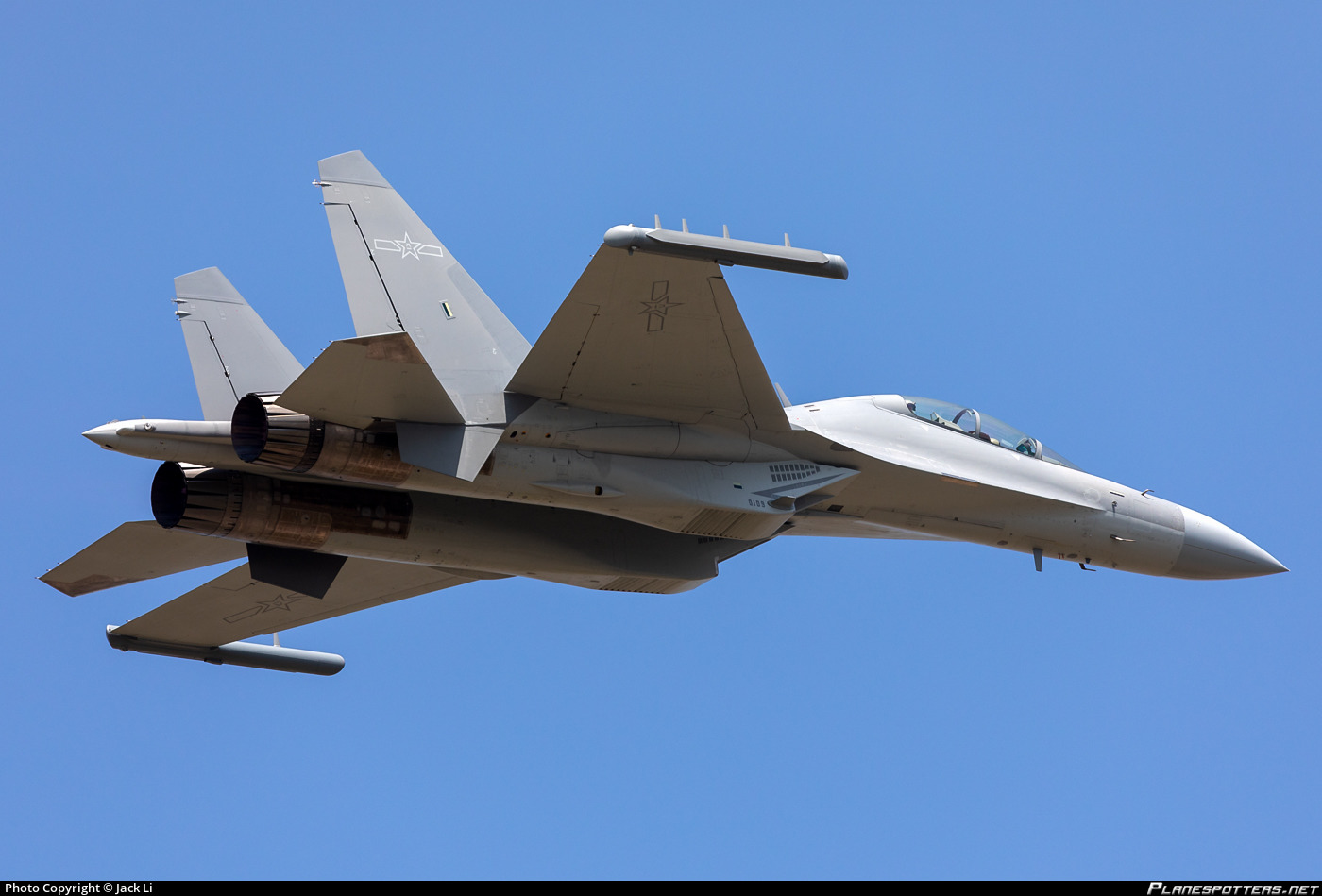
The Taiwanese military did not disclose the complete model composition of these 14 aircraft, so it is not possible to directly refer to all targets that day as J-16s. However, the J-16 remains a key model for understanding such operations. It is a twin-seat multirole fighter developed based on the J-11 series, capable of long-range air combat, anti-ship strikes, and electronic warfare missions. For the PLA, the value of the J-16 is not just how many missiles it can carry, but its ability to undertake medium- to long-range firepower delivery and airspace suppression within the system of the J-20, early warning aircraft, and land-based long-range firepower.
From the combination of 14 aircraft and 8 maritime platforms, this appears more like a sustained pressure and intelligence gathering operation rather than an attempt to create a one-time visual impact. The aircraft are responsible for quickly changing direction and altitude, while the vessels extend their presence time. In simple terms, the PLA is breaking down a single operation into many low-intensity, repeatable shifts, forcing Taiwan to deploy reconnaissance aircraft, vessels, and land-based radars for confirmation every day.
A Decrease in Numbers Does Not Equal a Decrease in Pressure
An easily overlooked detail is that the number of Chinese military aircraft entering Taiwan's air defense identification zone in the first seven months of this year has decreased by about 52% compared to the same period in 2025, but the activity level of PLA naval vessels has seen a significantly smaller decline. Looking solely at the number of aircraft, outsiders may easily conclude that "air pressure has weakened"; however, when military aircraft and vessels are viewed on the same table, the conclusion is not so simple.
Taiwanese news reports, citing data from Taiwan's defense department, stated that in the first seven days of October, there were already 25 recorded activities of Chinese military aircraft and 84 activities of naval vessels. Here, "activities" do not refer to combat sorties and cannot be directly converted into combat intensity, but it indicates that maritime presence is bearing more normalized pressure. A recent analysis by the South China Morning Post on the PLA's increased maritime use of the Z-10 attack helicopter also suggests that the PLA is working to adapt more platforms to the joint operational environment near coastal and island areas. A reduction in aerial activities may indicate adjustments in training rhythms, a shift in tasks to maritime platforms, or an effort to conserve the exposure frequency of high-value aircraft.
Actual Impact on the Taiwan Strait Situation
The most realistic effect of such actions is not simulating a landing but compressing Taiwan's judgment window. Taiwan needs to distinguish which targets are merely routine patrols and which may be related to maritime blockades, long-range fire support, or drone reconnaissance; the PLA can test Taiwan's response speed, radar activation patterns, and troop rotation by adjusting the ratio of aircraft to vessels.
From the perspective of military industry and system construction, this also shifts the question from "how many advanced fighter jets does the PLA have" to "how many effective groupings can be maintained in the long term." The performance of the J-16, J-20, and naval vessels is certainly important, but what truly consumes Taiwan's defense resources are the continuous expenditures on fuel, pilots, maintenance personnel, radar duty, and ammunition stockpiles. For the PLA, the cost of low-intensity normalized operations must be low enough to sustain for months or even longer before a crisis.
Therefore, the 14 military aircraft on October 7 should not be exaggerated as a new crisis point, nor should it be interpreted as a disappearance of pressure. It resembles a routine test, assessing system endurance rather than a single-day peak. What is truly worth questioning is whether, as the number of aircraft decreases and vessel activities remain high, the PLA is quietly shifting the main force of pressure in the Taiwan Strait from "air display" to a more sustained maritime and aerial joint blockade?
Sources
Taiwan News, Taiwan tracks 14 Chinese military aircraft, 8 ships, October 7, 2026; South China Morning Post, Why the PLA’s Z-10 attack helicopter is taking a bigger role at sea, October 5, 2026; GlobalMilitary, PLA Air Activity Around Taiwan Halved in 2026, but Its Warships Never Left.
On October 6-7, 2026, 14 Chinese military aircraft and 7 naval vessels were reported in the Taiwan Strait, with 9 aircraft entering Taiwan's air defense identification zone. This indicates a shift towards normalized gray zone operations by the People's Liberation Army (PLA), focusing on sustained pressure and intelligence gathering against Taiwan. The presence of J-16 fighter jets highlights the strategic importance of these operations.
- 14 Chinese military aircraft and 7 naval vessels were reported in the Taiwan Strait.
- 9 aircraft entered Taiwan's air defense identification zone.
- The presence of J-16 fighter jets indicates a shift towards normalized gray zone operations.
- Chinese military activities have been consistent, with 25 air activities and 84 naval activities recorded in the first week of October.
- The report suggests a strategic shift in PLA operations towards sustained pressure on Taiwan.