
PLA's Air Activities in the Taiwan Strait Decrease by 52% in 2026, Why Has Naval Patrol Not Decreased Accordingly?
 Li Minghui
PLA Air Activities in the Taiwan Strait Reduced by 52% in 2026, Why Naval Patrols Have Not Decreased Simultaneously
On October 3, Taiwan's defense department reported that within the previous 24 hours, 5 PLA military aircraft, 6 naval vessels, and 7 civilian ships were observed operating around the island of Taiwan, including 2 military aircraft that entered Taiwan's so-called southwestern and eastern air defense identification zones. The numbers themselves are not shocking, but when placed in the context of the annual trend, they reveal a change that is easily overlooked: a decrease in PLA air activities does not equate to a simultaneous reduction in military pressure in the Taiwan Strait.
Two Trends in the Same Table
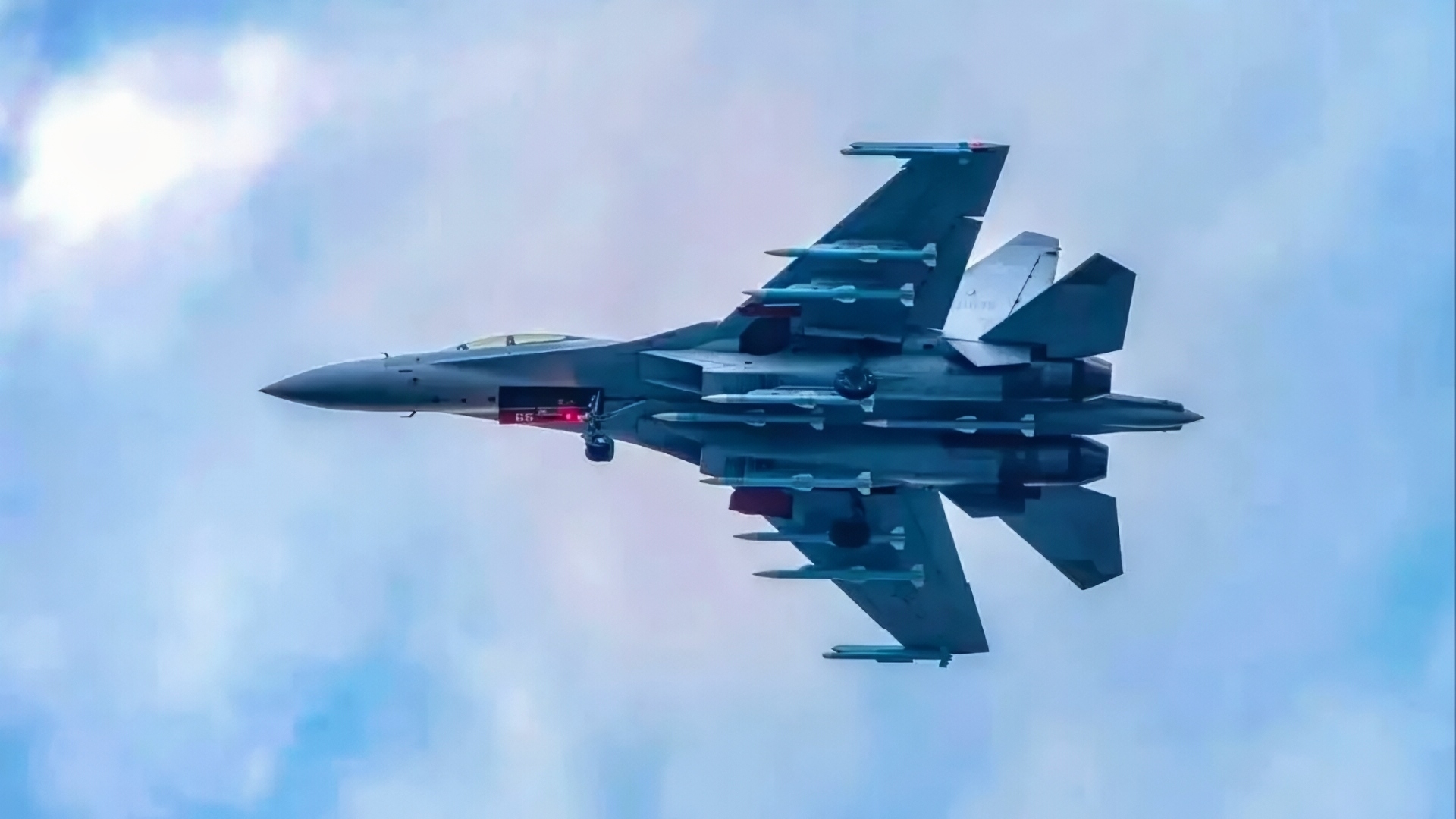
According to daily publicly available data compiled by Taiwan's defense department, the number of Chinese military aircraft entering Taiwan's air defense identification zone in the first seven months of 2026 decreased by approximately 52% year-on-year, while the number of PLA naval vessels recorded during the same period only decreased by about 7%. The report on October 3 also indicated that the total number of naval vessels and civilian ships was 13, significantly higher than the number of military aircraft. Statistics cited by Taiwanese media also showed that in the first few days of October, there had already been 11 recorded instances of Chinese military aircraft activities and 28 instances of naval activities.
It is important to clarify a statistical pitfall here. The air defense identification zone is not sovereign airspace; entering it once does not mean an interception or attack occurred; and "naval activities" typically also include navigation in broader maritime areas. Therefore, the two numbers cannot be directly treated as equivalents of combat intensity. However, the trend remains valuable: the high-frequency display of aerial platforms is becoming more selective, while naval platforms and civilian ships maintain a more stable presence.
Why Air Sorties Can Decrease While Naval Presence Cannot
From a cost perspective, high-frequency military aircraft patrols consume flight hours, engine life, and ground support resources, especially for twin-engine heavy fighters like the J-16, where the training and maintenance costs after carrying long-range munitions are not low. If the PLA has already established familiarity with the airspace in the Taiwan Strait through flight routes, time windows, and electronic reconnaissance, there is no need to repeatedly prove itself with the same number of sorties every day.
The logic for naval vessels is different. Maritime patrols not only serve as a deterrent but also continuously collect information on shipping lanes, ports, and the mobilization of Taiwan's maritime and aerial forces. The long-range radar, data links, and area air defense capabilities of the Type 055 destroyers and Type 052D destroyers allow them to take on command and sensor node roles within formations; coast guard and civilian ships extend this presence into law enforcement and gray zones. In simple terms, military aircraft are more like high-intensity short-term signals, while ships are low-intensity but more durable sensors.
What This Means for the Situation in the Taiwan Strait
First, the PLA may be shifting from "sortie competition" to "position competition." In the past, external observers were accustomed to judging pressure fluctuations based on the number of military aircraft each day, but if naval formations and civilian ships maintain a continuous presence, the focus of observation should shift to where they appear, how long they stay, and whether they coordinate with drones and shore-based firepower.
Second, Taiwan's response costs may not necessarily decrease with the reduction in military aircraft. The Taiwanese side reported that it still needs to deploy aircraft, naval vessels, and shore-based missile systems to monitor targets. As long as naval activities are distributed in multiple directions around the island, Taiwan must maintain a wide range of monitoring and readiness. For the defender, low-frequency but multi-directional targets can sometimes be more challenging to handle than large-scale aerial activities from a single direction.
Third, this does not prove that the PLA has completed some form of "new normal" deployment. Public data does not provide information on vessel types, mission groupings, and specific tracks, and Taiwan's daily reports are also influenced by changes in detection capabilities and statistical criteria. I am more inclined to view this as a sign of the reallocation of training and deterrence resources, rather than a simple cooling or escalation.
Key Indicators to Watch
What is most worth observing next is not the appearance of a few military aircraft on a given day, but three combined indicators: whether naval vessels shift from single-ship patrols to fleet operations, whether military aircraft conduct shorter but more targeted incursions in key maritime and aerial areas, and whether civilian ships maintain temporal and spatial coordination with military platforms. If all three occur simultaneously, the "total" pressure in the Taiwan Strait may not have decreased; it has merely shifted from easily quantifiable aerial sorties to a more difficult-to-identify sustained presence at sea.
The real question raised by this set of data is: when the PLA reduces visible aerial displays while maintaining a naval presence, are Taiwan and external forces witnessing a decrease in military activity, or are they adapting to a more economical, decentralized, and harder-to-warn mode of operation?
Sources
- Taiwan News, October 3, 2026, Taiwan's defense department reports on the activities of 5 military aircraft, 6 naval vessels, and 7 civilian ships around the Taiwan Strait.
- Global Military, 2026 compilation of trends in military aircraft and naval activities in the Taiwan Strait for the first seven months of 2026.
- CSIS, research on the definitions and characteristics of maritime gray zone operations.
On October 3, 2026, the People's Liberation Army (PLA) conducted activities around Taiwan, including 5 military aircraft and 6 naval vessels. Air activity decreased by 52% in the first seven months of 2026, while naval presence remained stable with only a 7% decrease. This indicates a potential shift in military strategy from air dominance to sustained naval operations in the region.
- PLA air activity around Taiwan decreased by 52% in the first seven months of 2026.
- Naval vessel activity only decreased by 7% during the same period.
- On October 3, 2026, 5 PLA aircraft and 6 naval vessels were reported active around Taiwan.
- The presence of government ships was noted alongside military vessels.
- The report suggests a shift from air to naval presence in the Taiwan Strait.