
Poland's 16 Billion Dollar Korea Path Shows Europe's FMS Trap by 2030
 Dr. Klaus Weber
Poland's 16-Billion-Dollar Korean Path Reveals Europe's FMS Trap by 2030
2029 or 2030 is not a delivery date, but a strategic polite refusal. When Lieutenant General Piotr Błazeusz, Poland's military representative to NATO, stated in Washington on June 11 that European countries are now being referred to such timeframes for American systems, he articulated more precisely than many ministers the actual problem of European rearmament. Europe is supposed to spend more. Europe is supposed to buy American. Europe is supposed to become combat-ready faster. These three demands no longer fit together.
The Polish case is particularly important because Warsaw is not seen as a skeptical special case. Poland is the European model student of deterrence policy, purchasing Abrams, F-35, Patriot, HIMARS, and at the same time South Korean K2 tanks, K9 howitzers, and FA-50 aircraft. When Poland states that American quality fails due to delivery times and local maintenance, it is not a rhetoric of French autonomy. It is the complaint of a country that cannot afford to wait for industrial political symbolism in a serious situation.
The Polish Paradox
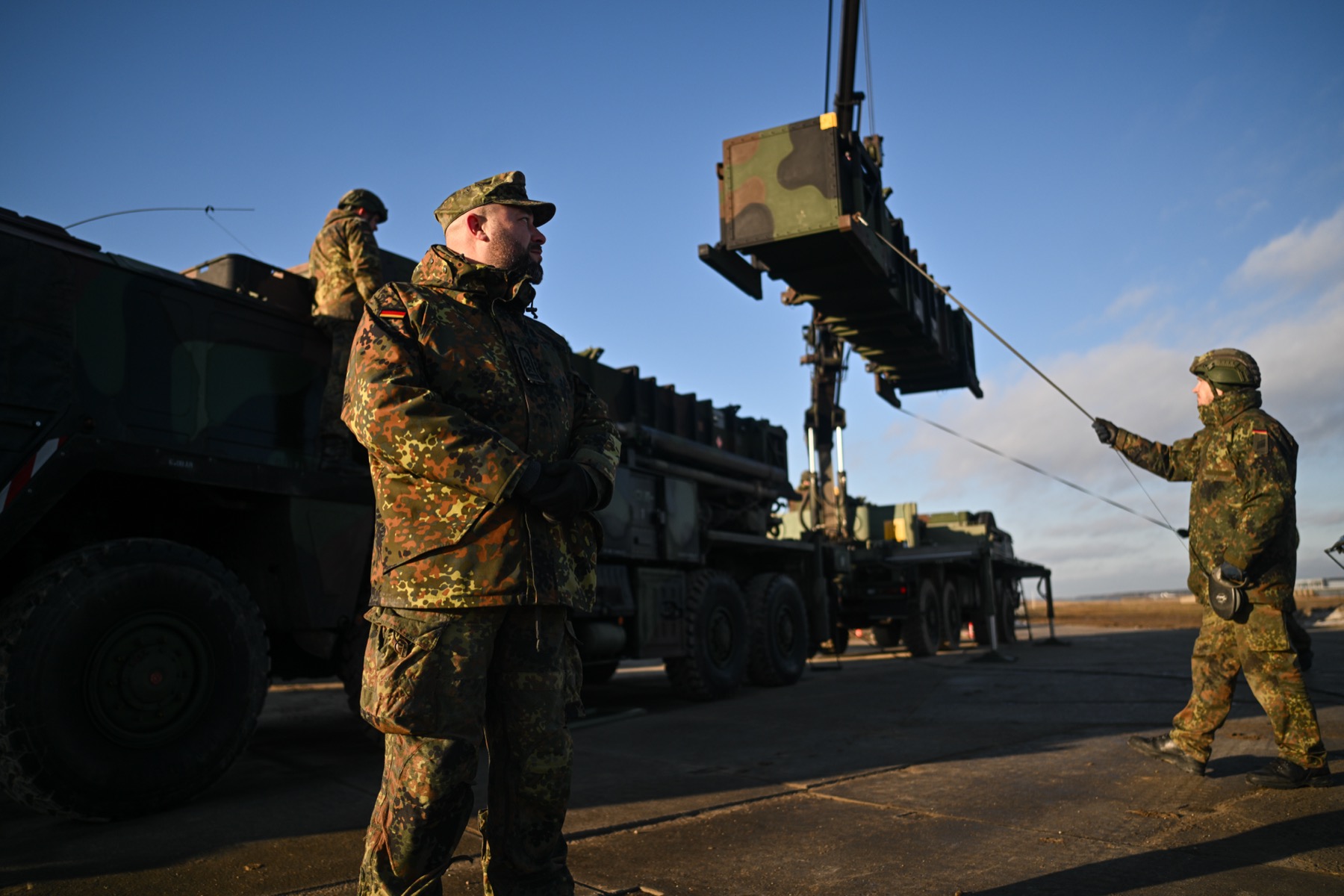
According to Breaking Defense, Poland has announced arms agreements worth around 16 billion dollars with South Korean companies between 2022 and 2025. This includes a contract worth 6.5 billion dollars with Hyundai Rotem for an additional 180 K2 battle tanks, which are to be delivered between 2026 and 2030. The number is not the only crucial factor. What matters is that South Korea is willing not only to sell equipment but also to establish repair and maintenance structures in Europe.
This is where the classic debate about European procurement often remains too superficial. It is not about whether an American system is technically superior. In many cases, it is. Patriot PAC-3, IBCS, F-35, or HIMARS are not political brand products, but real capabilities. However, a capability that only arrives at the end of the decade, has no spare parts within reach, and whose prioritization in a crisis is decided in Washington is only conditionally a capability for a frontline state.
Błazeusz described exactly this situation: Poland believes in US equipment and values its interoperability, but long delivery times and limited local maintenance have forced Warsaw to seek alternatives. This is not a break with America. It is an indication that interoperability without availability becomes an empty formula.
FMS as Industrial Policy
The institutional cause lies in the Foreign Military Sales system. FMS has long been a foreign policy tool: partners buy through the US government, gain access to sensitive systems, and are integrated into American logistics and training structures. However, under the America-First Arms Transfer Strategy from February 2026, the focus is visibly shifting. The Fondation pour la Recherche Stratégique describes that arms exports are increasingly understood as levers for American reindustrialization, production capacity, and supply chain resilience. The DSCA is thus becoming less a diplomatic mediator and more a component of American industrial policy.
This must be read soberly. Washington demands higher defense spending from European allies and sees foreign purchases as a capital influx for its own industrial base. For the United States, this is rational. However, for Europe, this creates an institutional conflict of objectives. Those who buy American do not automatically finance European capability. Those who buy European risk delays in integration, standardization, and NATO compatibility. Those who buy Korean gain speed but again create dependence on a non-European supplier.
Thus, Poland does not demonstrate the triumph of a procurement strategy but the escape from a poorly constructed triangle. American systems are technologically attractive, European programs are politically desirable, and Korean offers are timely useful. No single path resolves the problem that Europe wants to deter, integrate, and industrialize simultaneously.
The Ammunition Question Destroys the Old Certainty
The second pressure point is ammunition. Breaking Defense reported on June 3 that several allies had been informed of possible delays in American deliveries while the US replenishes its own stocks after operations in the Middle East. CSIS estimates cited in this context suggest more than 1,000 Tomahawk cruise missiles and 1,060 to 1,430 Patriot interceptors have been fired; for Patriot, a return to pre-war stock levels could take until mid-2029. Such numbers are more important than any summit declaration.
For here it becomes visible what European defense ministers are reluctant to state: The United States is not only a security guarantor but also a competing consumer of the same scarce goods. When Washington prioritizes its own stocks, it does not act irrationally. But Europe cannot simultaneously claim that the American supply chain is the fastest response to the Russian threat.
Patriot is the symbolic system for this. It protects Ukrainian cities, NATO airfields, and critical infrastructure. It is also expensive, scarce, politically prioritized, and industrially difficult to scale. At Eurosatory 2026, both Patriot and SAMP/T, along with new European defense concepts, will be prominently represented, according to Defense News. The trade fair image will suggest diversity. The strategic reality remains that Europe does not possess sufficiently deep domestic interceptor production to serve multiple theaters of war and its own deterrence simultaneously.
Why SAFE Only Partially Solves This Problem
The obvious answer is: Then Europe must buy European. This is correct but incomplete. EU programs like SAFE can pool financing and demand. They can also set political incentives to prefer European components and European manufacturing. What they do not automatically create are production lines, qualified labor, supply chains, testing capacities, and military standardization.
Here lies the difference between money and capacity. A credit program can enable orders. However, it cannot accelerate an interceptor if engines, seekers, or solid propellants are missing. It also cannot enforce a common European maintenance standard if states continue to order national special versions. Those who only look at the level of defense spending confuse budget power with industrial endurance.
Poland's Korean path is therefore uncomfortable for Brussels. It proves that a frontline state does not wait for the slow completion of European industrial policy when immediate needs arise. Warsaw takes South Korean speed, American interoperability, and European financing options where they are useful. This is pragmatic. However, it is not a model for European sovereignty but a model for national risk minimization under time pressure.
The Real Lesson for NATO and the EU
For NATO, the Polish case means that deterrence is not just about target quotas. A 5 percent target by 2035 sounds determined, but a frontline state needs operational systems, ammunition, and repair capacity by 2026. If the alliance does not institutionally address this gap, each state will individually purchase what is currently available. The result would be a richer but even more fragmented European defense landscape.
For the EU, it means that strategic autonomy does not arise from excluding American providers. It arises from the ability to implement its own priorities even when Washington sets different priorities. For this, Europe needs not less transatlantic cooperation but tougher conditions: local final assembly, European ammunition lines, joint spare parts depots, guaranteed maintenance rights, and clear crisis prioritization. Without such clauses, every major import remains a political promise with a foreign delivery schedule.
The most uncomfortable conclusion is therefore: Poland is right to buy American as long as the European alternative is lacking; Poland is equally right to buy Korean when American deliveries are delayed. But if all Europeans act this way, a collective weakness arises from rational individual decisions. Europe's defense dilemma in 2026 is not that too little money is promised. It is that every euro is to be spent faster than European institutions can shape reliable military capacity from it.
Sources: Breaking Defense, June 11, 2026; Breaking Defense, June 3, 2026; Fondation pour la Recherche Stratégique, 2026; Defense Security Cooperation Agency; Defense News, June 12, 2026.
Poland is set to spend $16 billion on military equipment from South Korea, including 180 K2 tanks, due to concerns over U.S. delivery times and maintenance. The Polish Armed Forces are enhancing their capabilities amid a complex defense procurement landscape, balancing American interoperability with the need for timely access to military resources. This situation underscores the challenges faced by European nations in achieving strategic autonomy while relying on external suppliers.
- Poland plans to spend $16 billion on military agreements with South Korean companies between 2022 and 2025.
- Poland is purchasing 180 K2 tanks from South Korea, with deliveries scheduled between 2026 and 2030.
- U.S. military systems face long delivery times and limited local maintenance, prompting Poland to seek alternatives.
- The U.S. prioritizes its own military supply needs, affecting European defense procurement.
- Poland's strategy highlights the challenges of European defense integration and reliance on non-European suppliers.