

Summary and Key Points: The U.S. Navy is losing a significant share of its Tomahawk launch capacity on two fronts. USS Georgia, the first of four Ohio-class guided-missile submarines being retired, can carry 154 Tomahawk cruise missiles. The Ticonderoga-class cruisers are leaving too, each built since USS Bunker Hill with 122 Mk 41 cells.
The Ticonderoga-Class Problem
The U.S. Navy is losing a significant amount of its Tomahawk launch capacity, and it’s happening at a time when long-range missiles are becoming more important.
USS Georgia, the first of the four Ohio-class guided-missile submarines currently being retired, can carry up to 154 Tomahawk cruise missiles.
Georgia is on the way out, and the remaining three will soon follow — but those submarines are only part of the problem.
The Navy is also in the process of retiring its aging Ticonderoga-class guided-missile cruisers.
Starting with USS Bunker Hill, the Vertical Launch System-equipped Ticonderogas were built with 122 Mk 41 launch cells capable of accommodating a combination of Tomahawks and other weapons.
Not every one of those cells carries a Tomahawk, but every single retiring cruiser will remove a large block of potential missile capacity from the U.S. fleet.
The Navy tried to delay that problem, but it went badly.
Why Those Missile Cells Matter
Tomahawks allow American warships to strike targets from hundreds of miles away, keeping valuable assets well outside of defended zones.
They also allow the U.S. military to strike targets without relying, at least initially, on crewed aircraft operating over hostile territory.
The current Block IV and Block V weapons have ranges of roughly 1,000 miles.
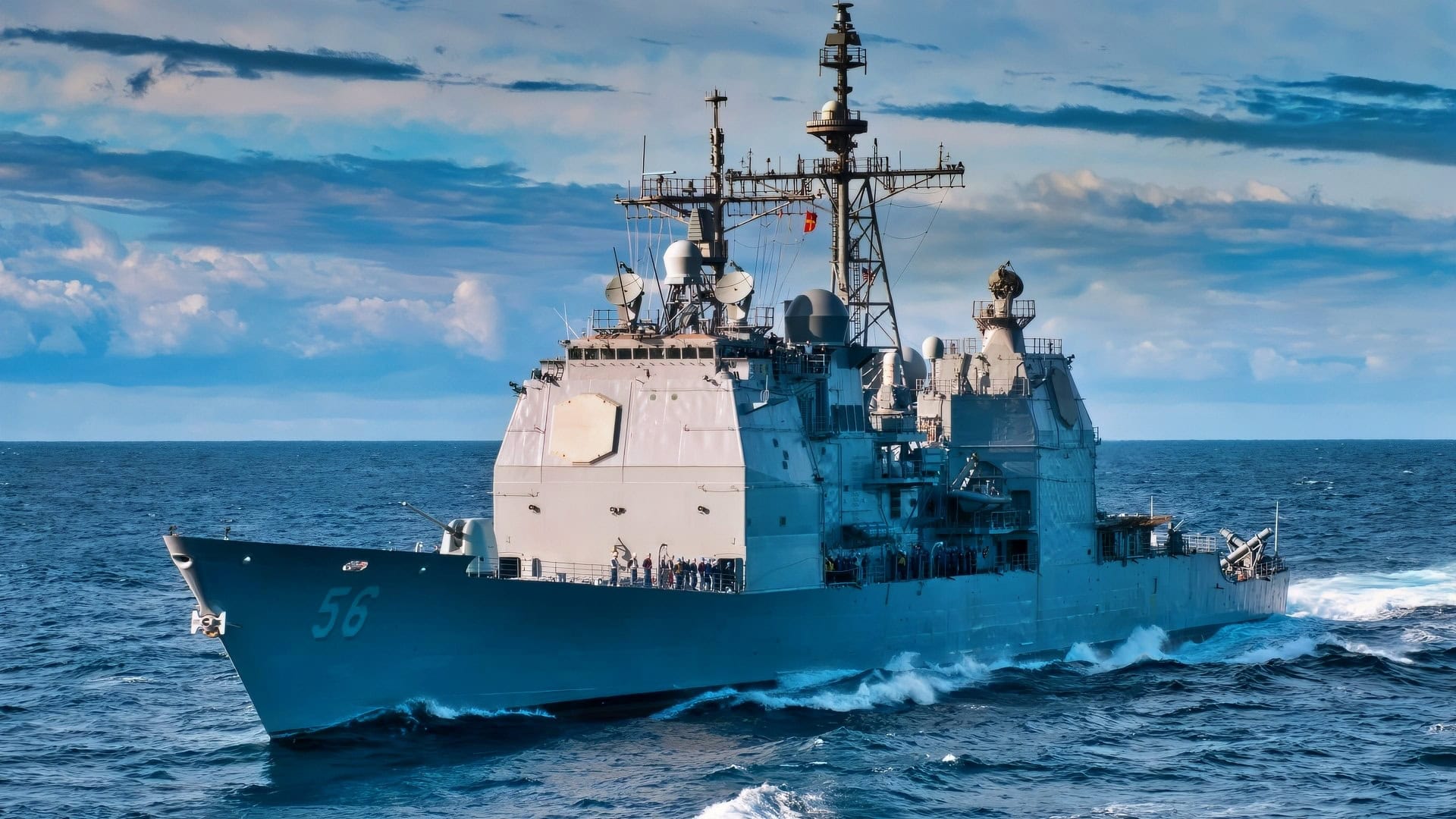
ATLANTIC OCEAN (June 6, 2012) The guided-missile cruiser USS San Jacinto (CG 56) approaches the amphibious assault ship USS Kearsarge (LHD 3) for a fueling at sea. (U.S. Navy photo by Mass Communication Specialist 1st Class Tommy Lamkin/Released)
TAIWAN STRAIT (Aug. 28, 2022) Ticonderoga-class guided-missile cruiser USS Antietam (CG 54) transits the East China Sea during routine underway operations. Chancellorsville is forward-deployed to the U.S. 7th Fleet area of operations in support of a free and open Indo-Pacific. (U.S. Navy photo by Mass Communication Specialist 2nd Class Justin Stack)
They can be launched from submarines and surface ships against command facilities, air-defense sites, military infrastructure, and other targets.
That capability matters generally, but especially during the opening stages of a major conflict.
For example, in a potential Indo-Pacific conflict, American forces could face Chinese air and missile defenses while also being forced to operate across huge distances.
Surface ships and submarines carrying long-range weapons could attack targets without first having to move aircraft carriers or land-based aircraft dangerously close to defend areas.
The same principle can apply to a major Middle Eastern conflict as well. Tomahawks allow strikes from ships positioned far from enemy territory.
That makes the number of available launch cells and their locations important.
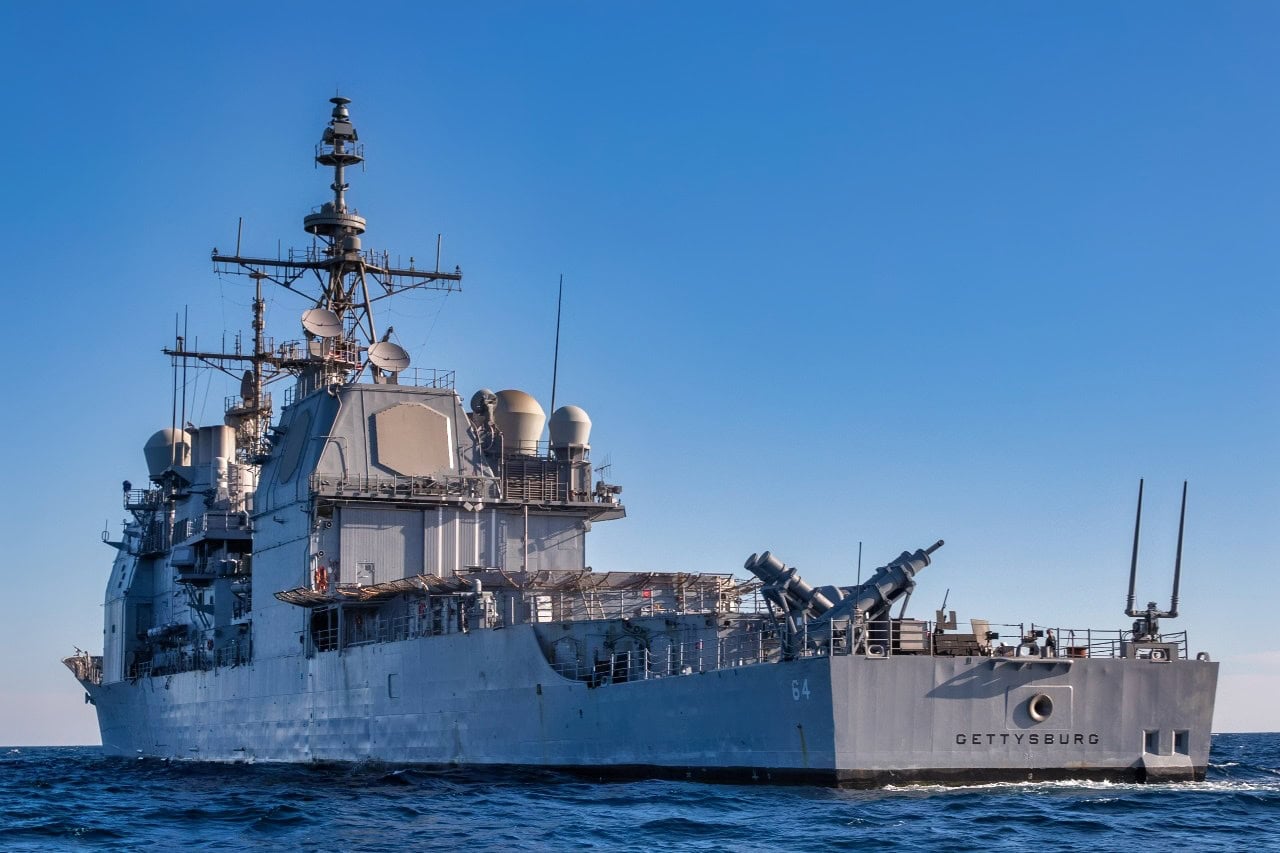
(Feb. 18, 2025) The Ticonderoga-class guided-missile cruiser USS Gettysburg (CG 64) sails in the U.S. Central Command area of responsibility. (Official U.S. Navy photo)
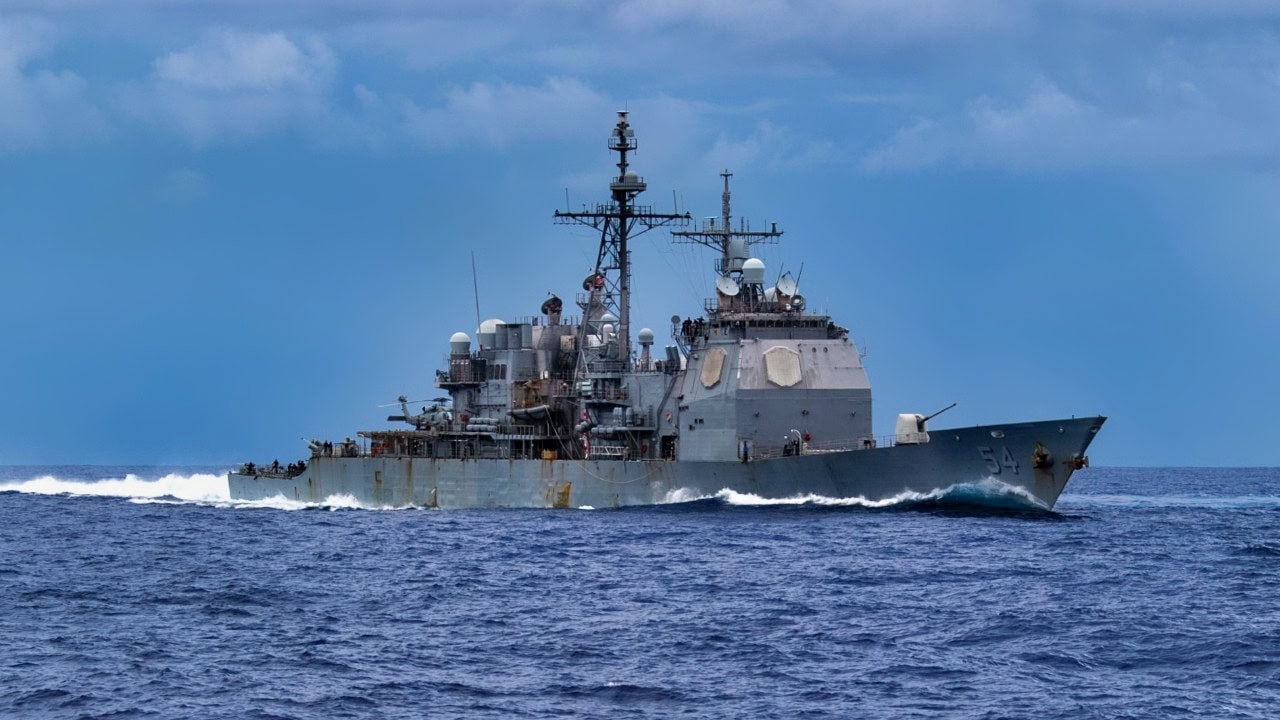
PACIFIC OCEAN (Sept. 14, 2020) The Ticonderoga-class guided-missile cruiser USS Antietam (CG 54) moves in formation during exercise Valiant Shield 2020. Valiant Shield is a U.S. only, biennial field training exercise (FTX) with a focus on integration of joint training in a blue-water environment among U.S. forces. This training enables real-world proficiency in sustaining joint forces through detecting, locating, tracking, and engaging units at sea, in the air, on land, and in cyberspace in response to a range of mission areas. (U.S. Navy photo by Mass Communication Specialist 2nd Class Nick Bauer)
The Ticonderogas Carry A Lot Of Missiles
The Ticonderoga class first entered service in the 1980s.
They were Aegis-equipped warships designed for air defense, protecting carrier battle groups while also performing anti-submarine and surface warfare missions.
Starting with the USS Bunker Hill, the ships received the Mk 41 Vertical Launching System, each equipped with 122 cells.
That transformed the cruisers into massive floating missile magazines — and they have been used for that purpose since.
The cells are flexible, too. Depending on the mission, they can accommodate Tomahawks or other kinds of missiles.
But that capacity gives commanders real options, because a cruiser can carry a substantial load of land-attack missiles while still retaining weapons for other missions.
As the Ticonderoga-class retires, that capacity is not being replaced one-for-one.
Arleigh Burke-class destroyers will take over many of the jobs previously performed by the Ticonderogas, but they carry fewer launch cells.
Every Burke has 90 Mk 41 cells. Later ships have 96. The Ticonderoga has 122.
A ship with 96 cells simply has fewer spaces available for Tomahawks and the other defensive missiles it needs to carry.
So even when a newer destroyer replaces a retiring cruiser in the fleet, the Navy ends up with fewer missile launch positions.
The Navy Tried to Keep Them Going
The Navy would prefer to keep that launch capacity and tried to save it, too.
Starting in 2015, seven cruisers entered modernization.
The Navy planned extensive repairs and upgrades to the Ticonderogas, hoping to return them to service.
According to the Government Accountability Office, the service eventually spent around $3.7 billion on those seven ships, but the efforts failed, and four never returned.
USS Hue City, USS Anzio, USS Cowpens, and USS Vicksburg were ultimately retired without ever being deployed again after entering modernization.
The GAO determined that the Navy spent around $1.84 billion maintaining and modernizing those four ships alone.
The work was plagued by problems from the start, as the Navy underestimated the extent of the aging vessels’ poor condition before beginning repairs.
Additional damage was discovered during maintenance, repeatedly expanding the work required to get them operational again.
The program eventually accumulated around 9,000 contract changes to address the damage, and poor planning and inadequate oversight further contributed to delays and rising costs.
Three other cruisers – USS Gettysburg, USS Chosin, and USS Cape St. George – did successfully complete modernization, and the Navy subsequently extended their service lives.
But those extensions only delay the problem. When the Ticonderogas finally do retire, the Navy will lose their additional missile capacity, and there are no plans to fully replace it.
About the Author: Jack Buckby
Jack Buckby is a British researcher and analyst specializing in defense and national security, based in New York. His work focuses on military capability, procurement, and strategic competition, and he produces and edits analysis for policy and defense audiences. He brings extensive editorial experience, with a career output spanning over 1,000 articles at 19FortyFive and National Security Journal, and has previously authored books and papers on extremism and deradicalization.