
Poland's F-16 Scrambles Expose NATO's Article 5 Drone Problem
 S.W
S.WPoland's F-16 Scrambles Expose NATO's Article 5 Drone Problem
Poland is no longer treating Russian drones near its border as someone else's war. That is the real meaning of Warsaw's latest air-policing moves. Fighter jets launched on September 17 while Russia attacked central Ukraine, and Prime Minister Donald Tusk warned that intelligence indicated Moscow might stage drone or missile strikes against countries helping Kyiv. The immediate military event was limited. The political signal was not.
The Trigger Was More Than a Border Incident
According to the Institute for the Study of War's September 18 assessment, Polish military aviation operated preventively in Polish airspace during Russian strikes on Ukraine. Warsaw has also indicated that F-16s and helicopters will be used more actively to protect the country's eastern airspace. Reuters separately reported that Poland scrambled jets as Russian attacks hit Kyiv and other Ukrainian cities. These are not claims that Russia deliberately attacked Poland. They are evidence that the operational boundary between the Ukraine war and NATO territory is becoming harder to police.
That distinction matters. A drone crossing the border can be accidental, navigationally confused, or deliberately probing. The air-defense response still costs fuel, maintenance hours, pilot availability and political attention. Russia does not need to hit a Polish target every time to impose a bill on NATO. It only needs to make allied commanders wonder whether the next track is a mistake, a test or the opening move of something worse.
Cheap Drones Are Testing an Expensive Alliance
ISW notes that Russia's expanded use of faster, jet-powered Geran-type drones is shrinking the reaction time available to neighboring states. That changes the economics of air defense. A fighter scramble is a high-end answer to a low-cost threat. A Patriot interceptor is even more expensive, and neither system is designed to make every border violation politically painless.
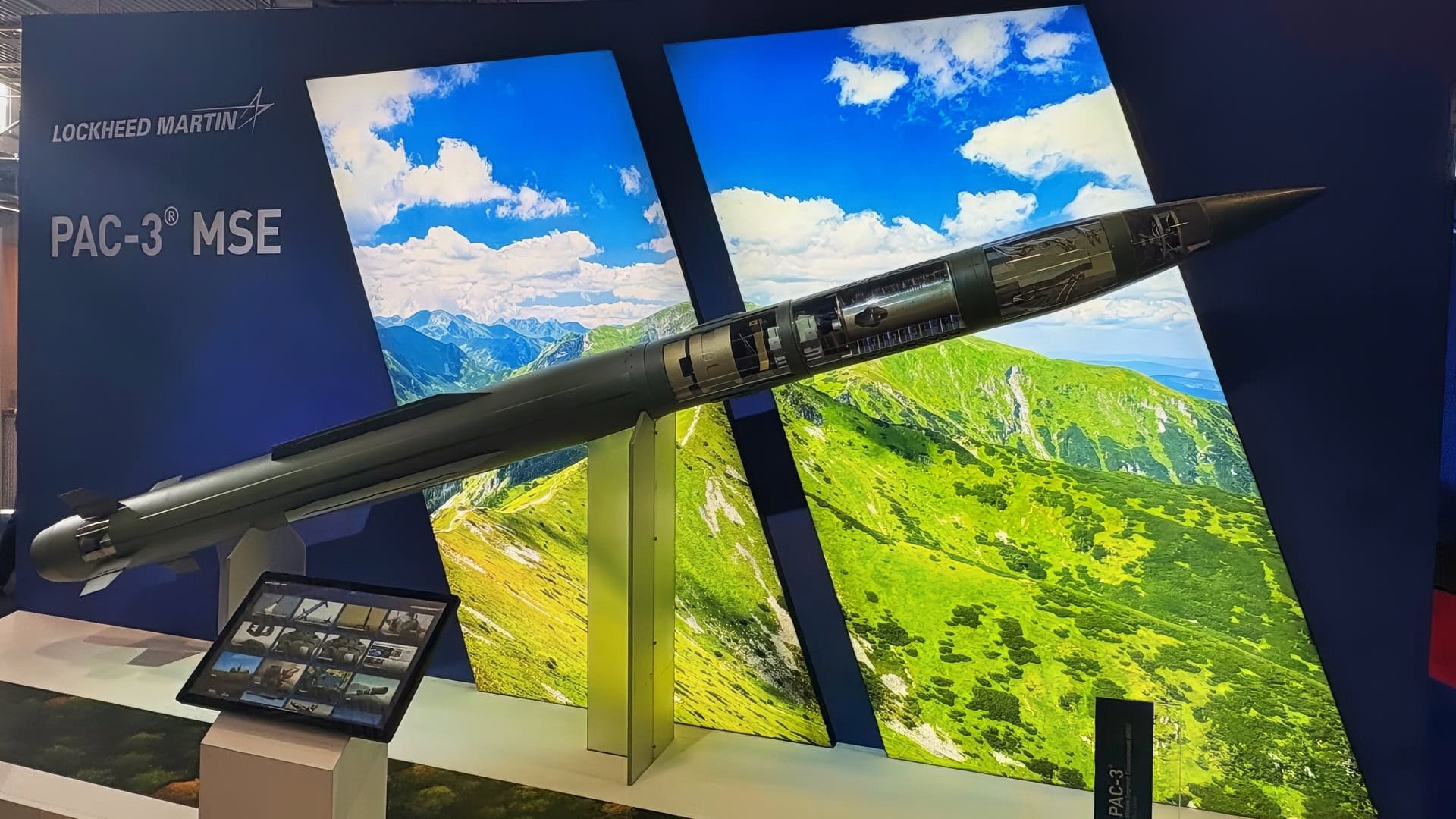
Poland is buying layered air defense, including Patriot systems, because it has to prepare for missiles and aircraft as well as drones. The photograph above shows the logic of that investment. But the same image also exposes the problem: a system optimized for a serious missile raid cannot, by itself, solve the daily burden of drone tracks, uncertain attribution and saturated sensors. NATO needs cheaper interceptors, electronic warfare, passive sensors and a shared regional command picture. Otherwise, the alliance will keep using premium assets to manage a quantity problem.
That is the lesson Russia learned in Ukraine. Mass, persistence and ambiguity can be militarily useful even when individual drones are inaccurate. The point is not simply to destroy infrastructure. It is to force defenders to reveal radars, launchers and decision thresholds. Every scramble tells Moscow something about NATO's readiness cycle. Every delayed response tells Moscow something else.
Tusk's Warning Raises the Article 5 Question
Polish officials have warned that Russia could try to make future attacks look accidental. AP reported Tusk's assertion that Moscow may seek to weaken the willingness of NATO states to invoke Article 5 by creating incidents that remain below the threshold of unmistakable aggression. That is an assessment, not proof of a settled Russian plan. It should nevertheless be taken seriously because it targets the alliance's hardest problem: collective decisions under uncertainty.
Article 5 is often discussed as if it were a tripwire. In reality, it is a political decision backed by military capability. A missile that kills civilians on Polish territory is easy to classify. A drone that falls in a field, crosses an invisible line and disappears is not. The danger is not that every incident triggers a war. The danger is that repeated ambiguous incidents make governments hesitate, while frontline states conclude that the guarantee is theoretical.
That is where the mainstream assumption needs challenging. NATO's problem is not simply that it lacks air-defense hardware. It lacks an agreed escalation playbook for small, repeated incursions during an ongoing war. Who authorizes a shootdown? When does an intrusion become an Article 4 consultation? Which evidence is released publicly, and how quickly? If the answers are improvised after each incident, Russia gets to shape the tempo.
What NATO Should Do Next
Poland's response should become a NATO mission rather than a national improvisation. The alliance should establish a standing eastern-flank drone cell linking Polish, Romanian, Slovak, Baltic and Ukrainian air pictures where politically possible. It should pre-plan rules for escort, jamming and engagement, and rotate aircraft so that a handful of countries do not carry the full readiness burden.
The material requirements are straightforward, even if the politics are not. NATO needs more short-range air-defense teams, counter-drone electronic warfare, mobile passive radars and low-cost effectors near likely approach corridors. F-16s remain useful for rapid interception and deterrence, but they should be the visible top layer of a cheaper system underneath. Sending a fighter after every suspicious drone is not resilience. It is an expensive habit.
There is also a diplomatic requirement. Warsaw must share intelligence without presenting every warning as established fact. Allies should distinguish between a confirmed violation, a probable spillover and an intelligence-based forecast. Credibility matters. If every ambiguous track is described as an imminent Russian attack, publics may become numb; if every incident is minimized, they may conclude that officials are hiding the risk.
The Next Test Will Be Political
Neither Ukrainian nor Russian forces made a major ground advance in the September 18 ISW assessment, but the air war is widening the strategic perimeter. Ukraine is preparing a more resilient energy system for another winter strike campaign, while Poland is already paying to defend the space around that campaign. The battlefield is not expanding because NATO has entered the war. It is expanding because Russia can export risk across borders at a fraction of the cost of stopping it.
Poland's F-16 scrambles are therefore more than routine air policing. They are an early warning that Article 5 will be tested first by ambiguity, not by tanks. NATO can answer with better sensors, cheaper defenses and clearer rules. But if the alliance waits for an unmistakable attack before deciding how to respond, Moscow will have already learned the most important fact: where NATO's certainty ends.
Sources: Institute for the Study of War, “Russian Offensive Campaign Assessment, September 18, 2026”; Reuters, “Russia strikes Kyiv and other Ukrainian cities, Poland scrambles jets,” September 18, 2026; Associated Press, “Poland warns Russia is planning drone or rocket strikes on NATO territory,” September 17, 2026; statements attributed to Poland's Armed Forces Operational Command and Prime Minister Donald Tusk.
Poland scrambled F-16 fighter jets on September 17, 2026, in response to Russian drone threats during attacks on Ukraine. Prime Minister Tusk warned that Russia may attempt to create incidents that challenge NATO's Article 5. The report highlights the increasing difficulty of distinguishing between accidental and deliberate incursions into NATO airspace, emphasizing the need for improved air defense strategies and clearer engagement rules among NATO allies.
- Poland scrambled F-16s in response to Russian drone threats on September 17, 2026.
- Prime Minister Tusk warned of potential Russian strikes against NATO countries.
- NATO faces challenges in responding to ambiguous drone incursions.
- Poland is enhancing its air defense capabilities, including purchasing Patriot systems.
- The operational boundary between the Ukraine war and NATO territory is becoming harder to police.