
Post-World War II Overseas First Launch of Offensive Missiles: Why Did Japan Choose the Antique Type 88?
Japan's Type 88 coastal anti-ship missile was launched for the first time on May 6 during the U.S.-Philippines "Shoulder-to-Shoulder" military exercise, marking Japan's first overseas launch of an offensive missile since World War II. What exactly is the so-called "Type 88 coastal anti-ship missile"?
"Type 88 Coastal Anti-Ship Missile"
Entered service in 1988, limited threat
Military commentator Shao Yongling introduced that the so-called "Type 88 coastal anti-ship missile" is an antique missile that has been in service for nearly 40 years, posing a limited threat to today's advanced naval vessels.
Military commentator Shao Yongling: Just by looking at the "88," you know it was commissioned in 1988, and in Japan, it is considered a missile that is about to be retired, so it is now mainly used for training. It seems average now, but in the 1980s, this missile was quite good. It is somewhat similar to the U.S. Harpoon anti-ship missile, also subsonic, at about 0.9 Mach. The warhead of the Type 88 anti-ship missile is also relatively large, weighing 270 kilograms, with a maximum range of 180 kilometers, which was considered quite far for anti-ship missiles at that time.
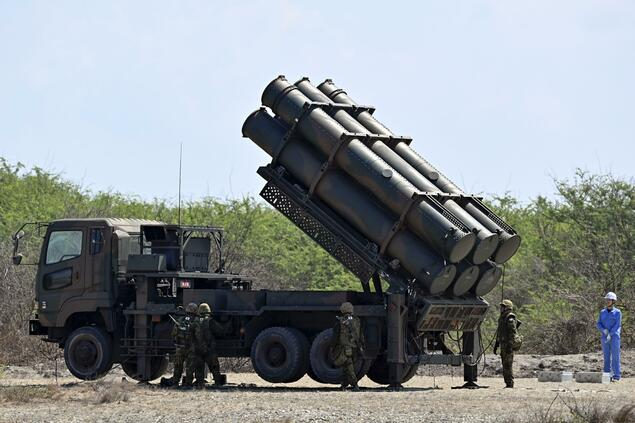
△ The Type 88 coastal anti-ship missile launcher that fired two missiles this time
Although the range of the Type 88 anti-ship missile is roughly on par with that of the U.S. Harpoon missile from the same era, the Harpoon can be deployed on warships, meaning that as long as the warship gets close enough to the target, the missile's range is not that important. However, the Type 88 anti-ship missile is not launched from a warship but from a truck. Since it is a truck, it can only operate within its own coastal area. Shao Yongling pointed out that this design reflects Japan's Self-Defense Forces' defensive military strategy of strictly adhering to defense at that time.
Military commentator Shao Yongling: This anti-ship missile is not mounted on a warship or launched from an aircraft; it is launched from an 8×8 truck, which is a vehicle-mounted mobile launch anti-ship missile. If this anti-ship missile were carried by aircraft or warships, it would mean it could have a much larger strike range. But if deployed on the mainland, it can only operate within a range of over 100 kilometers, which aligns with the logic of a strictly defensive military strategy. Therefore, from its launch method, it can be seen that at least at that time, Japan was still relatively restrained.
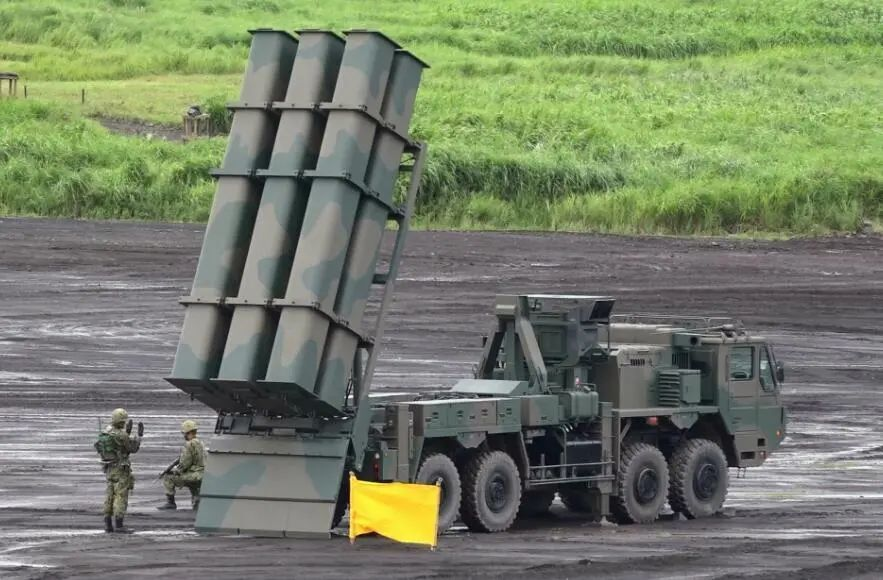
△ Type 88 anti-ship missile (data image)
Holding back the urge to flip the table
Only having the courage to break a cup
So, since Japan has made up its mind to launch an offensive missile overseas for the first time after the war, why not use the more advanced Type 12 or even the newly commissioned Type 25 land-based anti-ship missile? Shao Yongling believes this action marks a significant shift in Japan's defense policy, which will inevitably provoke strong opposition from both the Japanese public and the international community. Therefore, Japan is holding back the urge to flip the table but ultimately only has the courage to break a cup, and it specifically chose an old cup.
Military commentator Shao Yongling: There is probably a consideration; on one hand, it wants to conduct a live-fire launch, as this is a huge breakthrough. On the other hand, it may want to reduce sensitivity. If it used the Type 25, it would not only be anti-ship; its range could reach nearly a thousand kilometers, and it also has ground attack capabilities, making it a strategic strike weapon. So it wants to achieve a political breakthrough while also trying to minimize the impact and consequences of this action, not to be too high-profile, so it chose this soon-to-be-retired anti-ship missile mainly used for training.
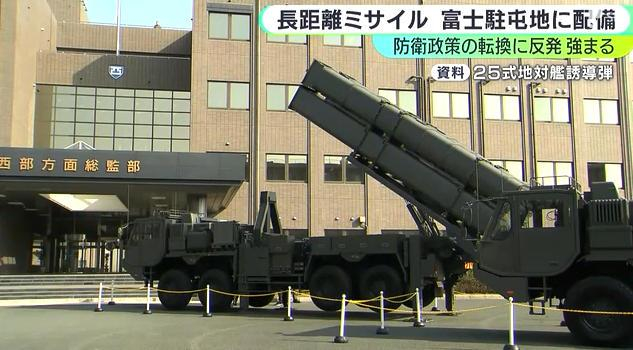
△ Japan's Type 25 anti-ship missile (data image)
Launch site chosen in northern Luzon
Wolves' ambitions are evident
Japan's choice to launch the anti-ship missile from northern Luzon, north of the Philippines, can be seen as a desperate push northward, and just a bit further north is Taiwan. Shao Yongling pointed out that the location of this launch of the Type 88 anti-ship missile theoretically could control the Bashi Channel and the Balintang Channel, which are crucial chokepoints for the Chinese Navy to advance into the Western Pacific and break through the first island chain. Although, as mentioned earlier, these antique missiles pose little threat to today's advanced vessels, Japan's well-known strategic intentions and the symbolic significance of this launch will inevitably raise high vigilance among the peoples of countries that have suffered from Japanese militaristic invasion and colonial rule, as well as all peace-loving nations and peoples around the world.
Military commentator Shao Yongling: This indeed reflects a strategic transformation of the entire Japanese nation, from being a relatively low-profile, self-proclaimed peace-loving defeated nation of World War II, to now starting to stir and eager to become a political and military power in East Asia, and even to have a certain voice on a global scale. This transformation is indeed very alarming.
Japan's "new militarism" poses a threat
Threatening regional peace and stability
On June 6, Foreign Ministry spokesperson Lin Jian responded to reporters' questions regarding Japan's overseas launch of offensive missiles, stating: Japan has a serious historical responsibility for its past invasions and colonial rule over Southeast Asian countries, including the Philippines. In this special year marking the 80th anniversary of the Tokyo Trials, the former aggressor has not only failed to deeply reflect on its historical crimes but has instead sent military forces overseas under the guise of so-called "security cooperation" and launched offensive missiles.
This trend once again indicates that Japan's right-wing forces are pushing for an accelerated "remilitarization" process, continuously breaking through the boundaries of "strictly defensive" and relevant regulations of international and domestic law, with some policies and actions far exceeding the scope of "self-defense." The severe shortcomings in historical education, fundamental errors in historical perspectives, combined with strategic ambitions for military expansion, have led to the emergence of Japan's "new militarism," posing a threat to regional peace and stability. We urge the Japanese side to deeply reflect on its militaristic invasion history and to adhere to its commitments in the military security field, exercising caution in its words and actions.
Japan launched two Type 88 anti-ship missiles on May 6, 2023, during a military exercise with the U.S. and Philippines, marking its first overseas offensive missile launch since World War II. The launch took place on Luzon Island and involved the Japan Self-Defense Forces. The Type 88 missile, which has been in service since 1988, is considered outdated but was used to demonstrate Japan's evolving defense posture.
- Japan launched Type 88 anti-ship missiles on May 6, 2023.
- This is Japan's first overseas launch of offensive missiles since World War II.
- The launch occurred during a military exercise with the U.S. and Philippines.
- The Type 88 missile has been in service since 1988 and is considered outdated.
- The launch site was located on Luzon Island, Philippines.