
Putin’s Kaliningrad Threat Tests NATO’s Baltic Nerve
 Alexandra Reeves
Putin’s Kaliningrad Threat Tests NATO’s Baltic Nerve
Russia has turned Kaliningrad into a nuclear talking point again. That matters less because Moscow is about to use nuclear weapons than because the enclave remains the fastest way to expose NATO’s political problem in the Baltic: the alliance can reinforce its eastern flank, but it cannot remove geography from the equation.
A warning built around a real vulnerability
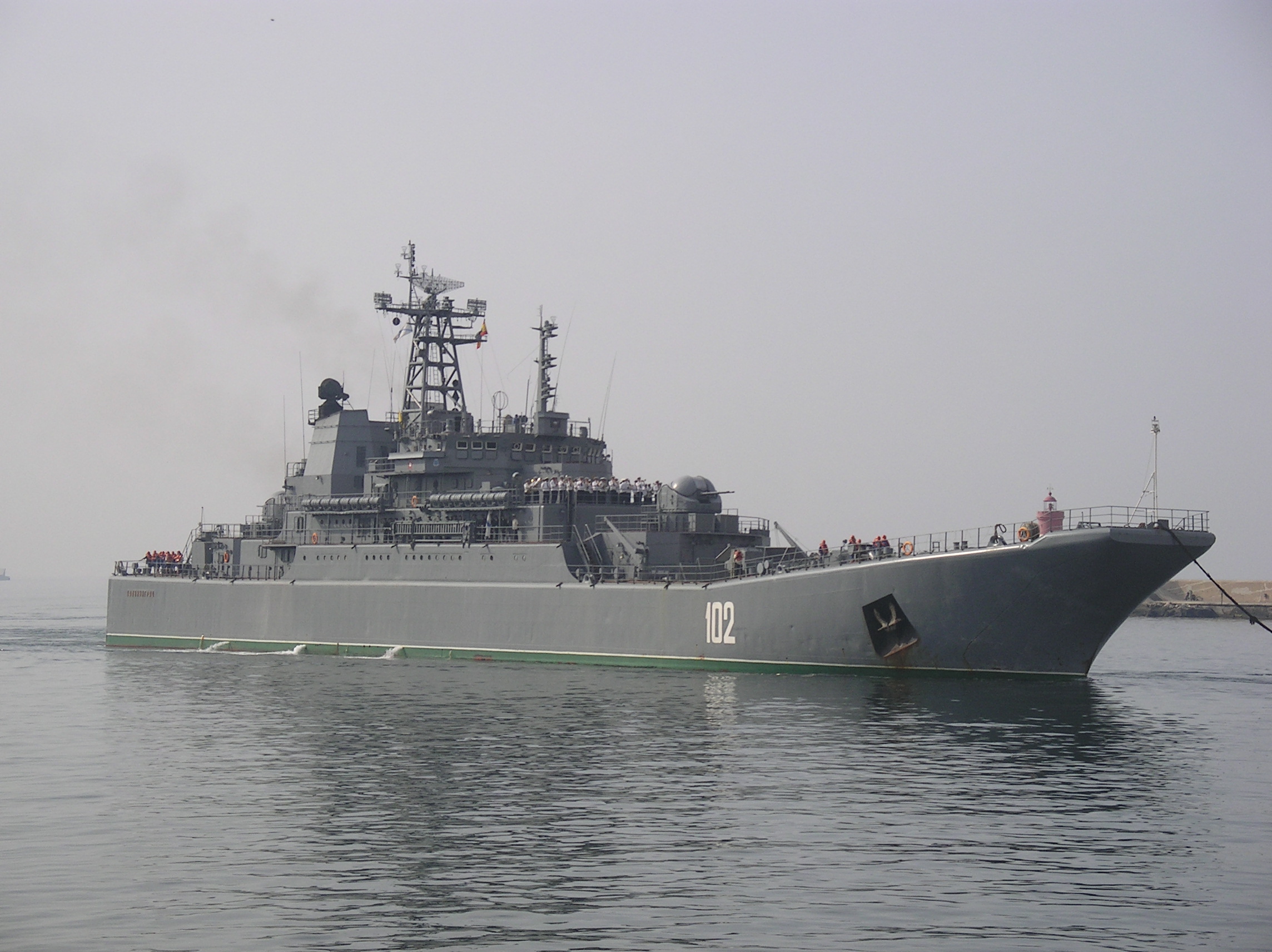
According to Reuters reporting published on October 1, President Vladimir Putin warned that Russia would use “all weapons” in its arsenal if Russian territory were attacked. BBC and other outlets described the message as a warning aimed at NATO during a period of rising tension in the Baltic. The immediate trigger was political and media speculation about what could happen if Kaliningrad were isolated or threatened, not a confirmed NATO operation against the enclave.
That distinction is important. Moscow often uses maximal language to blur the line between a conventional contingency and an existential attack. But the underlying military problem is genuine. Kaliningrad is a Russian exclave on the Baltic Sea, separated from the rest of Russia and bordered by NATO members Poland and Lithuania. Its position gives Moscow a forward military platform close to the alliance’s northeastern members, while also making the territory dependent on vulnerable air and sea links.
Why the enclave still matters militarily
Kaliningrad’s value is not simply the number of missiles stationed there. It is the way those systems complicate NATO’s decisions before a crisis even begins. Russia has long used the region to field layered air-defence, coastal-defence and strike capabilities. Open-source assessments have associated the enclave with S-400 air-defence systems, Bastion coastal missiles and Iskander ballistic missiles, whose commonly cited range is up to roughly 500 kilometres depending on the variant and mission profile.
Those systems can threaten aircraft, ships, ports and reinforcement routes across much of the southern Baltic. They do not create an impenetrable “bubble,” despite the lazy use of the A2/AD label. Modern air defences can be suppressed, radars can be deceived and launchers can be hunted. The problem is that doing so would be an act of war against a heavily defended Russian territory. A commander may have the technical option to strike a system without having a politically usable option to do it.
The same logic applies to the Suwalki corridor, the narrow land connection between Poland and Lithuania that links the Baltic states to the rest of NATO. In a conflict, Russia would not need to conquer all of Poland to create a strategic crisis. It would need to threaten the movement of forces, air defence and ammunition through a narrow corridor while exploiting Kaliningrad and Belarus as pressure points.
The nuclear message is about escalation control
Putin’s language is designed to make NATO think about escalation before NATO has decided what the first move is. If a conventional clash damaged a Russian radar, disrupted a military port or severed a route to Kaliningrad, Moscow could describe the event as an attack on sovereign territory. The Kremlin would then try to turn a local military problem into a test of alliance nerve.
That does not mean every Russian threat should be treated as a prelude to nuclear use. It means the threat itself is part of Russia’s conventional strategy. Nuclear signalling can protect conventional assets by making the other side hesitate. It can also split an alliance whose members have different exposure to the Baltic and different appetites for risk.
Here is the uncomfortable part for NATO: deterrence depends on communicating that an attack on one member will bring a unified response, while also avoiding promises so rigid that every incident becomes an automatic march toward general war. Kaliningrad sits exactly inside that gap.
Europe’s answer cannot be another press release
NATO has strengthened its eastern-flank posture since Russia’s full-scale invasion of Ukraine, and the Baltic states have become more important to alliance defence planning. But the practical test is not whether NATO can announce another exercise. It is whether Poland, Lithuania, Latvia and Estonia can keep receiving fuel, air-defence interceptors, spare parts and reinforcements while Russian missiles and electronic warfare are active nearby.
The equipment problem is familiar. Iskander and coastal missiles are only part of the threat. NATO would also need persistent surveillance, long-range fires, counter-drone systems, mine-clearing capacity and resilient logistics. A Baltic defence plan that depends on a few high-value air-defence batteries is fragile; once those batteries are saturated or forced to relocate, the alliance’s political choices become much narrower.
That is why Kaliningrad should be treated as a campaign problem, not a map-room curiosity. NATO needs options below the threshold of a deliberate strike on the enclave: stronger maritime patrols, distributed air bases, hardened ammunition storage, deception, rapid repair teams and rehearsed convoy routes. The goal is to deny Moscow the ability to turn every reinforcement movement into a nuclear debate.
What to watch next
The next indicators will be practical rather than theatrical. Watch for unusual Russian naval activity from Kaliningrad, air-defence deployments, electronic interference around Baltic airspace, new restrictions on maritime traffic and any NATO move to reposition Patriot or other long-range systems. Watch the language too. If Moscow starts defining routine alliance exercises as preparations to “block” or “attack” the enclave, the warning campaign will be moving from deterrence theatre toward operational shaping.
Russia’s Kaliningrad threat is not proof that nuclear war is imminent. It is proof that Moscow still believes the Baltic is a place where NATO can be made to hesitate. The alliance’s real challenge is not removing the enclave from the map. It is making clear that Kaliningrad cannot turn a conventional crisis into a political hostage situation. If NATO cannot do that, Russia will keep discovering that a few missiles and a frightening sentence can achieve more than a larger army.
Sources
- Reuters, “Russia sends nuclear warning to NATO as tensions rise in the Baltic,” October 1, 2026.
- BBC, “Putin warns West that Russia is ready to use every weapon to protect Kaliningrad,” October 1, 2026.
- CSIS, “Strengthening Baltic Security: Next Steps for NATO,” background analysis on Baltic defence and alliance reinforcement.
- Atlantic Council, “Putin’s next move? Five Russian attack scenarios Europe must prepare for,” February 2026.
Russia issued nuclear threats regarding Kaliningrad, emphasizing its military significance in the Baltic region. On October 1, 2026, Putin warned that all weapons would be used if Russian territory was attacked, highlighting the strategic challenges NATO faces in reinforcing its eastern flank. The presence of advanced missile systems in Kaliningrad complicates NATO's military decisions and response options.
- Putin warned of using all weapons if Russian territory is attacked.
- Kaliningrad is a strategic military platform for Russia near NATO countries.
- Russia has deployed advanced missile systems in Kaliningrad that threaten NATO operations.
- NATO faces challenges in reinforcing its eastern flank due to Kaliningrad's geographical position.
- Russia's threats aim to create hesitation within NATO regarding military responses.