
Qatar and the United States Strengthen Defense Coordination in Doha Amid New Test for Gulf Security
 Ahmed Al-Rashid
Qatar and the United States Strengthen Defense Coordination in Doha Amid New Gulf Security Test
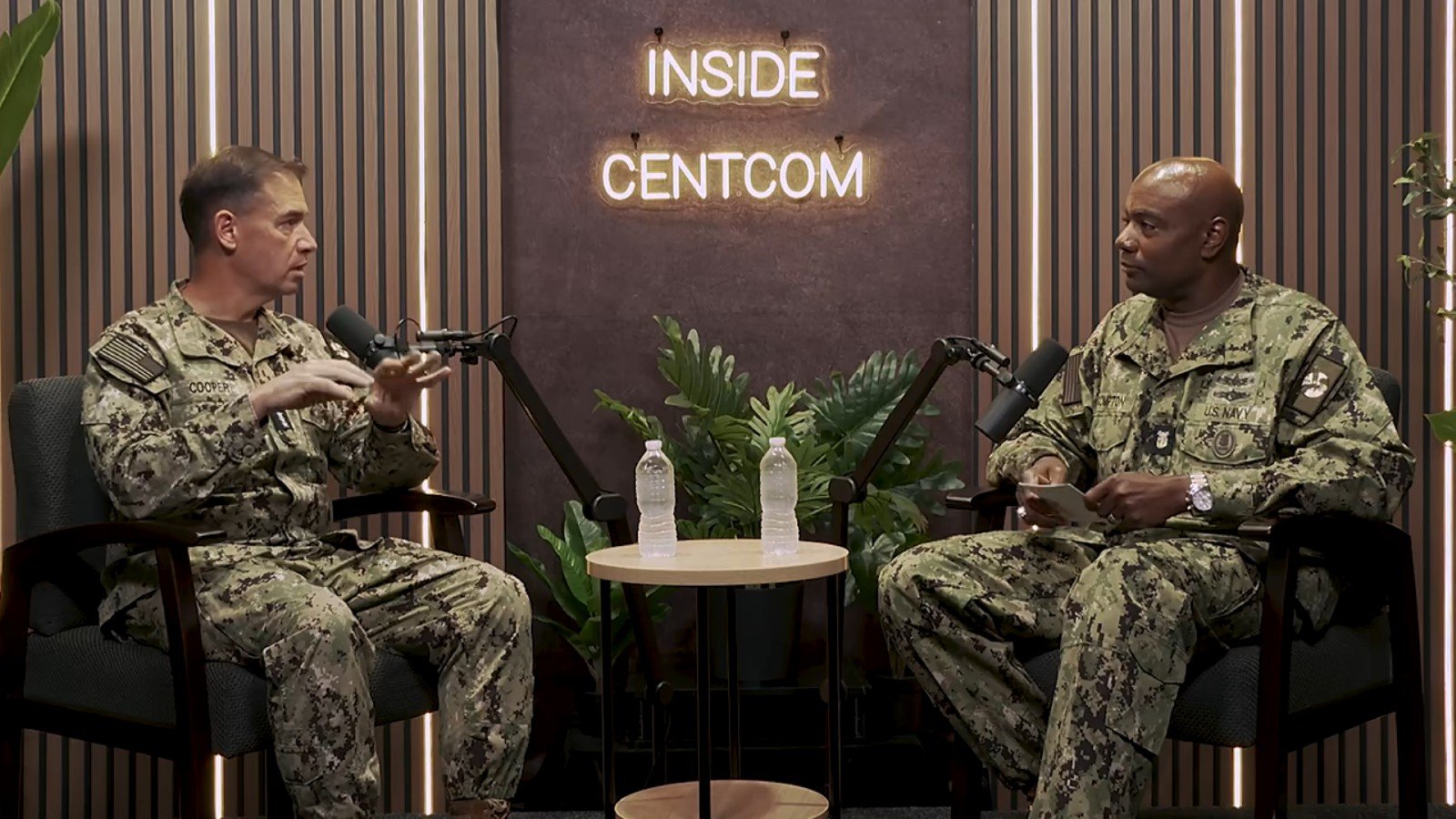
On November 22, 2026, the Qatari Deputy Prime Minister and Minister of State for Defense Sheikh Saud bin Abdulrahman Al Thani received U.S. Central Command Commander Admiral Brad Cooper in Doha. The Qatari Ministry of Defense issued only a brief description of the meeting, stating that it discussed issues of mutual interest, but its timing is more significant than the statement itself. It came after Cooper's visit to Riyadh and just hours after allegations exchanged between Iran and the United States regarding a drone and a fighter jet in the Gulf area, at a time when Saudi Arabia announced the interception of Houthi ballistic missiles and the fall of debris in the Mecca region.
A Brief Meeting in a Country That Holds the Key to Deployment
Qatar is not just another Gulf state on the itinerary of American leaders. Al Udeid Air Base hosts the main infrastructure for U.S. air command in the region, providing a center for command, control, communications, intelligence, and logistics. Therefore, any Qatari-American discussion during a moment of tension is not just about purchasing a system or organizing a maneuver, but about Washington's ability to keep its operational network connected if the Strait of Hormuz or the Gulf airspace becomes a hostile environment.
Qatar possesses modern F-15QA fighters, an advanced version of the F-15E capable of conducting long-range missions and carrying advanced air-to-ground and air-to-air munitions. However, owning the aircraft does not equate to having an independent air system. The real difference lies in stored munitions, spare parts, training, air battle management, and linking national radars with the allies' network. Here, the relationship with the United States remains more important than the specifications of the aircraft itself.
The Message from Doha is Not a Declaration of War
A quick reading of the meeting might make it seem like a step towards alignment against Iran, which is an unhelpful simplification. Qatar hosts the U.S. military presence, but at the same time, it tries to keep its political channels open with Tehran. Practically, Doha needs American deterrence to protect its energy infrastructure and political communication to prevent its territory from becoming a platform for an Iranian strike or a battleground for retaliation.
This is Qatar's old equation in a more dangerous formulation. The American base provides it with a shield, but it also makes it a potential target in any confrontation. When the Iranian Revolutionary Guard announces the downing of an MQ-1 drone east of Hormuz, and then U.S. Central Command denies damage to an F-16 fighter, the direct military value of the two pieces of news is less than their impact on risk management. Each party tests the limits of its opponent's narrative, and each Gulf state asks how much of this war could reach its facilities.
From Saudi Arabia to Qatar: A Single Network or Separate Rooms?
Cooper's visit to Doha follows his discussions in Riyadh with Crown Prince Mohammed bin Salman and Defense Minister Khalid bin Salman. This sequence reflects an American attempt to manage Gulf security as a single network, but it also reveals a problem that Gulf purchases have long ignored: owning advanced equipment does not guarantee a joint command operating under pressure.
- Equipment includes Qatari F-15QA aircraft, F-16 fighters, and U.S. Air Force units, as well as missile defense systems deployed in the Gulf.
- Training requires joint sorties, data-sharing exercises, and the ability to operate after jamming or loss of communications.
- Institutions mean clear decision-making rules, sharing early warning, and determining who has the authority to respond.
In my view, the weakest link is not the number of interceptors but the third link. The Gulf can purchase radars and aircraft, but it has not politically resolved who leads air defense when a Qatari facility is attacked by a trajectory close to Saudi or Bahraini airspace. This is not a technical issue that can be solved with a new contract.
Hormuz Pressures Qatar's Choice
The talks coincided with reports of stalled U.S.-Iranian negotiations over navigation in the Strait of Hormuz, along with mutual accusations regarding attacks on tankers. Even if the details of the drone's downing or the fighter's damage remain uncertain, they remind us that the Gulf is entering a phase where reconnaissance itself becomes a provocative act. The MQ-1, a relatively slow reconnaissance and attack platform compared to modern fighters, may have a mission to gather information or monitor shipping lanes; however, its downing sends a signal that Iran wants to raise the cost of approaching its maritime domain.
For Qatar, it is not enough for Al Udeid Air Base to be protected by layers of air defense. What is required is to prevent miscalculation: direct military communication channels, procedures to separate aircraft, and understandings that prevent a tactical incident from turning into a political decision. This explains why leaders' meetings in Doha carry operational value even when no deal is announced.
The Real Test After the Official Picture
Reports from Middle East Monitor and Anadolu published brief details of the meeting, while other reports linked Cooper's visit to rising tensions around Hormuz and Houthi attacks on Saudi Arabia. There are no indications in the available data of a new defense agreement or announced U.S. deployment in Qatar, so caution is warranted in turning a single meeting into a new alliance.
Deterrence is not measured by the number of aircraft in the hangar, but by the state's ability to make a unified decision during the minutes that separate warning from strike.
This is the challenge facing Doha and Washington together. The United States wants freedom of movement, secure bases, and partners capable of absorbing the first strike, while Qatar wants to protect the base without losing its political margin. Negotiations may succeed in improving coordination, but they do not eliminate the contradiction between relying on American power and seeking Gulf decision-making independence. The closer the Gulf gets to the brink of war, the more this contradiction becomes evident, greater than any diplomatic statement.
Sources
- Middle East Monitor and Anadolu Agency, report on the Qatari Defense Minister's meeting with the CENTCOM Commander in Doha, November 22, 2026.
- Gulf Times, report on Qatar and the United States discussing defense relations, November 21, 2026.
- Reuters, report on debris from missiles intercepted by Saudi Arabia in the Mecca region.
- The Jerusalem Post and Middle East Eye, reports denying CENTCOM damage to an American F-16 fighter.
Qatar and the United States strengthened defense coordination in Doha on November 22, 2026, amid rising tensions in the Gulf. The meeting involved discussions on mutual interests following recent incidents involving Iran. Qatar's hosting of the U.S. airbase at Al Udeid is central to these discussions, emphasizing the need for improved military readiness and political communication.
- Qatar and the U.S. are enhancing defense coordination in Doha on November 22, 2026.
- The meeting followed tensions between Iran and the U.S. regarding drone and fighter aircraft incidents in the Gulf.
- Qatar hosts the U.S. airbase at Al Udeid, crucial for U.S. operations in the region.
- The discussions aim to improve military readiness and political communication amid rising tensions.
- The U.S. seeks secure bases and partners capable of responding to threats, while Qatar aims to maintain its political autonomy.