
Raytheon to build record numbers of AMRAAM missiles
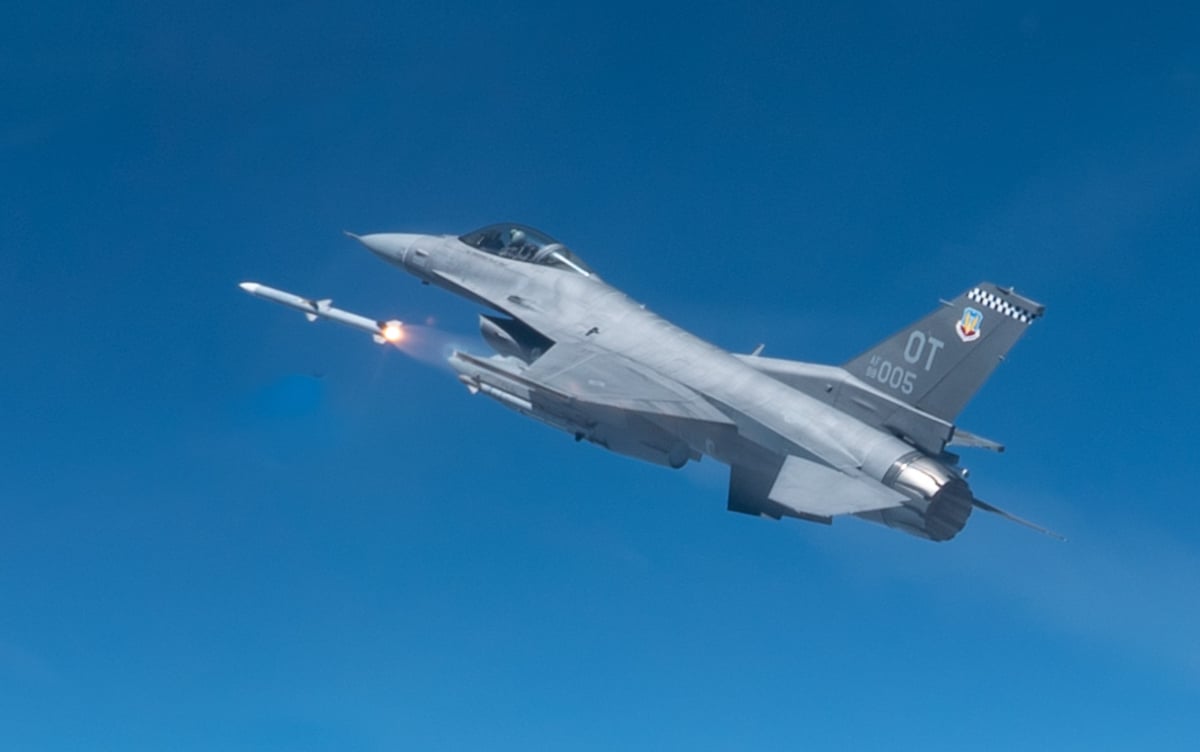
The U.S. Air Force has awarded Raytheon a multi-year contract worth up to $20.7 billion to build AMRAAM air-to-air missiles, a deal the company says will push production of the weapon to record levels.
The award, announced Sept. 25 by the U.S. Department of War, covers complete missiles, spare guidance sections and related work, and runs through June 30, 2033. Raytheon will build the missiles in Tucson, Arizona. The contract does not say how many missiles it will buy.
The AMRAAM, short for Advanced Medium-Range Air-to-Air Missile and also known as the AIM-120, is a radar-guided missile fighter jets use to shoot down enemy aircraft beyond visual range. Now in its fifth generation, it is carried on 14 aircraft and ground platforms and fielded by 44 countries, and has recorded more than 7,000 successful live firings in tests and combat, Raytheon said. It is also the main interceptor for NASAMS, the ground-based air defense system Norway and Raytheon developed together, which Ukraine uses against Russian cruise missiles and drones.
Raytheon described the deal as a five-year multi-year contract with two option years, awarded under the Department of War’s “Arsenal of Freedom” push to expand munitions production. Multi-year contracts let the Pentagon buy several years’ worth of weapons at once, which gives manufacturers the confidence to invest in factories and suppliers and usually lowers the price per missile.
The award follows a framework agreement Raytheon and the Department of War signed on Feb. 4, 2026, under which the company committed to producing at least 1,900 AMRAAMs a year. That agreement was one of five covering Tomahawk cruise missiles, AMRAAM and three Standard Missile interceptor variants. RTX, Raytheon’s parent company, said it nearly doubled AMRAAM output in 2025 compared with 2024 and is working with small and mid-sized suppliers across the country, as well as exploring co-production with international partners, to raise it further.
Much of the demand comes from abroad. The contract includes foreign military sales to 16 countries: Australia, Belgium, Canada, the Czech Republic, Denmark, Finland, Germany, Italy, Japan, Kuwait, the Netherlands, Norway, Poland, Sweden, Taiwan and the United Kingdom.
The contract is a sole-source award, meaning Raytheon did not compete for it, and part of it is an undefinitized contract action. That lets work begin before the government and the company agree on final prices and terms, up to a set ceiling, in this case $20.7 billion.
Only a small share of the money has been committed so far. The Department of War obligated $85,715 in fiscal 2026 U.S. Air Force weapons procurement funds and about $154.3 million in foreign military sales funds at the time of award. The rest will be released as the contract is finalized and future budgets are approved.
The Air Force Life Cycle Management Center at Robins Air Force Base, Georgia, manages the contract.
Content preview only. Full article available at source. View Full Article
The U.S. Air Force awarded Raytheon a multi-year contract worth up to $20.7 billion to produce AMRAAM missiles in Tucson, Arizona, through June 30, 2033. This contract includes foreign military sales to 16 countries and is part of the Department of War's initiative to expand munitions production. Raytheon aims to increase missile output significantly, responding to both domestic and international demand.
- U.S. Air Force awarded Raytheon a contract worth up to $20.7 billion.
- The contract covers production of AMRAAM missiles through June 30, 2033.
- Raytheon will produce the missiles in Tucson, Arizona.
- The contract includes foreign military sales to 16 countries.
- The deal is part of the Department of War's 'Arsenal of Freedom' initiative.