
Rheinmetall's 155-mm Order for Ukraine 2026 Reveals Europe's Ammunition Gap Until 2030
 Dr. Klaus Weber
Rheinmetall's 155-mm Order for Ukraine 2026 Highlights Europe's Ammunition Gap Until 2030
An order in the low five-digit piece range initially sounds like an industrial success story. For Ukraine, it is operationally welcome. However, for Europe, it is primarily a measuring instrument. Rheinmetall is to supply 155-mm artillery ammunition and M203 propelling charges, produced at Rheinmetall Expal Munitions in Spain, with a contract value in the high double-digit million euro range, to be completed in the first quarter of 2027. At the same time, the company states its goal of being able to produce around 1.5 million 155-mm shells per year by 2030. The European problem lies exactly between these two figures.
The Order is Real, but Small Compared to the Need
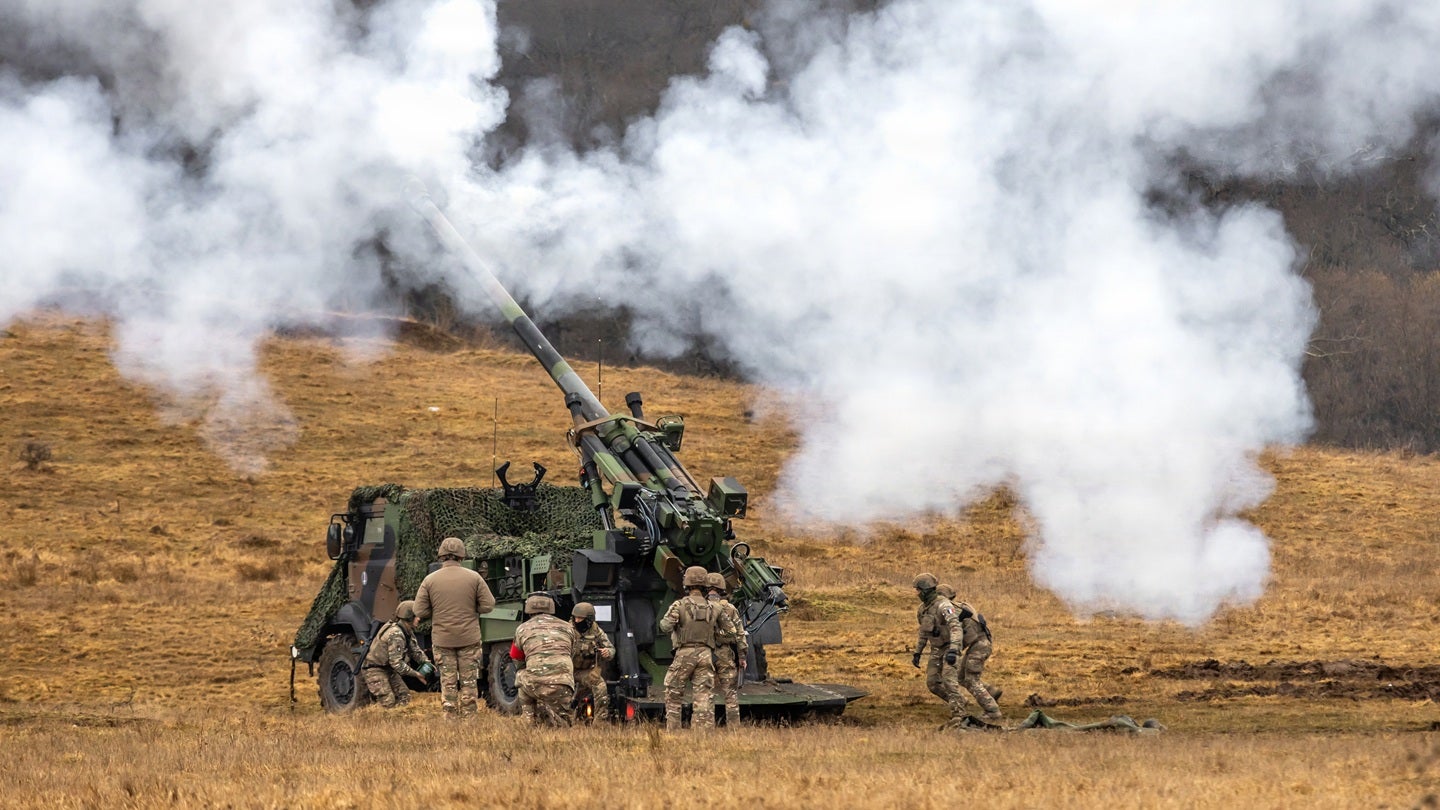
According to European Security & Defence, the Ukrainian order includes ER02A1 B/B shells and M203 propelling charges. Both products are introduced in several NATO countries and can be used with a wide range of Western 155-mm systems. This is important because Ukraine no longer operates a single artillery system but a mix of M777, PzH 2000, CAESAR, Krab, Archer, and other platforms. Ammunition is therefore not just a consumable but a matter of standardization policy.
However, the crucial question is not whether Rheinmetall can deliver. The question is what Europe should learn from such an order. A low five-digit stock can only support intense combat phases to a limited extent. Even if calculated conservatively, it corresponds more to weeks than years. This is not a criticism of Rheinmetall. Companies produce against contracts, not against political declarations of intent. It is a criticism of a European procurement culture that, since 2022, has adopted the language of a war economy but continues to think in terms of annual budgets, national lots, and delayed framework agreements.
ASAP Has Correctly Identified the Bottlenecks
The European Commission has identified the right bottlenecks with the Act in Support of Ammunition Production: explosives, powders, casings, rockets, as well as testing and certification capacities. This is analytically sound. ASAP has never been merely a subsidy program for end products but an attempt to repair the supply chain behind the shell. The Commission estimated the EU contribution at 500 million euros, which, through co-financing, is expected to mobilize investments of around 1.4 billion euros. This is an unusually concrete industrial intervention for Brussels.
But is that enough? Rheinmetall's Spanish production shows exactly why the answer must be cautious. Europe can expand individual plants, integrate company acquisitions, and accelerate production lines. However, the structural gap arises in three areas: long-term demand guarantees, national stock targets, and joint procurement. As long as each state decides for itself when and how many shells to order, the industry is forced to weigh capacity against political uncertainty. No board builds powder capacities for ten years when ministries only sign for two budget years.
The Spanish Production is a Progress with Side Effects
Rheinmetall Expal in Spain is a useful case for Europe. The acquisition of Expal gave Rheinmetall access to ammunition expertise outside Germany and strengthened a broader European production base. This is better than the old German illusion that defense capability could be restored from a few national key locations. Spain thus becomes not just a supplier but part of a European ammunition architecture.
At the same time, the case shows how far Europe remains from true integration. A German group uses a Spanish production facility for a Ukrainian order while EU programs flank the supply chains. This sounds European, but it is not yet a European ammunition policy. There is no binding EU minimum stock for 155-mm ammunition, no automatic replenishment rule after deliveries to Ukraine, and no common prioritization between frontline needs and national stock replenishment. The institutions accompany the market; they do not steer it.
2030 is Industrially Plausible, Strategically Late
The goal of 1.5 million 155-mm shells per year by 2030 is no small feat. Before 2022, such a number would have been dismissed as unrealistic or unnecessary in many European capitals. Today, it is the minimum of a serious artillery policy. However, the peculiarity is the timeline. The Ukrainian contract is to be completed in the first quarter of 2027; the large capacity number lies three years later. This gap is politically decisive.
Russian warfare has shown that artillery ammunition cannot be thought of in symbolic packages. It is an ongoing industrial flow. If Europe only reaches a robust annual production by 2030, it will have to either distribute scarce stocks until then, utilize additional sources outside Europe, or ration Ukrainian firepower more heavily. Each of these options comes at a cost. Rationing costs military initiative. Non-European procurement costs autonomy. Stock depletion costs NATO readiness.
The Political Economy Remains Unanswered
The most common mistake in the European debate is equating order with capability. A contract proves that a ministry wants to buy. It does not prove that an alliance has strategically organized its industrial base. This is where capacity differs from capability. Capacity is a production line. Capability is the reliable connection of raw materials, personnel, financing, standardization, inventory management, transport, and political decision-making.
For Germany, this distinction is particularly uncomfortable. The Zeitenwende has released large sums, but ammunition has long remained the least visible element. Tanks, air defense, and combat aircraft generate images; propelling charges do not create parades. However, a PzH 2000 unit without sufficient 155-mm stocks is only an expensive testament to incomplete planning. That Rheinmetall can now deliver through Spain is good. That such orders still appear as special news in 2026 is less reassuring.
What This Order Really Shows
The Rheinmetall contract should neither be downplayed nor exaggerated. It is a useful building block but not proof of resolved European defense capability. Its significance lies in the scale: low five-digit delivery now, 1.5 million annual target later, EU funding for supply chains in the background. This is progress, but progress under time pressure.
Europe faces a sober dilemma. Without national orders, the industry cannot grow. Without European coordination, national orders will be inefficient. And without ongoing Ukrainian demand, many capitals would lack the political pressure to order at all. Thus, Ukraine forces Europe into a truth that was conveniently suppressed in peacetime: defense autonomy does not begin with the strategic concept but with the powder, the casing, and the signed multi-year contract.
Source: European Security & Defence, European Commission ASAP Program, Rheinmetall Capacity Information.
Rheinmetall is set to deliver 155mm artillery ammunition and M203 propellant charges to Ukraine, with a contract valued in the high double-digit million euro range, expected to be completed in Q1 2027. The company aims to produce 1.5 million shells annually by 2030, addressing Europe's ammunition supply challenges. The report emphasizes the need for improved coordination in European defense procurement to meet ongoing military demands.
- Rheinmetall will deliver 155mm artillery ammunition and M203 propellant charges to Ukraine.
- The contract is valued in the high double-digit million euro range and is expected to be completed in Q1 2027.
- Rheinmetall aims to produce 1.5 million 155mm shells per year by 2030.
- The ammunition is compatible with various NATO artillery systems used by Ukraine.
- The report highlights Europe's ammunition supply challenges and the need for better coordination.