
RIMPAC 2026 Shows Thirty Navies Still Lack Warfighting Depth
 Marcus Chen
RIMPAC 2026 Shows Thirty Navies Still Lack Warfighting Depth
Thirty nations, more than 30 surface ships, five submarines, over 206 aircraft and 30,000 personnel are now in the at-sea phase of RIMPAC 2026. That is a serious coalition fleet by peacetime standards. It is also a reminder of how thin the operational margin remains if the same coalition had to fight west of Guam instead of training around Hawaii.
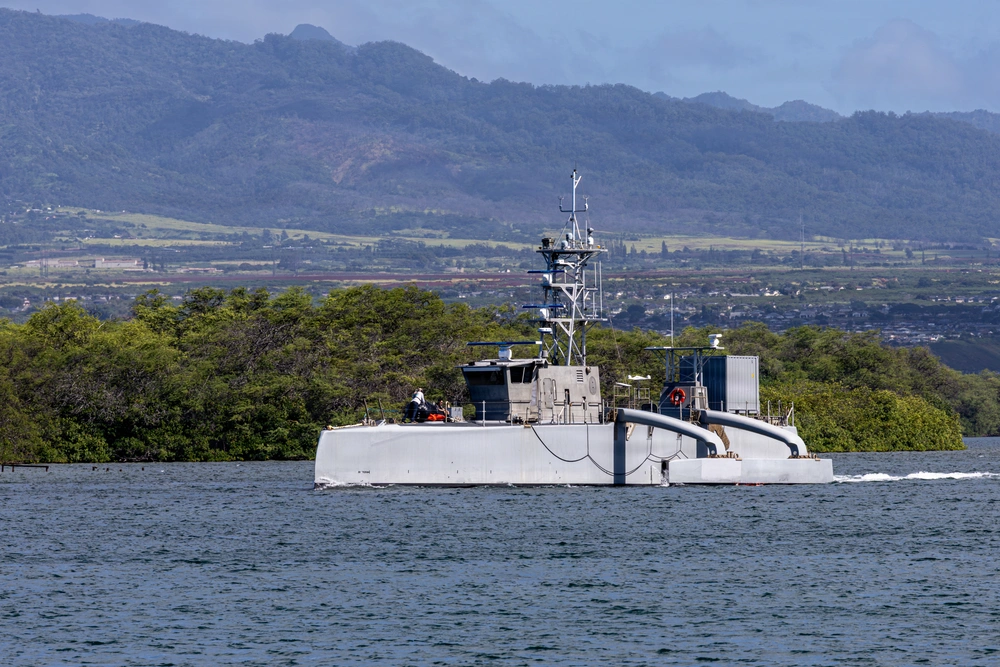
USNI News reported on July 10 that RIMPAC ships and unmanned surface vessels departed Joint Base Pearl Harbor-Hickam in stages from July 6 to July 9. The exercise, which runs from June 24 to July 31, has already moved into live fire. HMCS Ottawa fired a torpedo on July 7, while Japan Maritime Self-Defense Force destroyer JS Kongo fired an SM-2 surface-to-air missile on July 8. The U.S. Navy medium displacement unmanned surface vessel Sea Hunter also departed Pearl Harbor for the sea phase.
The visible order of battle is impressive. USS Theodore Roosevelt (CVN-71), Carrier Air Wing 9, cruiser USS Chosin, four U.S. destroyers, amphibious assault ship USS Essex, attack submarines USS Charlotte and USS Columbia, two fleet oilers and a dry cargo ship form the American core. Pacific Fleet's participant list adds allied hulls from Australia, Canada, Chile, Italy, Japan, South Korea, Mexico, New Zealand, Peru, the Philippines, Singapore and Spain, plus five submarines including South Korea's Dosan Ahn Changho, Peru's Chipana and Canada's Corner Brook.
The Exercise Has Scale but the War Would Need Persistence
The important number is not 30,000 people. It is how many ships could remain on station after the first week of missile expenditure, submarine attrition, battle damage and logistics disruption. A carrier strike group can look enormous on a departure day. Anyone who has served on a destroyer knows the harder question comes later: how fast can the magazines be refilled, where does the oiler rendezvous, and what happens when the easiest port is inside the enemy's missile basket?
RIMPAC is not designed to answer all of that. It is a coalition training event, not a Taiwan contingency rehearsal. But the exercise exposes the basic math Washington tends to talk around. The U.S. contingent includes two fleet oilers and one dry cargo ship for the RIMPAC force package. In a real western Pacific fight, the logistics tail would need to sustain dispersed surface action groups, submarines, air wings, Marine littoral units and allied ships across thousands of miles. Hawaii is forgiving. The Philippine Sea is not. The Luzon Strait is worse.
The SM-2 live fire by JS Kongo matters because Japan's Aegis destroyers would be central to any first-island-chain air and missile defense network. The Canadian torpedo firing matters because anti-submarine warfare cannot be an American-only task. The presence of Sea Hunter matters because unmanned surface vessels are supposed to extend sensing and reduce risk to crewed ships. But none of those points erase the uncomfortable gap between a successful serial event and a sustained campaign.
China and Russia Are Training the Counter-Pattern
While RIMPAC ships left Pearl Harbor, Chinese and Russian forces began the sea phase of their Joint Sea 2026 exercise from Qingdao. USNI's same Western Pacific roundup listed Russia's cruiser Varyag, corvette Rezkiy, submarine rescue ship Igor Belousov and attack submarine Ufa. The People's Liberation Army Navy fielded cruiser Anshan, destroyer Kaifeng, frigate Wuhu, fleet oiler Kekexilihu, submarine rescue ship Yangchenghu and a Yuan-class attack submarine.
The Chinese-Russian drill is smaller than RIMPAC, but its geography is sharper. The Yellow Sea sits close to China's home ports, airfields and missile coverage. The announced training areas -- rescue operations, anti-submarine warfare, air defense and live fire -- fit the defensive-access problem China wants to impose on U.S. and allied forces. After the exercise concludes on July 13, some assets are expected to conduct joint patrols. That is a political signal, but it is also a habit-building exercise for combined maritime presence.
The contrast is useful. RIMPAC shows coalition breadth. Joint Sea shows interior-line practice. In a crisis, Beijing does not need to match a 30-nation exercise. It needs to complicate movement through chokepoints, threaten logistics ships, force allied navies to spend interceptors, and make U.S. commanders choose between concentration and survivability.
Two U.S. Carriers Do Not Solve the Western Pacific Problem
The U.S. Navy also has the USS George Washington Carrier Strike Group in the Philippine Sea after Valiant Shield. That puts one American carrier in a major multinational exercise around Hawaii and another operating forward near the first island chain. On paper, that looks like a reassuring two-carrier rhythm. In practice, it shows the demand signal that is eating the fleet.
George Washington left Yokosuka on May 23 for its spring patrol with cruiser USS Robert Smalls and destroyers USS Benfold and USS Shoup. Theodore Roosevelt is leading RIMPAC with four destroyers, a cruiser and an amphibious assault ship. These are high-end formations, but they cannot be everywhere. If one carrier is training, one is patrolling and one is in maintenance, the Navy's usable combat power is less elastic than campaign maps imply.
The unmanned piece is where RIMPAC 2026 deserves close attention. Sea Hunter was built to test long-endurance autonomous operations, and unmanned systems can help with surveillance, decoying and distributed sensing. But a single unmanned surface vessel departing Pearl Harbor is not yet a fleet architecture. The Navy needs dozens of reliable autonomous nodes that can operate with destroyers, submarines and patrol aircraft without becoming maintenance projects that pull sailors away from the fight.
The Useful Lesson Is Not Reassurance
RIMPAC's value is real. It lets allied ships practice common procedures, conduct live fires, exercise command relationships and prove that a wide coalition can put steel in the water. The participation of Japan, South Korea, Australia, Canada, the Philippines, Singapore and European navies creates habits that matter before a crisis. The presence of submarines from five countries is especially useful because undersea coordination is one of the hardest coalition missions to improvise.
But the exercise should not be sold as proof that the Indo-Pacific balance is settled. The coalition can assemble. The coalition can shoot. The coalition can sail. The unresolved question is whether it can reload, repair, disperse and keep fighting under missile attack while China operates from home waters.
That is the test RIMPAC cannot fully stage. Until the United States and its allies build more magazine depth, more underway replenishment capacity, more repair options west of Hawaii and a real unmanned fleet rather than promising prototypes, the numbers will keep flattering the exercise more than the war plan.
RIMPAC 2026 involves 30 nations conducting naval exercises in Hawaii, featuring over 30 surface ships, five submarines, and 206 aircraft. Live fire events included torpedo launches by HMCS Ottawa and missile launches by JS Kongo. Concurrently, China and Russia began their Joint Sea 2026 exercise, highlighting regional military tensions. The report emphasizes logistical challenges for sustaining operations in a potential conflict.
- RIMPAC 2026 involves 30 nations and over 30 surface ships, five submarines, and 206 aircraft.
- Live fire exercises included torpedo and missile launches by allied forces.
- The exercise highlights logistical challenges in sustaining operations in a real conflict scenario.
- China and Russia are conducting their own naval exercises concurrently, emphasizing regional military dynamics.
- The U.S. Navy's operational capacity is strained with multiple commitments in the Pacific.