
Russian Missile in Poland Exposes NATO’s 2026 Air Defence Problem
 Alexandra Reeves
Russian Missile in Poland Exposes NATO’s 2026 Air Defence Problem
A Russian missile landing in Poland should not be treated as a diplomatic oddity or another unlucky fragment of Ukraine’s war. It is a warning shot about geography, reaction time, and the uncomfortable fact that NATO’s eastern air defence is still being built for a tidier war than the one Russia is actually fighting.
According to Google News-indexed reporting from ABC News, NPR, BBC, The Guardian and Business Insider on 30 July, a missile linked to Russia’s overnight attack on western Ukraine came down inside Poland, leaving a crater near the Ukrainian border. BBC’s report cited Polish Prime Minister Donald Tusk saying the missile was probably Russian. DW reported that NATO confirmed to its Brussels correspondent that the missile was Russian and noted a roughly 10-meter-wide crater, with no injuries reported. The same Russian strike wave killed 10 people across Ukraine, according to NPR and other outlets.
That is the part everyone can agree on. The harder part is admitting what it means.
The Border Is Now Part of the Battle Space
Poland has lived with the risk of spillover since 2022, but this incident is different from a vague airspace scare. The reports point to a physical impact inside NATO territory during an attack on Ukraine’s western regions. Business Insider, citing Warsaw, reported that Ukrainian jets were trying to destroy threats close to the border. That detail matters because it shows the problem is not simply Russian intent. It is also the geometry of interception.
When Russian missiles fly toward Lviv, Volyn, or other western Ukrainian targets, defenders operate in a compressed airspace. Ukrainian pilots and ground-based crews have minutes, sometimes seconds, to decide whether to engage. A missile that is damaged, diverted, or missed does not politely respect the alliance map. The border becomes part of the battle space even if NATO insists it is only a line on a political map.
Everyone in Brussels likes the phrase “NATO territory” because it sounds binary. Either something is in or out. Air defence does not work that way. Radar horizons, interceptor envelopes, flight paths, electronic warfare, debris patterns and identification rules all blur the border long before diplomats get to write statements.
Patriot Is Not a Magic Umbrella
The obvious answer is to put more Patriot batteries on the eastern flank and send more interceptors to Ukraine. The obvious answer is also incomplete.
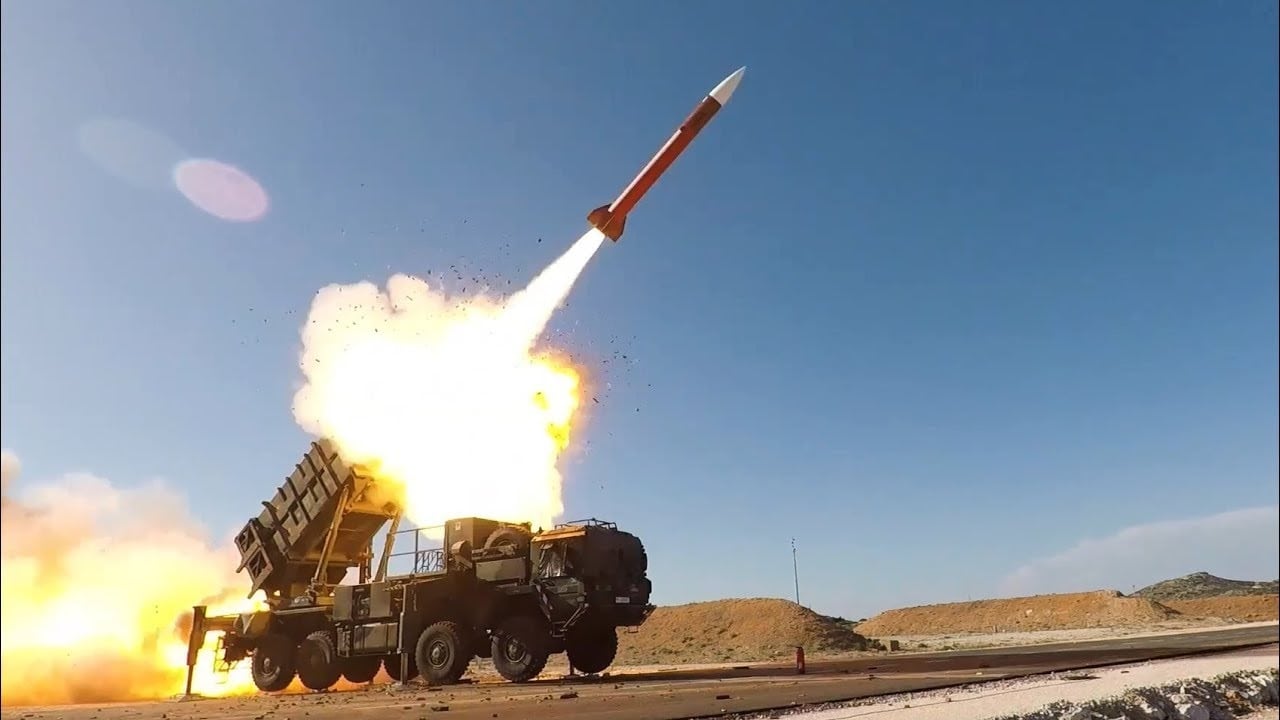
Patriot remains the Western system Ukraine most wants because it can engage ballistic and high-end cruise missile threats that cheaper systems cannot reliably handle. A Patriot battery combines launchers, command elements and phased-array radar; its modern PAC-3 family interceptors are designed for hit-to-kill engagements against ballistic missiles, while other missiles in the Patriot ecosystem are used against aircraft and cruise missiles. But Patriot is expensive, scarce, and maintenance-heavy. It is not a weather system that can be spread evenly across the map.
Ukraine’s political problem is that it needs Patriot for cities and energy infrastructure. NATO’s military problem is that it also needs Patriot for Poland, Romania, the Baltic states, Germany’s logistics corridors and the air bases that would support any reinforcement of the eastern flank. Those are not separate requirements. They compete for the same launchers, missiles, trained crews and production lines.
That competition is now visible. Recent Google News-indexed reporting from Reuters and The Guardian highlighted Ukraine’s renewed plea for interceptors, while Financial Times coverage said President Donald Trump was “not sure” he would allow Ukraine to build Patriot missiles. Axios reported that President Volodymyr Zelenskyy warned Ukraine needed interceptors to avoid a winter disaster. In plain English, Kyiv is asking for missiles now because winter is coming; NATO is trying to hold missiles back because Article 5 territory is no longer comfortably distant from the fight.
Russia Is Testing More Than Airspace
Was this an intentional Russian strike on Poland? The publicly available reporting does not prove that, and it would be reckless to claim it. But intent is not the only question that matters. Russia has spent years learning that NATO reacts more strongly to deliberate, attributable escalation than to ambiguity. A missile that crosses or crashes just over the line forces Warsaw, Brussels and Washington into the grey zone: condemn, investigate, reassure, but avoid immediate escalation.
That suits Moscow. The Kremlin does not need to start a NATO-Russia war to stress NATO’s defences. It can make the alliance spend money, move aircraft, harden radar sites, deploy additional air defence and conduct crisis diplomacy every time a strike package gets close to the border. A cheap Shahed-style drone, a cruise missile, or a failed interceptor can impose an expensive political cycle.
This is where NATO’s current posture looks too neat. The alliance has improved air policing, deployed multinational battlegroups, and talked seriously about integrated air and missile defence. Good. But the July 30 incident suggests the threat is not only a Russian column crossing the Suwalki corridor. It is a repeated pattern of air and missile pressure along the Ukrainian frontier that forces NATO to decide where Ukrainian defence ends and allied self-defence begins.
The Uncomfortable Policy Choice
There are three serious options, and none is tidy.
- First, expand Ukraine’s interceptor supply. This reduces the chance that Russian missiles survive long enough to threaten Poland, but it drains Western stocks and depends on U.S. political permission.
- Second, thicken NATO’s eastern air defence belt. Poland and Romania need more radar coverage, short-range systems for drones, and high-end interceptors for missiles. That protects NATO territory but may leave Ukrainian cities more exposed.
- Third, coordinate border-zone engagements more aggressively. This could mean better data sharing, pre-arranged procedures, and faster handoff between Ukrainian and NATO sensors. It also raises escalation and command-control questions that governments prefer not to discuss publicly.
The short answer is that NATO probably needs all three. The alliance cannot pretend Ukraine’s air war stops at Ukraine’s border. Nor can it promise an impenetrable shield while rationing the systems that make such a shield possible.
The key finding from Poland is not that Russia has suddenly discovered NATO airspace. It is that NATO’s eastern frontier is being shaped by Russian missile tactics every week, whether allied capitals admit it or not. Watch the next Polish and Romanian requests for air defence reinforcements. Watch the U.S. decision on Patriot co-production and interceptor transfers. Most of all, watch whether NATO starts treating western Ukraine as part of its own air defence problem.
Because here’s the thing: if a Russian missile can put a crater in Poland without changing NATO’s procurement priorities, then the alliance has learned less from Ukraine than it likes to tell itself.
A Russian missile landed in Poland on July 30, linked to an attack on western Ukraine, creating a crater without injuries. This incident underscores NATO's ongoing air defense challenges as the border becomes part of the battle space. The situation raises concerns about the adequacy of NATO's eastern air defense and the need for increased interceptor supplies and coordination with Ukraine.
- A Russian missile landed in Poland on 30 July.
- The missile was linked to an attack on western Ukraine.
- No injuries were reported from the incident in Poland.
- Poland's Prime Minister indicated the missile was probably Russian.
- The incident highlights NATO's air defense challenges.