
Russia's Soyuz-2.1b Launch Exposes NATO's 2026 Space Blind Spot
 Alexandra Reeves
Russia's Soyuz-2.1b Launch Exposes NATO's 2026 Space Blind Spot
A classified launch is still a strategic message
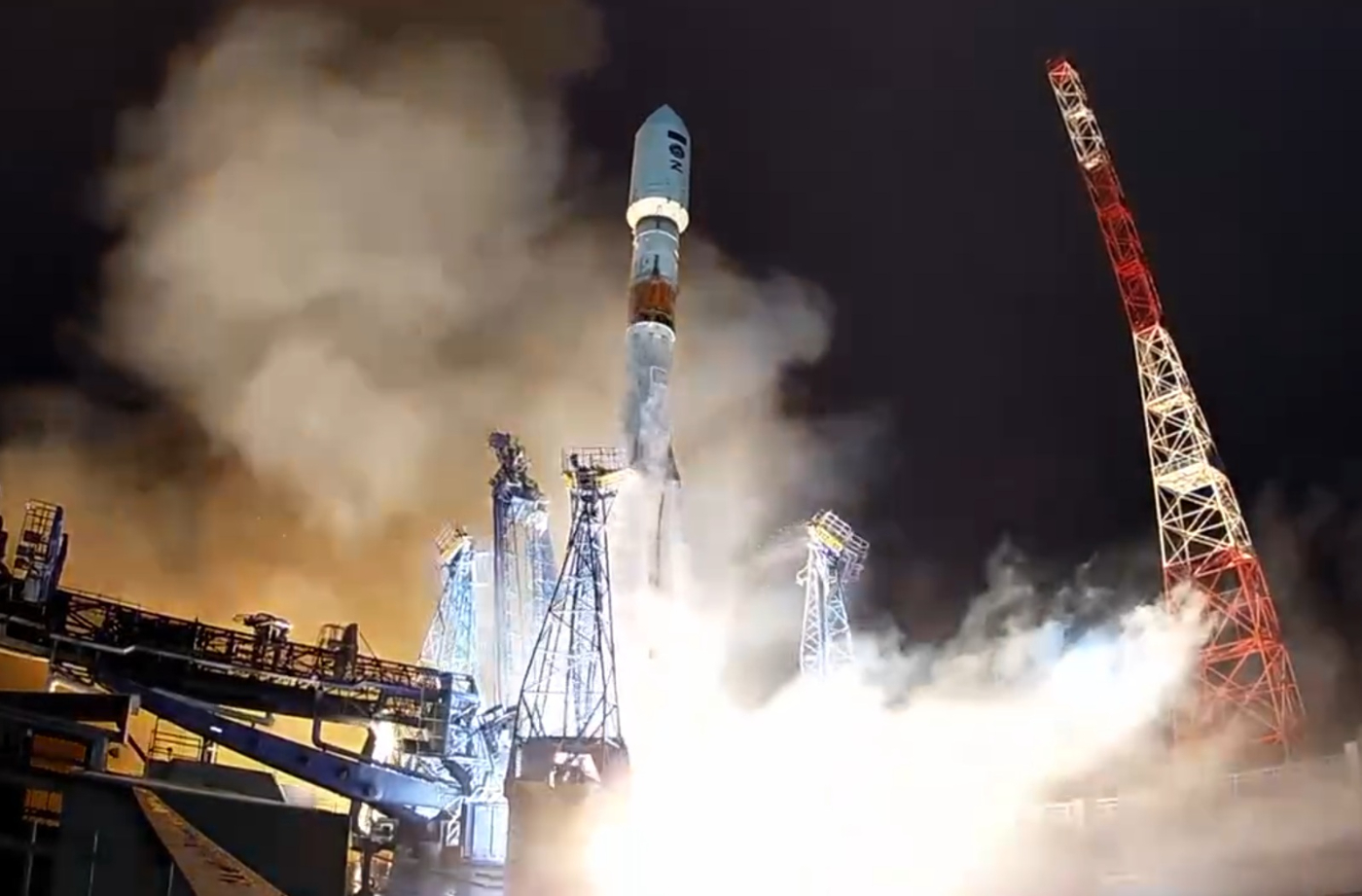
Russia did not say what it put into orbit on November 7. That is precisely why NATO should pay attention.
According to Russia's Ministry of Defence, a Soyuz-2.1b rocket launched from the Plesetsk Cosmodrome carrying a spacecraft for the ministry. The crew of Russia's Aerospace Forces Space Forces placed the payload into its planned orbit and established stable telemetry. No mission name or payload function was disclosed. Defence Blog, which reported the launch, notes that such missions are normally assigned a Kosmos designation after reaching orbit.
There is no responsible way to identify the satellite from the public statement alone. It could support reconnaissance, communications, navigation, missile warning, or another military mission. But the uncertainty itself is operationally useful to Moscow. A classified launch forces foreign intelligence services to spend time and resources determining what has changed, while Russia reveals almost nothing about its intentions.
Why Plesetsk matters to NATO
Plesetsk is not just another launch site. Located roughly 800 kilometres north of Moscow, it is Russia's principal military spaceport and is well suited to high-inclination and polar orbits. Those trajectories are useful for Earth observation, electronic intelligence and missile-warning missions because they can provide coverage across northern Europe, the Arctic and Russia's vast northern approaches.
The Soyuz-2.1b is also not an experimental platform. It is Russia's workhorse medium-lift launcher, with an upgraded third-stage engine that can carry heavier payloads to higher orbits. In other words, the November launch was routine in form even if its payload was secret. That is the uncomfortable point: Russia does not need a spectacular new space weapon to create pressure. It needs a dependable launch cadence and enough ambiguity to make NATO plan against several possibilities at once.
The launch follows other classified Russian missions from Plesetsk this year, including a September Soyuz-2.1b launch. Defence Blog has also documented earlier missions that placed several small satellites into orbit together. A single launch does not prove a new Russian doctrine. A pattern of launches does show that Moscow continues to invest in the orbital infrastructure supporting modern warfare while Europe is still debating how much of its security architecture depends on American space systems.
Ukraine has made the orbital problem impossible to ignore
The war in Ukraine has turned space support from an abstract capability into a daily battlefield requirement. Satellite communications connect dispersed units. Commercial and military imagery help identify movement and damage. Navigation signals support precision fires and drones. Weather and electromagnetic data shape the timing of operations. None of this means that one secret Russian satellite will transform the war. It does mean that the side able to replace lost space capacity faster has a real advantage.
Russia has already demonstrated interest in the more aggressive side of orbital operations. Western officials and analysts have tracked Russian inspector satellites manoeuvring close to foreign spacecraft. Other Russian satellites have been reported shadowing systems associated with Ukrainian radar support. These incidents do not establish that every classified launch is a counter-space mission. They do establish a strategic environment in which proximity operations, surveillance and interference are part of the contest.
NATO's problem is not simply that Russia may have more satellites. It is that the alliance must coordinate a response across national systems, commercial providers and multiple security classifications. The United States has the deepest space architecture in NATO, but European allies still depend heavily on American intelligence, satellite communications and early warning. Dependence is not automatically weakness. It becomes weakness when an opponent knows which links are difficult to replace.
The blind spot is political as much as technical
Everyone in Brussels now agrees that drones, missiles and electronic warfare matter. Space is often discussed differently: as a specialist portfolio, a procurement category or a future domain. That framing is too comfortable. Space is already the connective tissue of the domains NATO discusses more urgently on land and at sea.
A classified launch therefore tests more than NATO's ability to track an object. It tests whether allied governments can agree on what counts as hostile behaviour, how much evidence is required before naming it, and what response is proportionate. If a Russian satellite interferes with a commercial communications provider supporting a NATO operation, is that an attack on the provider, the member state, or the alliance? If Moscow conducts a close approach without causing visible damage, does NATO protest, impose costs, or wait for clearer evidence?
Those questions cannot be answered by adding another radar or buying another communications satellite. They require pre-agreed political thresholds, resilient cross-border networks and a command structure able to share data quickly. The alliance also needs more distributed capability: multiple launch options, redundant communications, protected ground stations and enough commercial contracts to prevent one provider from becoming a single point of failure.
What to watch next
The immediate issue is the satellite's orbit and behaviour. Independent trackers will look for the eventual Kosmos designation, orbital characteristics, manoeuvres and whether the spacecraft joins an existing Russian military constellation. NATO governments will also be watching for unusual activity around allied reconnaissance, communications or navigation assets.
Europe should not overreact to an unidentified payload. Moscow benefits if every launch is treated as proof of an imminent space attack. But Europe should also stop treating secrecy as evidence of insignificance. Russia's launch on November 7 is best understood as one more brick in a military system that links orbital surveillance to missiles, drones and electronic warfare.
The key finding is simple: the launch did not reveal what Russia can do, but it confirmed that Moscow can keep adding unknowns to NATO's planning problem. The next test will be whether the alliance can turn orbital ambiguity into shared intelligence and credible resilience before a satellite incident becomes a crisis. NATO is not blind in space. It is worse than that: it can see the threat, but still has not decided who is responsible for answering it.
Sources
- Defence Blog, “Russia launches secret military satellite from Plesetsk,” November 9, 2026, reporting the Russian Ministry of Defence statement and launcher details.
- NATO, “Space,” official alliance background, for NATO's space domain and resilience context.
- Russia's Ministry of Defence, November 7, 2026 launch statement, as quoted by Defence Blog.
Russia launched a Soyuz-2.1b rocket from Plesetsk Cosmodrome on November 7, 2026, carrying a classified payload. The launch highlights Russia's ongoing investment in military space capabilities and creates operational challenges for NATO due to the ambiguity surrounding the satellite's purpose. This event is part of a broader pattern of classified missions that enhance Russia's military space infrastructure.
- Russia launched a Soyuz-2.1b rocket from Plesetsk Cosmodrome on November 7, 2026.
- The payload and mission details were classified and not disclosed.
- Plesetsk is Russia's principal military spaceport, suitable for high-inclination and polar orbits.
- The launch is part of a pattern of classified missions indicating ongoing investment in military space capabilities.
- The ambiguity of the launch creates operational challenges for NATO.