
Japan's 1.72 Billion-Peso Radar Grant Gives the Philippines a Maritime Tripwire
 Marcus Chen
Japan's 1.72 Billion-Peso Radar Grant Gives the Philippines a Maritime Tripwire
Japan is giving the Philippines a coastal radar system and unmanned surveillance aircraft through a 1.72 billion-peso ($30 million) security grant. The equipment is modest. The geography is not. It will help Manila watch the approaches to its western coastline, where Chinese coast guard and maritime militia activity is already forcing the Philippines to spend scarce ships and aircraft on routine presence missions.
The agreement, reported by the Philippine News Agency and Kyodo News on November 9, is Japan's first Official Security Assistance (OSA) project to include defense equipment for the Philippines. Japan's Ministry of Foreign Affairs describes the package as a FY2026 project. That distinction matters: Tokyo is moving from training and infrastructure assistance toward sensors that can generate military-quality awareness in a contested sea lane.
The Grant Buys Detection, Not Sea Control
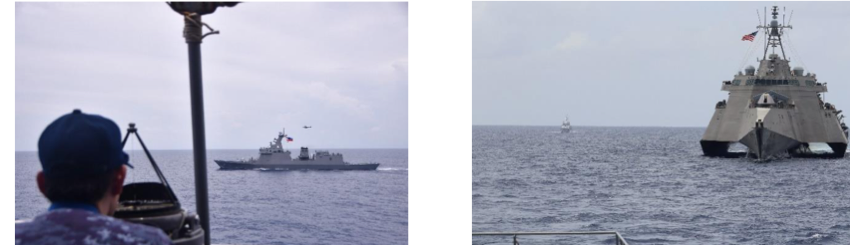
The radar and unmanned aircraft will not stop a Chinese frigate or push a coast guard cutter away from a Philippine outpost. They do something more basic and, in the opening phase of a crisis, more valuable: they make the maritime picture less ambiguous.
That is the first operational problem Manila has to solve. A coastal radar can provide persistent surface tracks from a fixed position, while an unmanned aircraft can investigate contacts beyond the radar horizon, maintain surveillance when a patrol boat is unavailable, and collect evidence for diplomatic or legal use. The combination creates a sensor-to-decision chain. It does not create a kill chain.
The grant's value is therefore measured in hours of warning and fewer blind sectors, not in the number of weapons it adds. If the system lets Philippine commanders identify a suspicious contact six hours earlier, the navy can choose whether to dispatch a patrol vessel, cue an aircraft, alert an ally, or simply document the encounter. That is a meaningful improvement when the opposing side is deliberately operating below the threshold of open combat.
Why Japan Is Building the Philippine Picture
Japan has a direct interest in this architecture. Chinese maritime pressure around the Philippines is not isolated from the waters around Japan. The same Chinese navy and coast guard that operate through the South China Sea are part of a wider system linking the Luzon Strait, the Bashi Channel, the Taiwan Strait, and the approaches to the Ryukyu Islands. A Philippine radar site can contribute to that wider picture, especially if data-sharing procedures eventually connect it to American and Japanese command networks.
Tokyo's assistance also fills a gap between exercises and alliance commitments. The United States can provide high-end intelligence, surveillance, and reconnaissance, but American assets are expensive and finite. They cannot be everywhere during a gray-zone confrontation. A Philippine-owned radar and unmanned aircraft fleet gives Manila a domestic reporting capability and gives Washington and Tokyo a local partner with its own sensors.
Japan's choice of equipment is politically calculated. Coastal surveillance is defensive, easier for Manila to explain domestically, and less escalatory than a new anti-ship missile battery. Yet surveillance changes the operating environment. A ship that knows it is being tracked must either accept attribution or spend effort masking its behavior. That raises the cost of coercion without crossing the line into direct confrontation.
The Weak Link Is Sustainment
Here is the part usually omitted from grant announcements: the hardware is the cheap part. A radar needs power, communications, trained operators, spare components, cybersecurity, and a maintenance chain. An unmanned aircraft needs launch and recovery crews, flight hours, data links, batteries or fuel, and a system for processing the imagery it collects. Without those layers, the Philippines receives equipment that looks impressive during a handover ceremony and becomes unreliable during a prolonged standoff.
The 1.72 billion-peso ceiling is large enough to start a network, not to guarantee one. Manila will need to budget for recurring operating costs and decide who owns the information. Philippine Navy, Coast Guard, and armed forces data often sit in separate bureaucratic channels. If a radar detects a contact but the report takes an hour to reach the commander responsible for a contested shoal, the sensor has not solved the tactical problem.
There is also a survivability question. Fixed coastal radars are useful precisely because they are persistent, but persistence makes them targetable. In a serious conflict, China would have options ranging from electronic attack and cyber disruption to long-range fires. The Philippines should therefore treat the Japanese system as a distributed network, with redundant sites, mobile nodes, protected communications, and procedures for operating after one sensor is lost.
A Small Grant With a Larger Strategic Signal
USNI News has reported that Japan is also seeking a larger defense relationship with the Philippine forces, including air-defense and maritime-surveillance systems. The OSA package is not an alliance treaty and it does not turn Japan into the Philippines' security guarantor. It does, however, show how Tokyo is using equipment, standards, and training to make Southeast Asian maritime forces more interoperable.
That is the real significance of November's announcement. Japan is helping the Philippines see the maritime battlefield before it helps the Philippines strike on it. For deterrence, that is the correct sequence. A state cannot defend a sea lane it cannot monitor, and it cannot rally outside support around an incident it cannot document.
But a radar grant is only a tripwire if somebody is prepared to respond when it trips. Japan and the United States can provide sensors; Manila still has to fund the crews, protect the sites, and decide what it will do with the warning. The equipment will improve the Philippine picture. Whether it changes Chinese behavior depends on what that picture triggers next.
Sources: Japan Ministry of Foreign Affairs; Philippine News Agency; USNI News.
Japan granted the Philippines a 1.72 billion-peso security package on November 9, 2023, which includes a coastal radar system and unmanned surveillance aircraft to enhance maritime surveillance. This initiative marks Japan's first Official Security Assistance project involving defense equipment for the Philippines, aimed at countering Chinese maritime activities. The equipment will improve the Philippines' ability to monitor its western coastline and contribute to regional security efforts.
- Japan is providing a 1.72 billion-peso security grant to the Philippines.
- The grant includes a coastal radar system and unmanned surveillance aircraft.
- This is Japan's first Official Security Assistance project involving defense equipment for the Philippines.
- The equipment aims to enhance maritime surveillance against Chinese activities.
- Japan's assistance is part of a broader strategy to improve regional security cooperation.