
Task Force Iron Gate Encircles Iran's Land Routes in 2026 and Tests the Gulf's Resilience
 Ahmed Al-Rashid
Task Force Iron Gate Encircles Iran's Land Routes in 2026 and Tests Gulf Resilience
On November 8, 2026, the U.S. Central Command announced the formation of Task Force Iron Gate to track the routes for transporting weapons and dual-use materials to Iran via its land borders and the Caspian Sea. The announcement came just one day after the Iranian Revolutionary Guard announced plans to expand underground facilities for producing missiles and drones, at a time when Riyadh was dealing with a wave of Houthi missiles and drones that struck an Aramco facility. These are not separate news items; they are one picture of a war in which Washington is trying to choke Iran's logistical depth, while its adversaries respond by expanding the front from the Caspian Sea to the Red Sea.
What Iron Gate Does Practically
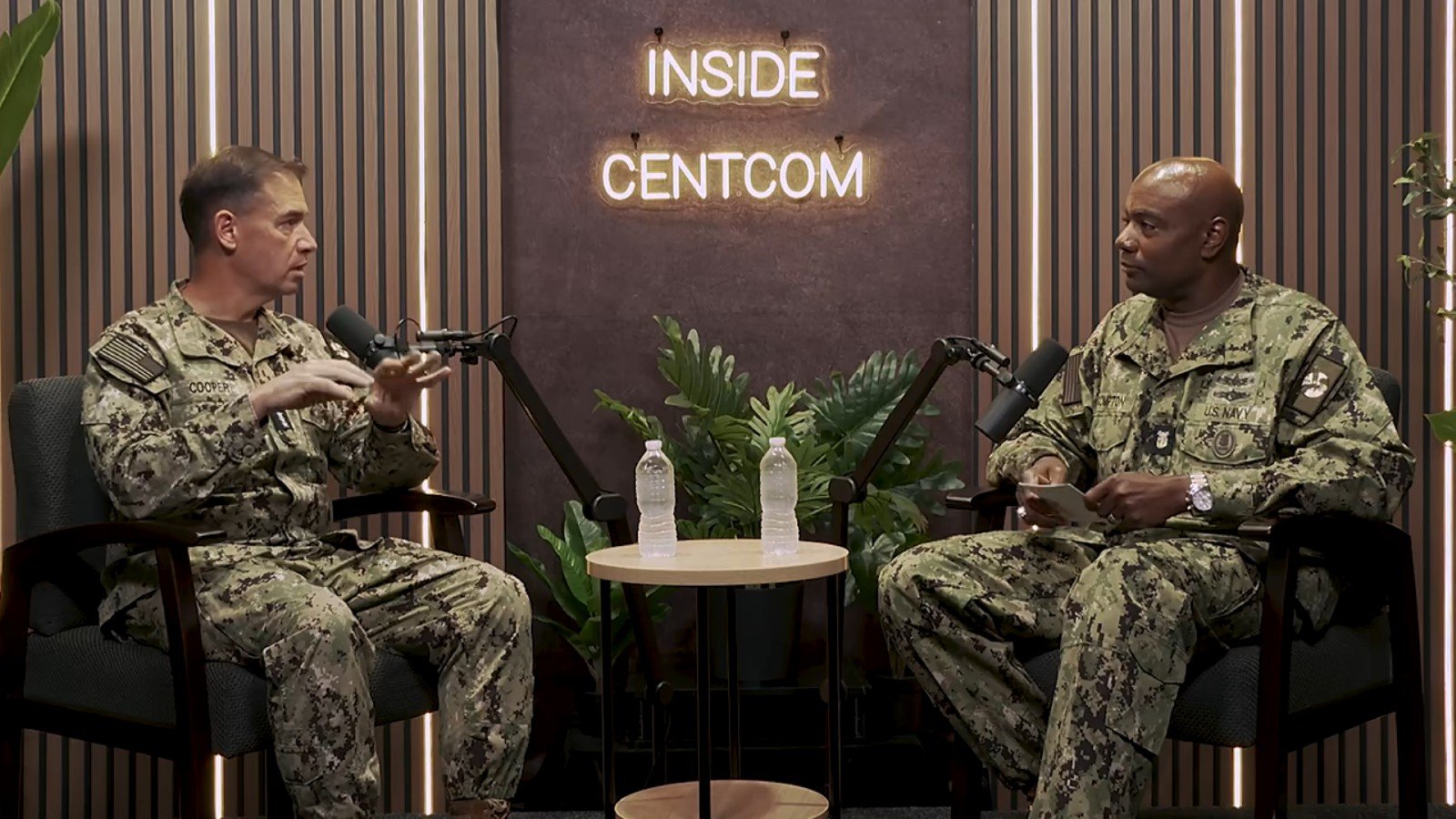
According to Central Command, the task force will consist of about 20 military and civilian personnel, and will coordinate with U.S. agencies to map the entry routes of weapon systems, sensitive technologies, and illicit revenues. Iran is surrounded by seven countries: Iraq, Turkey, Armenia, Azerbaijan, Turkmenistan, Afghanistan, and Pakistan, and has a wide outlet to the Caspian Sea. Therefore, the mission is not a maritime blockade in the traditional sense, but rather an information, legal, and intelligence operations room that could turn into strikes on transport nodes and economic facilities if the White House decides to resume fighting.
Militarily, the task force does not have a U.S. base on the Caspian Sea and cannot inspect every truck or ship passing through the Caucasus and Central Asia. Its primary value lies in gathering intelligence and linking sanctions with aerial and maritime surveillance and interception operations. The talk of closing all routes is more political propaganda than a feasible plan.
Iran Does Not Rely on One Route
The lesson that Washington has yet to learn is that Iran has built a war economy distributed across networks, not reliant on a single corridor. Components can pass through intermediary companies in Asia, enter from friendly ports, or reach the northern part of the country via the Caspian Sea. Recent reports indicate Russian connections in the transport of drone components and explosives, while the multiplicity of commercial intermediaries allows for the concealment of sensitive materials within civilian shipments.
The Revolutionary Guard described Iron Gate as "playing with words" and stated that attempts to impose a rapid economic collapse have failed. This statement should not be taken at face value, but it should also not be dismissed. Iran has paid a heavy price in exposed ports and facilities, and therefore will move more production to underground complexes and increase reliance on modified commercial parts. Bombing can destroy a factory; however, it does not easily destroy knowledge or the supplier network.
Why This Matters to Saudi Arabia and the UAE
The recent Houthi attack on Riyadh illustrates that pressure on Iran does not remain within Iranian borders. If the routes through the Caspian Sea and the borders tighten on Tehran, its networks and partners can raise the cost of war in the Gulf, Yemen, and Iraq. Intercepting missiles over the Saudi capital is a tactical success, but hitting an Aramco building or disrupting the financial district proves that air defense does not protect the economy merely by intercepting projectiles. What is needed is the protection of vital nodes, the distribution of command centers, and having an interception stock sufficient for a war of attrition, not just for one night.
Here lies the problem of the "triangle of capability" that Gulf states have long neglected. The equipment is available, from Patriot and THAAD to fighter jets; however, joint training, continuity of command, and the ability to repair systems under fire are less clear. Buying a new radar does not compensate for the absence of an intelligence network that detects the launch platform before takeoff, nor does it compensate for operational decision-making relying on a foreign party. Expanding partnerships does not automatically equate to building a cohesive fighting institution.
Between Deterrence and Negotiation
The paradox is that Washington announced Iron Gate while President Donald Trump says that new strikes on Iran are "unlikely" if talks progress. For Tehran, this is a contradiction that can be exploited: the closer diplomacy gets, the higher the cost of intercepting shipments, and the more pressure rises, the more it threatens navigation and energy through allies. For Gulf states, the problem is even harsher; they want U.S. deterrence without their arenas becoming a testing ground for a new blockade.
The task force may succeed in disrupting specific shipments, but it will not cut off Iran's entire network. In fact, pressure on the Caspian routes may push Russia and Iran to protect the corridors more clearly, creating friction with Azerbaijan, Turkey, and Iraq. Any military officer who has served in the region knows that an alternative route appears the moment the planner thinks they have closed the original route. Therefore, Iron Gate is an armed negotiating tool, not a key to victory.
Conclusion
The new equation in the Middle East is not just between U.S. blockade and Iranian production, but between Washington's ability to monitor networks and Tehran's ability to turn every pressure into a new front. Saudi Arabia and the UAE will measure the value of Iron Gate by the number of attacks that reach their facilities, not by the number of statements issued from Tampa. Here, the structural contradiction remains: Gulf states want defensive independence, but they still rely on U.S. power to make that independence possible.
Sources
The U.S. Central Command established Task Force Iron Gate on November 8, 2026, to monitor and disrupt Iranian supply routes, involving approximately 20 military and civilian personnel. This initiative follows Iranian plans to expand missile and drone production facilities and comes amid heightened tensions due to recent Houthi attacks on Saudi Arabia. The task force aims to gather intelligence and coordinate with U.S. agencies to address Iranian logistics and military capabilities.
- Task Force Iron Gate was formed to track Iranian supply routes.
- The task force consists of approximately 20 military and civilian personnel.
- Iran is expanding underground facilities for missile and drone production.
- Recent Houthi attacks on Saudi Arabia highlight regional tensions.
- The U.S. aims to monitor and potentially disrupt Iranian logistics.