

It’s called “Russia’s Warthog,” which is a reference to America’s iconic Fairchild A-10 Thunderbolt II “Warthog” close air support (CAS) warplane. That plane is the Su-25 Frogfoot.
Created by the Soviet Union, this plane is ugly, armored, simple, and built to fly low over the battlefield, killing ground targets.
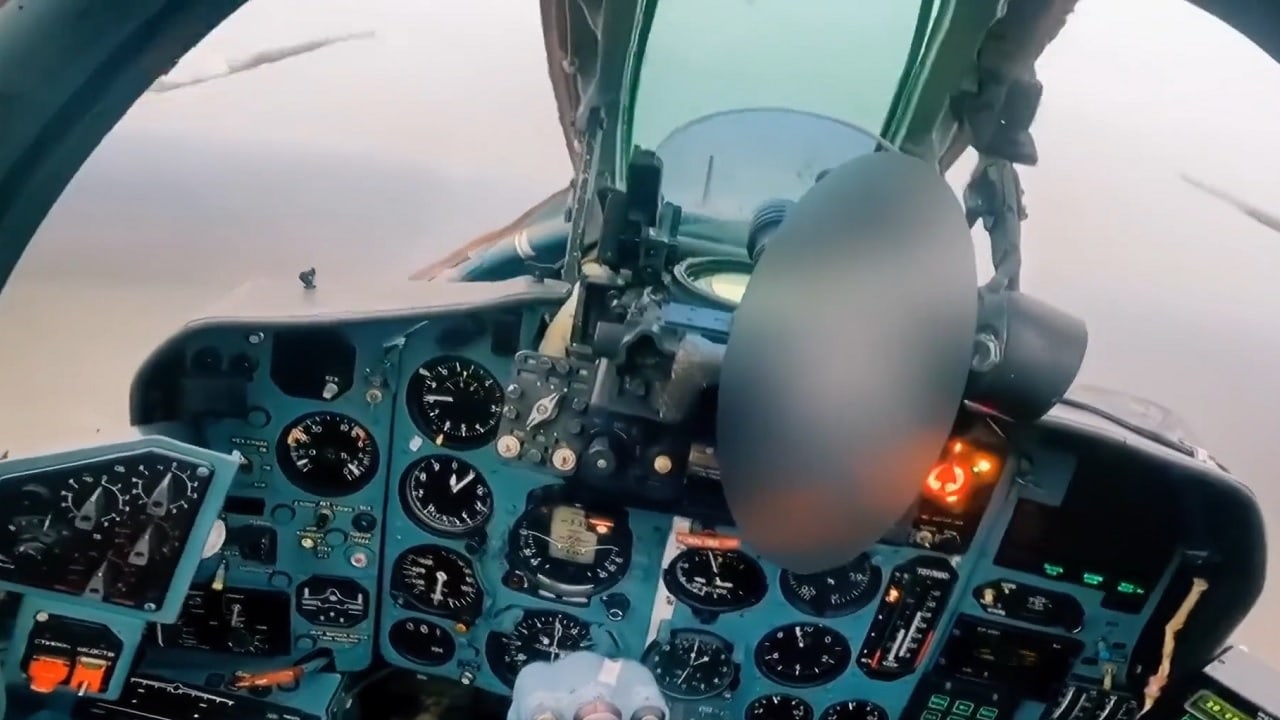
Ukraine Su-25
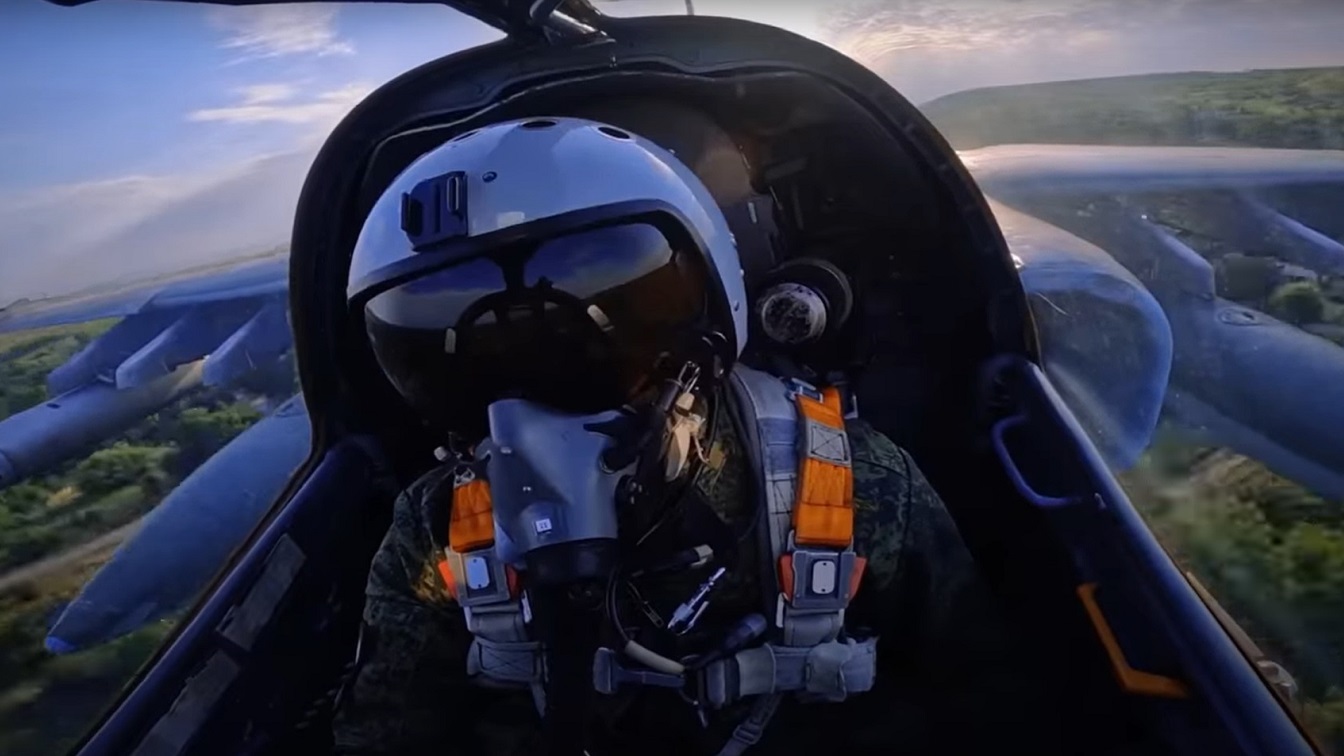
Inside pilot cockpit. Image Credit: YouTube Screenshot.
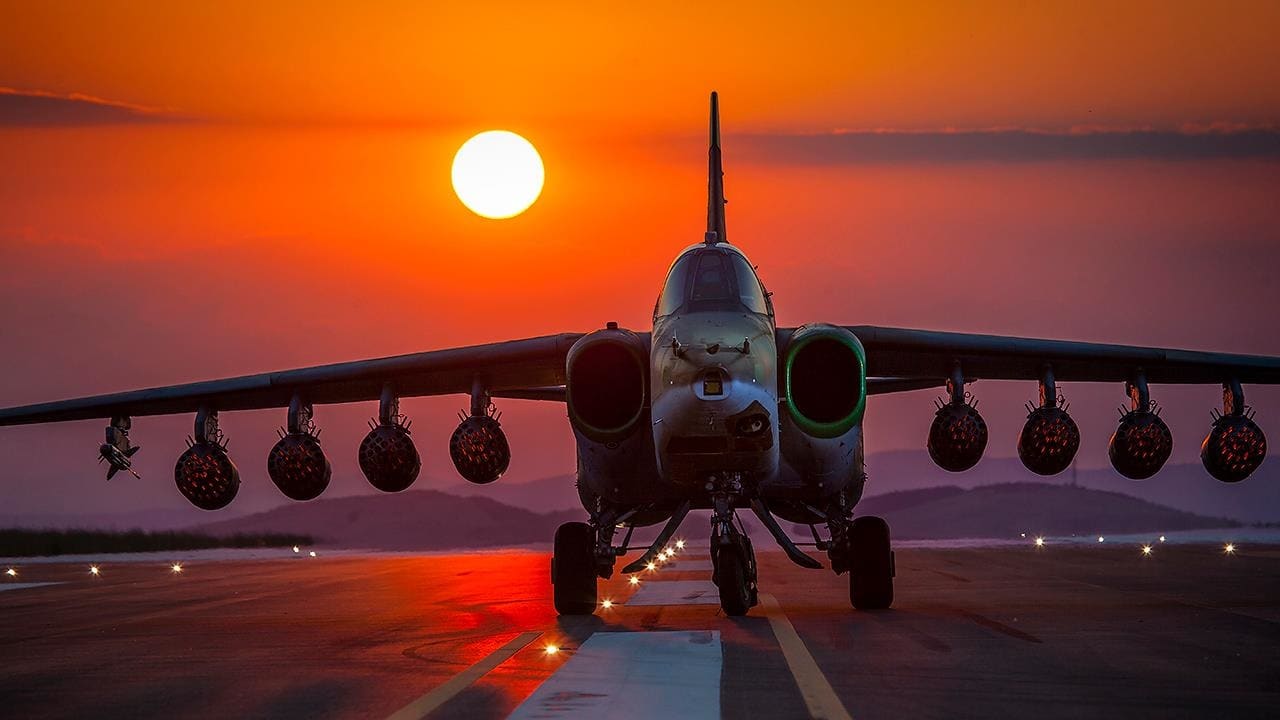
Su-25 like those used in Syria by Russian forces. Image Credit: Creative Commons.
This plane has become a centerpiece of the ongoing war in Ukraine, too.
But, like so much of the old Soviet gear used by both sides in the conflict, the Su-25 has adapted to the modern era of wars of attrition waged beyond visual range (BVR).
In Ukraine, both Russia and Ukraine still use Su-25s because they need battlefield strike aircraft, but the modern air-defense environment makes old-school CAS missions almost suicidal.
The Su-25 in Ukraine
At the start of the war, analysts expected Su-25 pilots on both sides to suffer badly. That proved true. HistoryNet, a popular online publication on history and warfare, notes that by mid-August 2022, both Russia and Ukraine had reportedly lost eight Su-25s each.
That showed both the aircraft’s importance and its vulnerability.
An Su-25 Frogfoot survives because it is rugged. The bird was built for low-altitude work–and it historically does that work well.
Like the A-10, the Su-25 features impressive armor and fuel protection and is known for its battlefield durability. But Ukraine has shown that the Su-25’s original missions are becoming obsolete.
Flying low over the battlefront exposes it to MANPADS, radar-guided surface-to-air missiles (SAMs), anti-aircraft guns, drones, and even friendly-fire risks.
That is why the biggest development is Ukraine’s conversion of its Su-25s into standoff precision bombers.
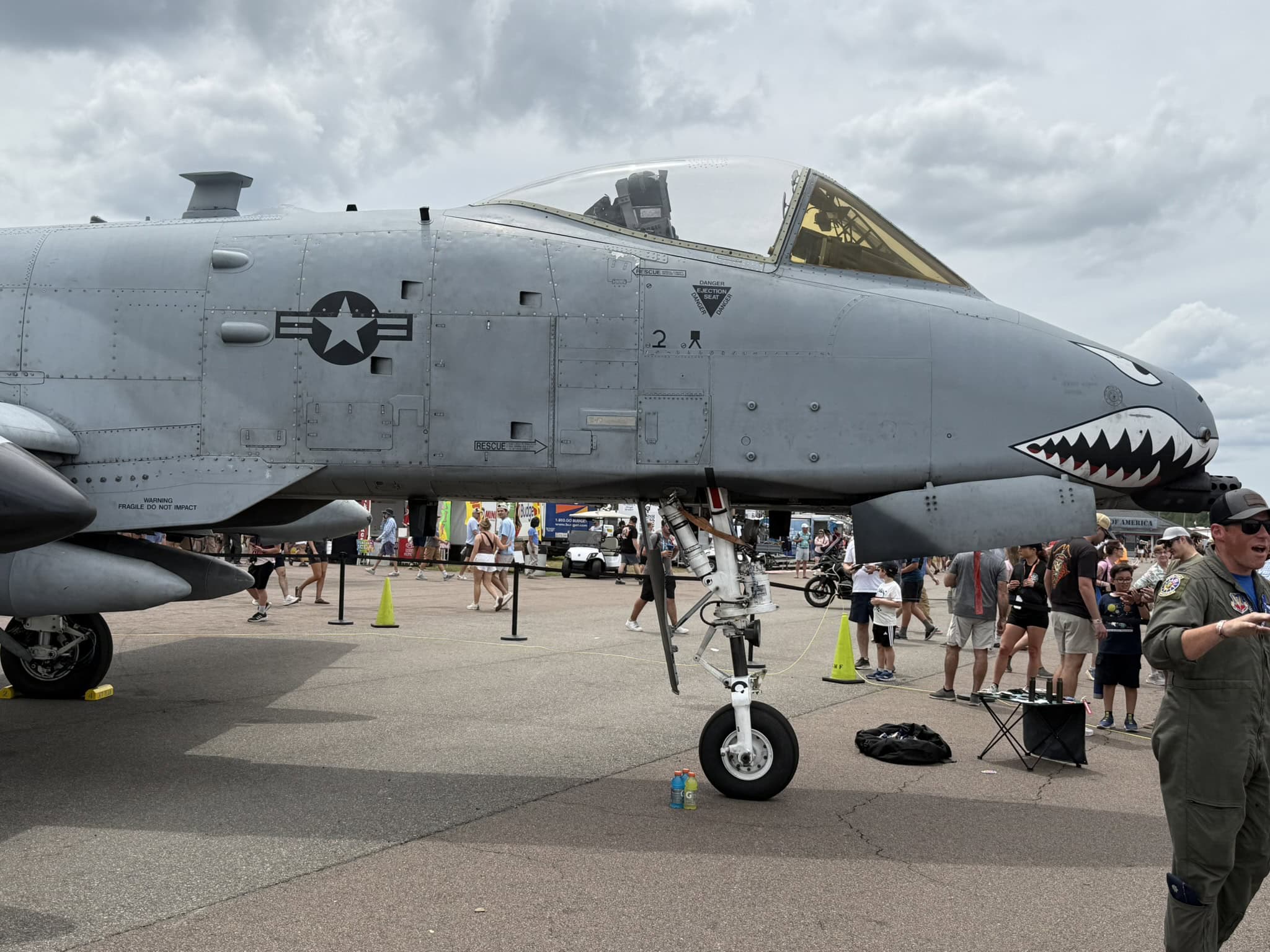
A-10 Warthog. 19FortyFive.com image from Lakeland, Florida airshow on 4/19/2026.
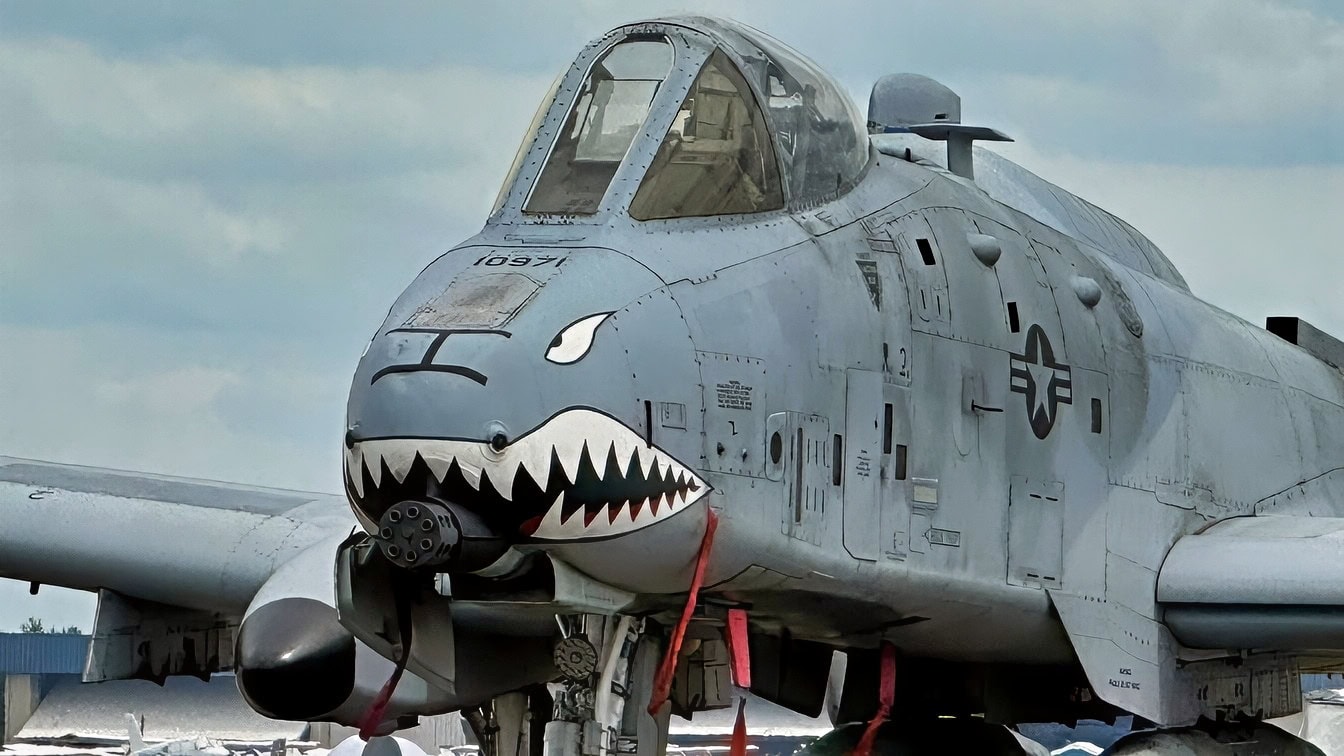
A-10 Warthog Lakeland Florida Airshow. Taken on 4/19/2026 by 19FortyFive.com
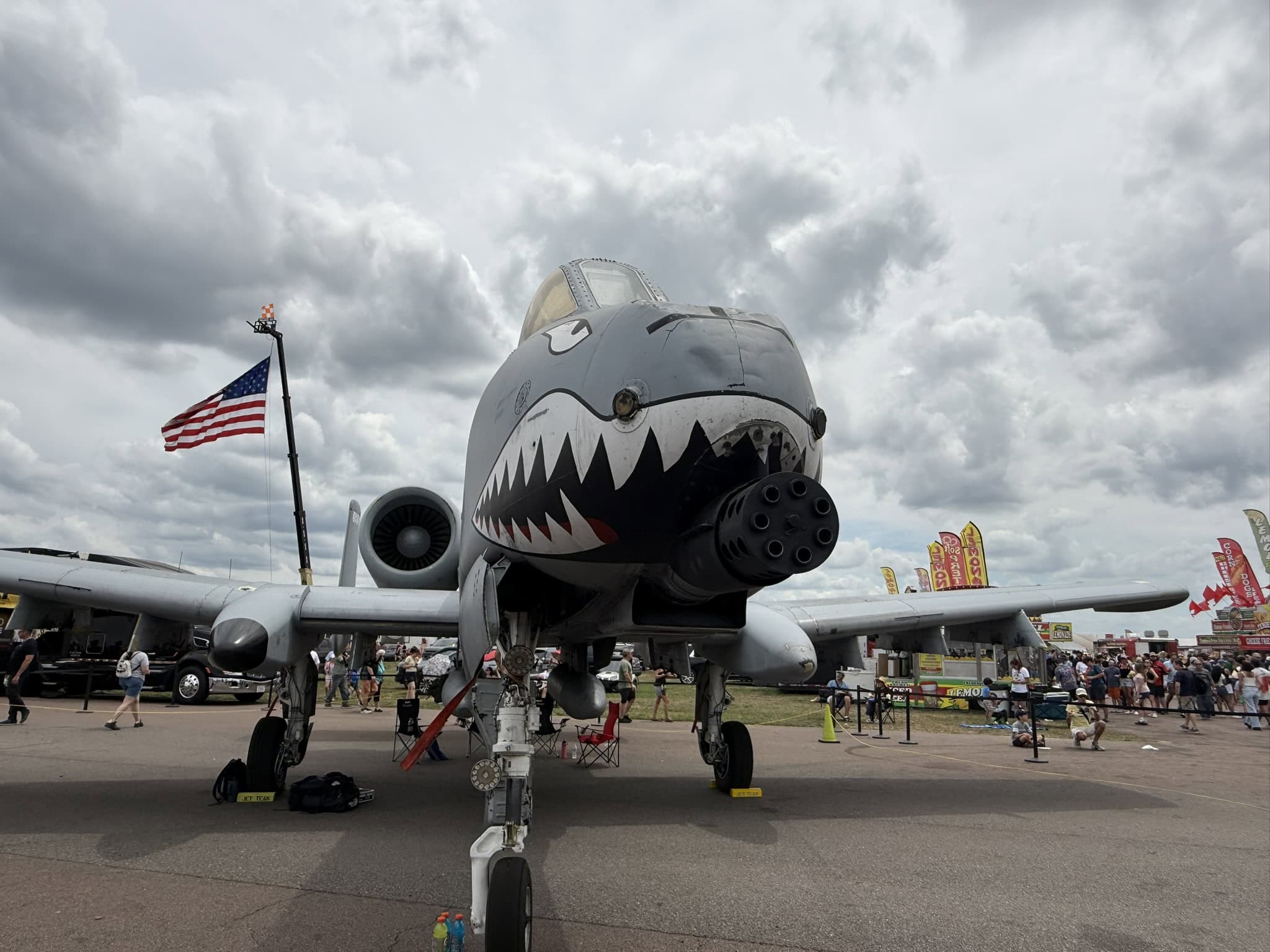
A-10 Warthog Sun’ and Fun Airshow 19FortyFive. Taken 4/19/2026.
Back in January 2025, The War Zone, a popular online defense publication, reported that Ukrainian Su-25s were seen launching French AASM Hammer rocket-boosted guided bombs, the first known Western precision munition integrated onto Ukraine’s Su-25s.
That matters because the Su-25 is no longer just diving in with rockets and cannon fire.
The Su-25 Frogfoot is being adapted to deliver precision weapons from greater ranges, giving the aircraft a chance to survive in a saturated air-defense zone.
It’s a smart and necessary move by Ukraine. Yet it weakens the plane’s utility, which was designed to hover over battlefields, take a pounding from small-arms fire below, and provide air cover for advancing troops and tanks.
But that style of warfare is over.
Why Ukraine Still Uses It
Ukraine keeps flying the Su-25 because it needs all the tactical airpower it can get along the highly contested and expansive frontline.
Per The War Zone, Ukraine has suffered confirmed Frogfoot losses. Although the Ukrainian Air Force continues to employ the aircraft, the need for strike aviation remains acute.
Beyond CAS missions, the Su-25 is useful for rocket attacks, low-level strikes, emergency battlefield interdiction, and, more recently, limited standoff bombing.
Russia’s Su-25 Problem
Russia, too, relies heavily on the Su-25. But the aircraft’s low-altitude mission profile has caused mounting losses.
Kyiv Post, a pro-Ukraine paper, reported that Russian Su-25 losses near Soledar in June 2025, allegedly from friendly fire, and noted that Russian Su-25s face risks from poor coordination, low-level flying, drone collisions, and even power-line strikes.
The key lesson is that while the Su-25 Frogfoot is an excellent plane on its own, which, if in the right environment, performs its original mission brilliantly, the Ukraine War has forced a fundamental change in that mission.
In Ukraine, toughness and ruggedness give you merely a chance to survive, but they do not give you immunity.
What the Su-25 Is
Called Grach in Russian (NATO designated the Su-25 as “Frogfoot”), the plane entered Soviet service in 1981. It was designed as a dedicated CAS aircraft after the Soviets realized fast jets were poorly suited for supporting troops in contact.
A single-seat armored attack jet, this bird has two turbojet engines, a powerful 30mm GSh-30-2 cannon, roughly 4,400 kg of weapons capacity, a combat radius of around 750 km, and a low service ceiling of around 23,000 feet.
CAS will remain an important function in any way. But the method for CAS became different under the conditions of the Ukraine War.
Indeed, the world is seeing that the more important role for these planes is one they were not meant for: standoff strikes.
Bottom Line
The Frogfoot is not a modern fighter. It is a flying armored truck. The plane saw service during the Soviet-Afghan War, in Chechnya, Georgia, Syria, and now Ukraine. Make no mistake: this plane is a rugged battlefield aircraft with a long record of success.
Ukraine has negated the warplane’s primary functionality. Traditional CAS is becoming nearly impossible against dense modern air defenses.
The Frogfoot survives today only by evolving–from low-level “flying artillery” into a crude standoff strike platform.
Its evolution in modern warfare is also a word of caution for the A-10, which is already being made to fight in the Middle East, not as a CAS plane but as a primarily anti-drone and air defense interception plane.
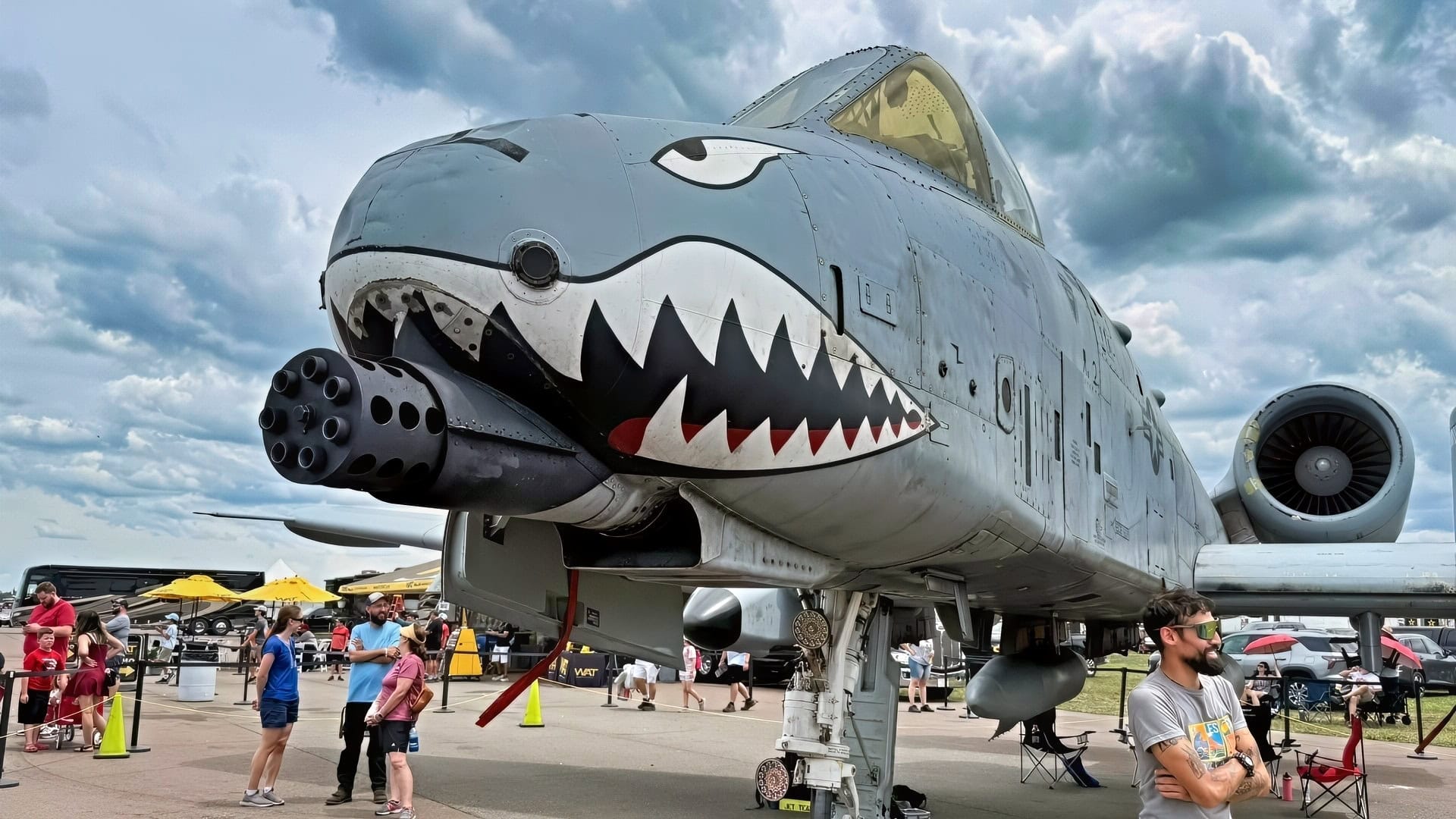
A-10 Warthog Lakeland Air Show 19FortyFive Photo
The Su-25 is no longer a CAS bird. It is now a crude standoff strike platform.
About the Author: Brandon J. Weichert
Brandon J. Weichert is the Senior National Security Editor at 19FortyFive.com. He also manages The Weichert Brief on Substack. Weichert also hosts “National Security Talk” on Rumble. He is the author of four bestselling national security books, the most recent of which is A Disaster of Our Own Making: How the West Lost Ukraine (Encounter Books). Follow him via Twitter/X @WeTheBrandon.