
Saudi Arabia completes first heavy maintenance for Eurofighter Typhoon after 2500 hours in 2026
 Ahmed Al-Rashid
Saudi Arabia Completes First Heavy Maintenance for Eurofighter Typhoon After 2500 Flight Hours in 2026
On June 21, 2026, a seemingly small piece of news emerged from King Fahd Air Base in Taif, but from a military perspective, it is more significant than many aircraft deals that make headlines. Saudi Arabia completed its first scheduled heavy maintenance for a Eurofighter Typhoon belonging to the Royal Saudi Air Force after reaching 2500 flight hours, with the work taking 180 days within the Kingdom and a workforce reported to be 80 percent Saudi.
This news does not mean that Riyadh has become self-sufficient in combat aviation, nor should it be sold to the reader so simply. However, it indicates that Saudi Arabia has begun to grasp part of the chain that has typically remained in Europe, which is the deep maintenance chain that determines whether a modern aircraft will remain a number in the military display or a ready capability in the squadron.
Why Heavy Maintenance Differs from Daily Maintenance
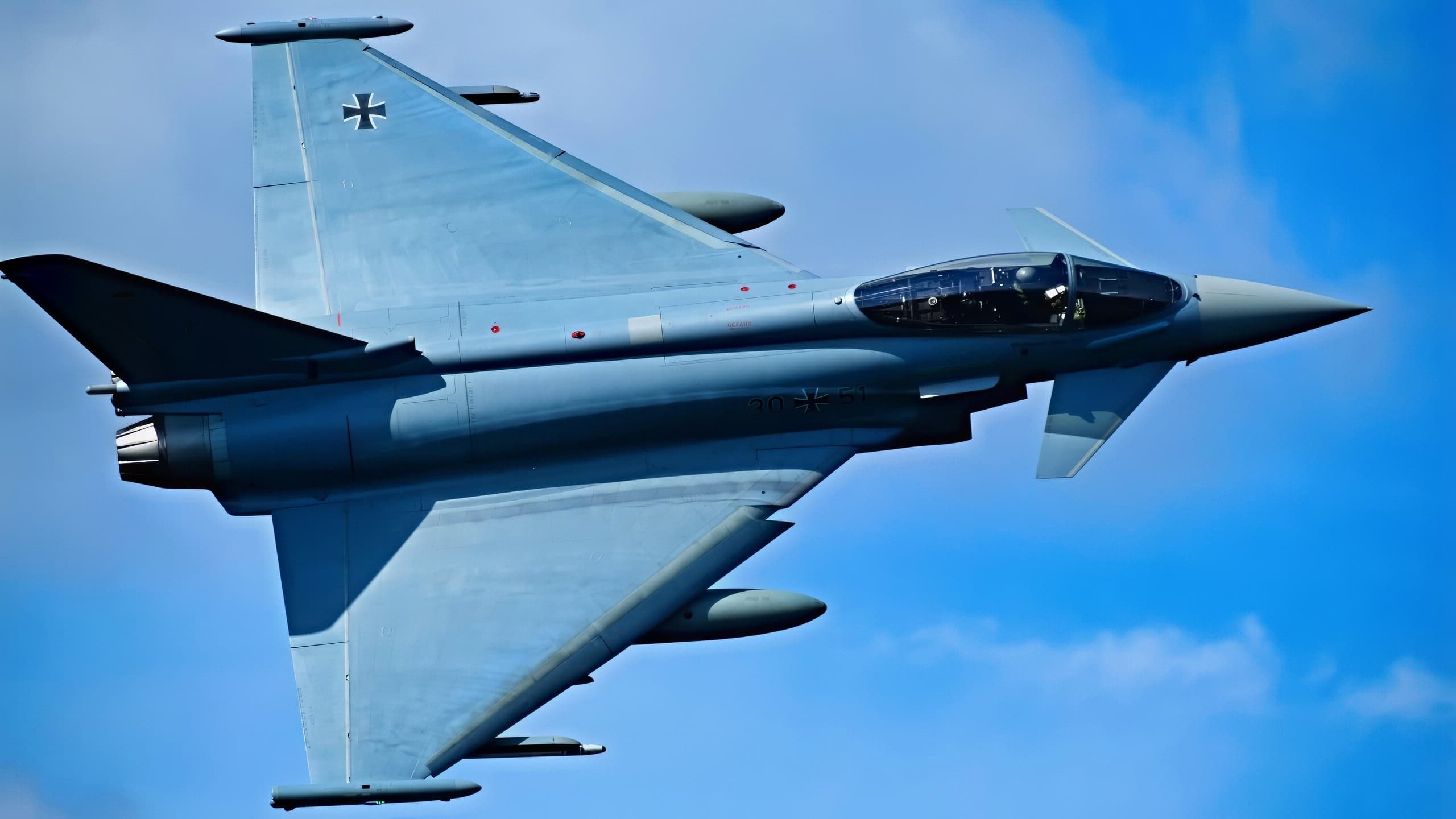
Any military personnel who has served in the region knows that purchasing the aircraft is the easiest part of the story. The difficulty begins when the aircraft enters the cycle of real use, especially in a hot and dusty environment with bases operating near operational theaters like Yemen and the Red Sea. Heavy maintenance at 2500 hours is not just an oil change or a routine check. It involves partial disassembly of the airframe, inspection of internal structures, safety tests, replacement of parts as per technical condition, and then reconditioning the aircraft for combat flight.
According to a Defence Blog report, this work was carried out at a facility in Taif described as the only one of its kind outside Europe qualified for this level of Typhoon maintenance. This statement is important because it shifts the discussion from localization propaganda to a measurable standard. The issue here is not the opening of a new building or signing a memorandum of understanding, but completing a maintenance cycle certified on a complex European platform that has been in service since 2003 and remains linked to an industrial network that includes BAE Systems, Airbus, and Leonardo.
The Saudi Fleet Between Numbers and Readiness
Saudi Arabia owns 72 Eurofighter Typhoons delivered between June 2009 and June 2017, as noted by Aviation Week in its coverage of the new Saudi order. For years, there has been talk of an additional batch that could reach 48 aircraft, with Saudi interest in a newer version equipped with the ECRS Mk2 radar and more advanced processing systems and cockpit. However, the question that should precede the excitement for the second batch is a simpler one: Can the current fleet maintain its readiness under operational pressure?
An aircraft that does not have a deep maintenance line nearby becomes hostage to shipping schedules and foreign manufacturer timelines. In peacetime, this raises costs and prolongs downtime. In times of crisis, it becomes a gap in deterrence. Therefore, completing the 2500-hour cycle within Saudi Arabia does not add a new missile or increase radar range, but it reduces the aircraft's absence from the squadron and gives the air commander flexibility that does not appear in marketing brochures.
This is where the value of King Fahd Air Base in Taif comes into play. The base is not just an administrative site; it is home to the second wing and operates Typhoon in an area relatively close to the Yemen theater. If the fleet is being used seriously, flight hours will accumulate faster, and deep maintenance will become a continuous production line rather than a celebratory event. The first aircraft to complete maintenance is the beginning of a test, not the end of a project.
True Localization is Not Spending Percentage but Technical Dependence
Vision 2030 talks about localizing 50 percent of military spending. This phrase is repeated so often that it has lost some of its meaning. Practically, industrial sovereignty is not measured by the number of logos on exhibition wings, but by the number of technicians and engineers who can sign off on dangerous and complex work and have it accepted by the manufacturer and the air force.
The presence of 80 percent of the workforce being Saudi in this maintenance, if confirmed and sustained, is more important than announcing a general spending percentage. Because deep maintenance creates cumulative knowledge. The technician who opened the aircraft and inspected the joints, structures, and systems for the first time will return in the next cycle with a better understanding. After ten cycles, the air force will have a local technical memory. This memory is what many armies lack when they buy the platform but do not have the school.
However, one should not exaggerate. BAE Systems and its partners will remain at the heart of the supply chain, parts, software, and updates. The ECRS Mk2 radar, the new mission computer, and the Striker II helmet are systems that Riyadh cannot produce by political decision. What has been achieved in Taif is a partial shift from complete dependence to managed dependence. This is a significant difference, but it is not complete independence.
A Message to London, Rome, and Berlin
This step comes as Riyadh navigates between multiple European paths. Aviation Week noted that the German obstruction of Typhoon exports to Saudi Arabia has begun to melt away, and that Riyadh does not want a solitary version but a configuration close to the updates of the Royal Air Force. Defense News quoted a Leonardo official stating that Saudi Arabia could use programs like Eurofighter and NH90 as an industrial entry point before any potential role in the sixth-generation GCAP program.
In other words, maintenance in Taif is not just a technical event. It is a bargaining chip. When Saudi Arabia tells the European supplier that it is no longer just a customer paying the bill, but has a center capable of executing 2500-hour maintenance, it is asking for a higher place in the chain: assembly, electronics repair, unit manufacturing, and perhaps a later role in future programs.
The Europeans understand this language. Britain wants to keep the Typhoon line alive, Italy wants to expand industrial partnerships, and Germany wants to ease the burden of its previous political decisions without losing influence within the Eurofighter consortium. Meanwhile, Saudi Arabia wants an aircraft, a radar, knowledge, and a seat at the table. The problem is that each party wants to give as little knowledge as possible in exchange for as much money as possible.
Testing the Triad Capability
I return here to the capability triangle that I always use: equipment, training, and institution. Saudi Arabia has the equipment, which is clear. Training has improved significantly since the Yemen war, especially in operating the joint air force and dealing with small targets like drones. The technical institution is the link that the Taif news tests.
If the center continues to rely on foreign experts who change their locations while Saudis remain in a supporting role, we will be left with a pretty picture and nothing more. If the first maintenance turns into a recurring program, with strict documentation, a local technical school, a calculated parts inventory, and a system of accountability for mistakes, then it can be said that Saudi Arabia has begun to build a capability that it does not just buy.
The irony is that this quiet step may be more important than announcing the purchase of 48 new aircraft. Adding aircraft to a fleet that cannot maintain them deeply is like increasing the number of horses without a stable or veterinary care. Building maintenance capability, however, is a dull task in the news but creates strength in war. As military personnel say: the weapon that you cannot return to service in a timely manner is not fully your weapon.
Conclusion
Completing the Typhoon maintenance after 2500 hours within Saudi Arabia does not free Riyadh from Europe, but it reduces the distance between it and the meaning of operational air sovereignty. It is a real advancement, but an advancement within a clear constraint: high technology, political dependence, and software updates will remain in the hands of European partners for a long time.
Here lies the ongoing Saudi tension. The Kingdom wants to be a major buyer and an industrial partner at the same time. Suppliers want money and controlled partnership, not a shift in the center of gravity. Between these two parties, facilities like the Taif center will determine whether the defense aspect of Vision 2030 will become operational capability or remain another large number in the spending ledger.
Saudi Arabia completed its first heavy maintenance of the Eurofighter Typhoon at King Fahd Air Base in Taif on June 21, 2026, after 2500 flight hours. This maintenance involved 80% Saudi personnel and marks a significant step in the country's military self-sufficiency. The facility in Taif is noted as the only one outside Europe qualified for such maintenance, enhancing the operational readiness of the Royal Saudi Air Force's fleet of 72 Typhoon aircraft.
- Saudi Arabia completed its first heavy maintenance of the Eurofighter Typhoon after 2500 flight hours.
- The maintenance took place at King Fahd Air Base in Taif.
- 80% of the workforce involved in the maintenance were Saudi nationals.
- The facility in Taif is the only one outside Europe qualified for this level of maintenance.
- Saudi Arabia has 72 Eurofighter Typhoon aircraft in its fleet.