

Iranian missile and drone strikes on US bases in the Persian Gulf this year should be a huge wake-up call for the United States. America’s massive conventional lead over its challengers has not prevented US vulnerability to counter-strikes.
Indeed, the regional damage is apparently worse than was initially made public.
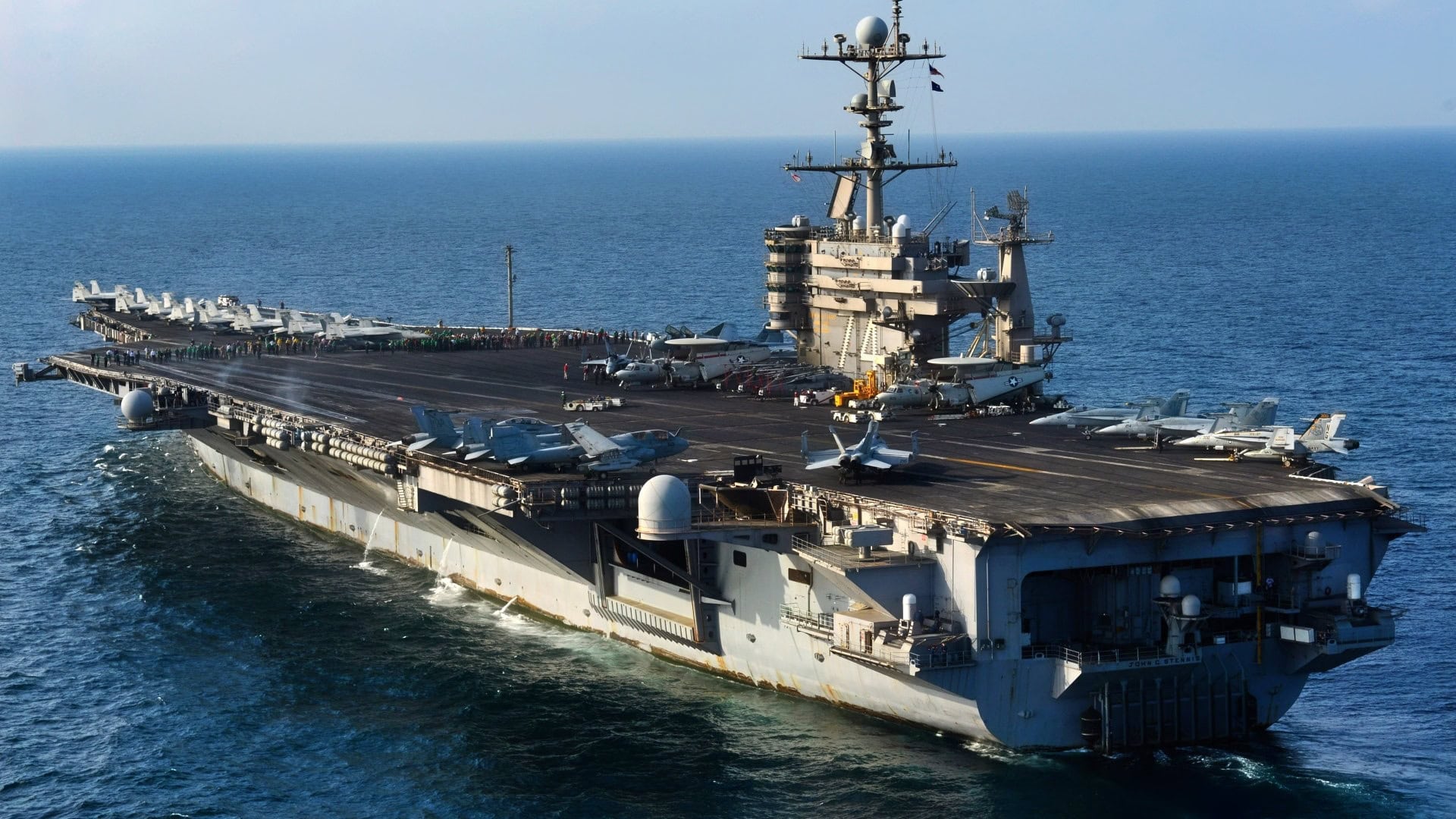
U.S. sailors perform a foreign object debris walkdown on the flight deck of the aircraft carrier USS John C. Stennis (CVN 74) Feb. 19, 2013, in the Arabian Sea. The ship was deployed to the U.S. 5th Fleet area of responsibility to conduct maritime security operations, theater security cooperation efforts and support missions for Operation Enduring Freedom. (U.S. Navy photo by Mass Communication Specialist 2nd Class Kenneth Abbate/Released)
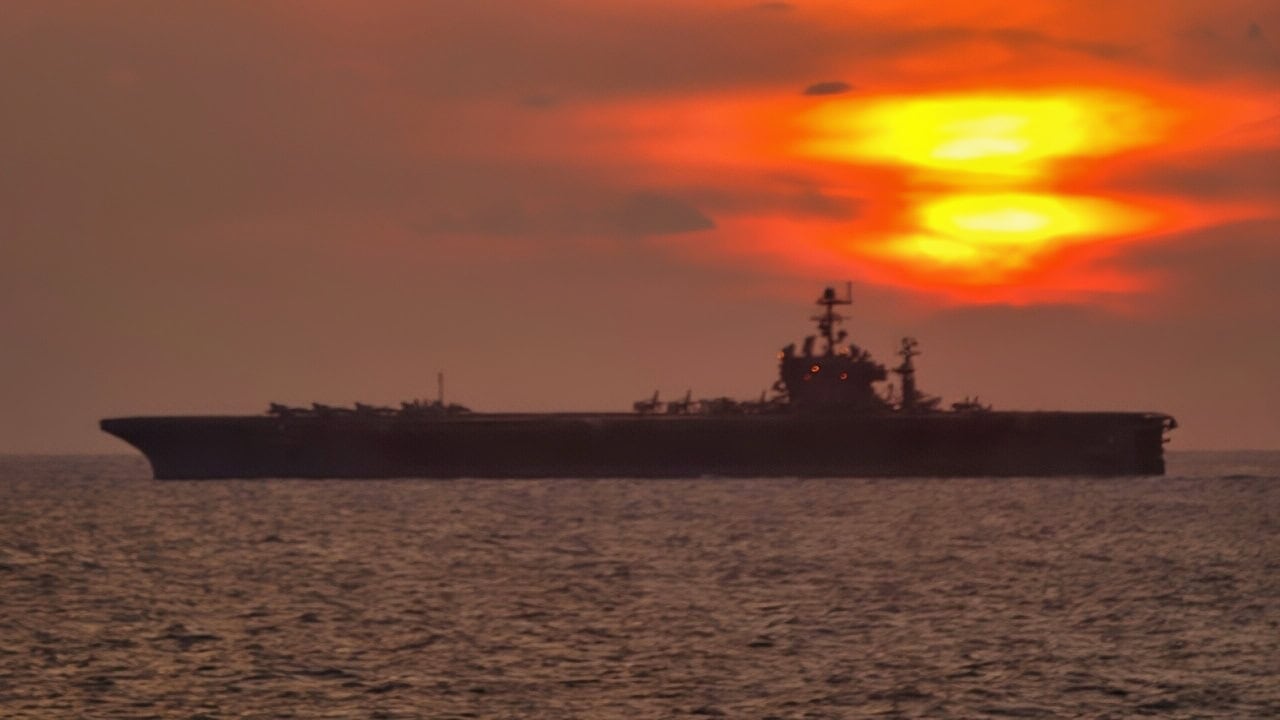
The Nimitz-class aircraft carrier USS Theodore Roosevelt (CVN 71) underway at sunset in the Persian Gulf. Roosevelt and embarked Carrier Air Wing Eight (CVW-8) are currently on a regularly scheduled deployment conducting maritime security operations. U.S. Navy Photo by Photographer’s Mate 2nd Class Matthew Bash (RELEASED)
The US may not return to these facilities.
This is a startling blow, one which the administration of US President Donald Trump clearly did not plan for or expect.
Iran, smartly, did not directly attack US platforms much.
Trying to sink a US aircraft carrier or shoot down a US fighter jet would be quite difficult.
Instead, the Iranians struck the large, vulnerable, hard-to-defend US logistical network in the region.
As is now widely understood, Iranian strikes on the US naval base in Bahrain left the US unable to support its ships in the region.
This led to the widely publicized poor conditions on board the USS Abraham Lincoln.
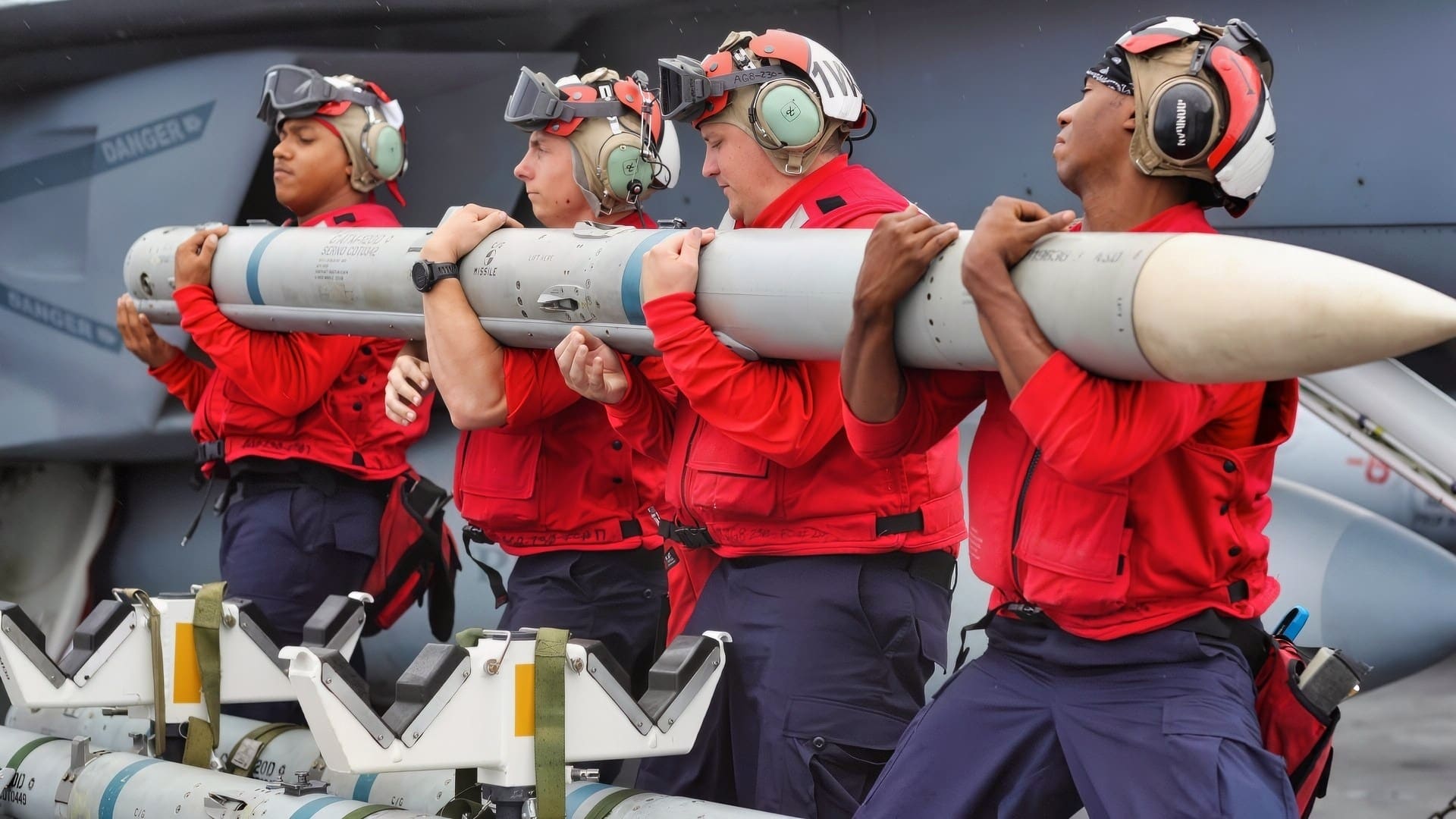
ATLANTIC OCEAN (July 31, 2018) Sailors prepare to transfer ordnance onto an F/A-18E Super Hornet from the Pukin’ Dogs of Strike Fighter Squadron (VFA) 143 on the flight deck of the Nimitz-class aircraft carrier USS Abraham Lincoln (CVN 72). (U.S. Navy photo by Mass Communication Specialist 2nd Class Jessica Paulauskas/Released)
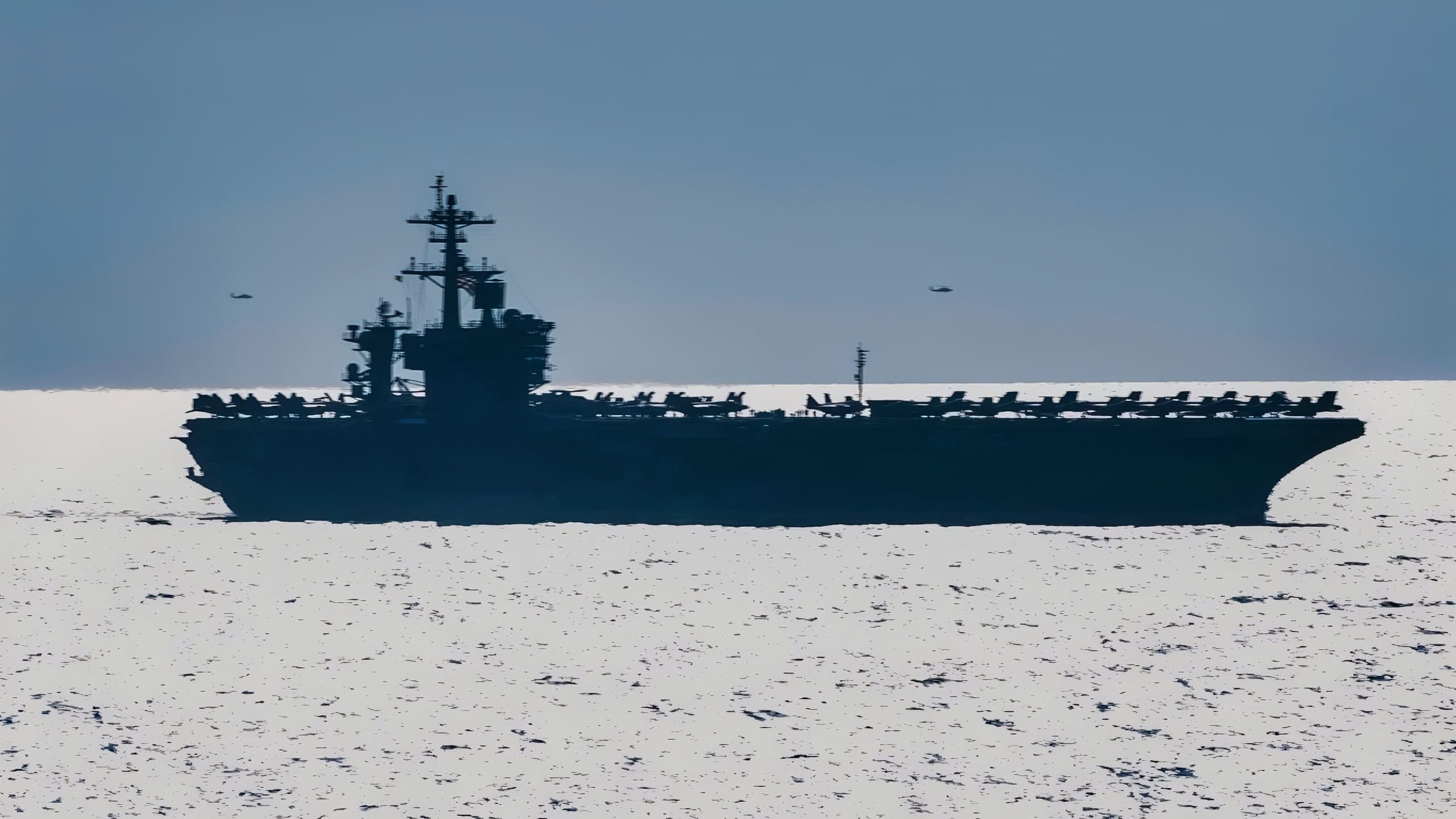
ATLANTIC OCEAN (Aug. 30, 2018) An MH-60S Sea Hawk helicopter assigned to Carrier Air Wing (CVW) 7 flies by the Nimitz-class aircraft carrier USS Abraham Lincoln (CVN 72) during dual-carrier sustainment operations with the Nimitz-class aircraft carrier USS Harry S. Truman (CVN 75). In addition to demonstrating the Navy’s inherent flexibility and scalability, this evolution provides the opportunity to conduct complex, multi-unit training to enhance maritime interoperability and combat readiness; prepare the Navy to protect our homeland; and preserve and promote peace anywhere around the world. (U.S. Navy photo by Mass Communication Specialist 3rd Class Juan Sotolongo/Released)
If Iran, a mid-sized power with a small economy and military, can do this, imagine what China can do to US bases in East Asia.
Offensive Air Power is Cheap
The Iran War and the Ukraine War are illustrating, in real time, just how difficult it is to defend large, fixed targets (bases) against cheap air power.
As has been widely reported, the US used a large portion of its missile defense stocks against Iranian drones and missiles.
Almost as important as this high burn rate is the limited success of these interceptors.
Despite the American technological lead and huge expense of its air defense, Iranian forces managed to break through and substantially damage fifteen US regional bases.
US interceptors themselves are not the problem.
They are effective.
Rather, the sheer volume of Iranian fire made the difference.
US interceptor stocks are low and costly compared to the huge number of cheap air platforms fired against them.
If Iran launched enough missiles and drones, eventually some would get through, and that appears to have been the case.
This is precisely what we have seen in Ukraine too.
Neither Russia nor Ukraine can defend very well against waves of cheap air power.
In the language of international relations theory, military airpower technology is currently in offensive balance.
That is, it is cheaper and easier to attack in the air than it is to defend. Missile defense is costly and not very effective.
This Problem Will be Much Worse in East Asia
If there is a silver lining to America’s slow-motion defeat in the Iran War, it is that Washington has learned an important lesson about modern air power in a low-stakes contest for the US.
That is, it is not, in fact, very important for the US that Iran controls the Persian Gulf now. It matters for many US regional partners, but not for the US.
Oil from the region will be sold no matter which loathsome Middle East autocrat controls its supply.
Israeli security does not require the US to control the Gulf. And renewable energy is slowly reducing the importance of oil, and the US could make that transition much faster if it wanted to.
So this is a good time to retrench from the Middle East and focus on what matters most for US foreign policy – the rise of China.
The Trump administration’s misadventures in the Gulf and Latin America dissipate American energy on small-bore issues.
Europe is wealthy enough to deal with Russia, and Trump – to his credit – has finally pushed the Europeans to spend and build capable militaries.
China, by contrast, is a huge challenger.
It is rising, unlike Russia, and it is enormous and influential, unlike Iran.
And US East Asian partners are not as well aligned as NATO partners in Europe.
US power can make a real difference in the region.
And the most important immediate project in East Asia is to prevent a repeat of Iran’s devastation of a highly vulnerable US logistical network.
As in the Gulf, the US presence in East Asia is dependent on a few mega-bases and mega-facilities in South Korea, Okinawa, and Guam.
These, we now know, are very vulnerable, and we can be sure China will target them with far greater force than Iran could bring to bear.
The time for the US to build out East Asian defense-in-depth, beyond a single string of huge bases.
Author: Dr. Robert Kelly, Pusan National University
Dr. Robert E. Kelly is a professor of international relations in the Department of Political Science and Diplomacy at Pusan National University in South Korea. His research interests focus on Security in Northeast Asia, U.S. foreign policy, and international financial institutions. He has written for outlets including Foreign Affairs, the European Journal of International Relations, and The Economist, and has appeared on television news services such as the BBC and CCTV. His personal website/blog is here; his Twitter page is here.