
South Korea eyes Turkish engines for its drones
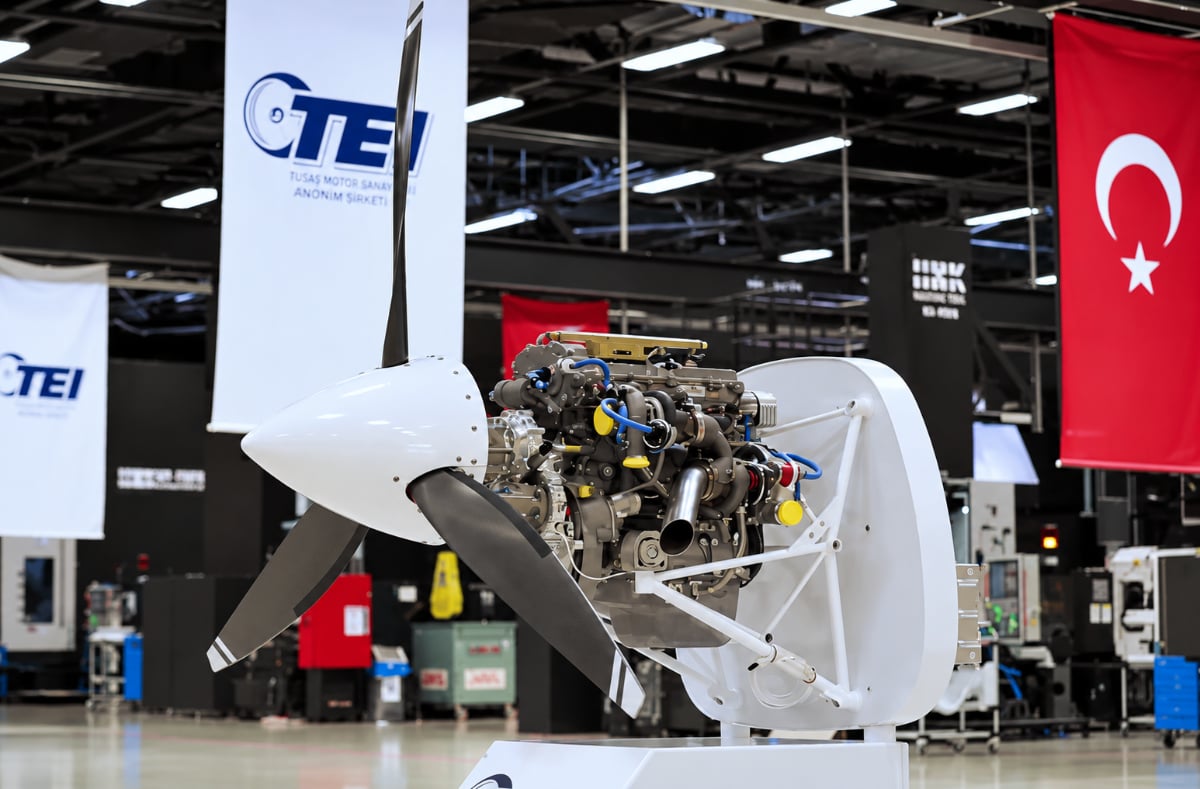
South Korea’s arms procurement agency has asked Türkiye whether it can buy the Turkish PD170 drone engine, a powerplant already flying on some of the world’s most combat-tested drones, as Korean military drone programs suffer a string of public crashes.
Turkish Aerospace Industries, or TAI, recently received an inquiry from South Korea’s Defense Acquisition Program Administration about buying the PD170 turbodiesel engine built by its subsidiary TEI, South Korea’s Yonhap news agency reported Sept. 27. A TAI official told Yonhap the company views potential cooperation with South Korea broadly and hopes joint engineering projects could lay the groundwork for long-term industrial partnerships and new aerospace programs.
Neither side has said which Korean drone program the engines would power, how many Seoul wants or what a deal might be worth. An official at Türkiye’s defense procurement agency, SSB, told Yonhap he could not comment on specific engine models and that a statement would come only after the necessary procedures and negotiations are finished.
The PD170 is a 170-horsepower turbodiesel built for medium-altitude, long-endurance drones, the fixed-wing aircraft that fly for a day or more to watch or strike targets. It powers TAI’s Anka and Aksungur drones and, according to Yonhap, Baykar’s Bayraktar TB2 and TB3. TAI said an Aksungur fitted with the engine stayed aloft for 45 hours and reached 42,000 feet (12,800 m). TEI says the design draws on experience from building engines for U.S.-designed F-16 fighter jets under license in Türkiye.
Turkish drones have been used in combat in Ukraine and across the Middle East, and Türkiye’s defense exports passed $10 billion last year. TAI has also been pushing into more advanced designs. Last month, it said its Anka-3 stealth drone launched two Süper Şimşek jet-powered drones from under its wings during a test flight. Yonhap reported the idea is for the small drones to mimic larger aircraft, draw fire from enemy air defenses and expose their radars, which the Anka-3 could then attack. The Anka-3 originally flew with a Ukrainian engine, and TEI’s own TF6000 turbofan is now being integrated into the aircraft.
South Korea has become one of the world’s fastest-growing arms exporters, with Chunmoo rocket launchers sold to Croatia, K2 tanks certified under NATO’s quality assurance system and rising Middle Eastern interest in its Cheongung-II air defense missiles. Its military drones have had a harder year.
On Sept. 16, at the Ministry of National Defense’s 2026 defense drone technology exhibition, a jet-powered drone developed by Korea Aerospace Industries nosedived into the ground right after takeoff. On Aug. 25, the South Korean Navy and the Agency for Defense Development tried to launch medium-size kamikaze drones from the 14,500-ton amphibious assault ship ROKS Marado in waters south of Busan. Both drones flew for only a few seconds before falling into the sea, and the planned strike on an uncrewed surface vessel never happened. The Navy said it would keep testing the drones’ performance at sea.
Yonhap described the engine inquiry as linked to assessments that South Korea lags behind in drone technology, though neither Seoul nor Ankara has said that directly.
Content preview only. Full article available at source. View Full Article
South Korea's Defense Acquisition Program Administration inquired about purchasing the Turkish PD170 drone engine to enhance its military drone capabilities. This inquiry comes amid a series of crashes involving South Korean military drones. Turkish Aerospace Industries expressed interest in potential cooperation and joint engineering projects with South Korea. The PD170 engine is known for its use in various combat-tested drones, highlighting the significance of this procurement for South Korea's defense strategy.
- South Korea's arms procurement agency inquired about the Turkish PD170 drone engine.
- The PD170 engine is used in several combat-tested drones.
- Turkey's defense exports exceeded $10 billion last year.
- South Korea's military drone programs have faced multiple crashes this year.
- The inquiry reflects South Korea's assessment of its drone technology capabilities.