
Strengthening Anti-Submarine Cooperation by the Japan Maritime Self-Defense Force in the 2026 Malabar Exercise: Challenges in SLOC Defense Demonstrated by the Navies of Four Countries around Tokyo Bay
 Tanaka Takashi
Japan Maritime Self-Defense Force Strengthens Anti-Submarine Cooperation in Malabar 2026; Challenges of SLOC Defense Demonstrated by Four Nations' Navies Around Tokyo Bay
From November 5 to 12, the navies of the United States, Japan, Australia, and India conducted Malabar 2026 in the waters off Kanto, surrounding Tokyo. According to Kyodo News, the Japan Maritime Self-Defense Force has announced training that includes responses to submarines and surface ships. The proximity of the exercise area to Japan's metropolitan region elevates this training from a mere goodwill voyage to a more advanced level.
Efforts to Make Anti-Submarine Warfare a "Four-Nation Procedure"
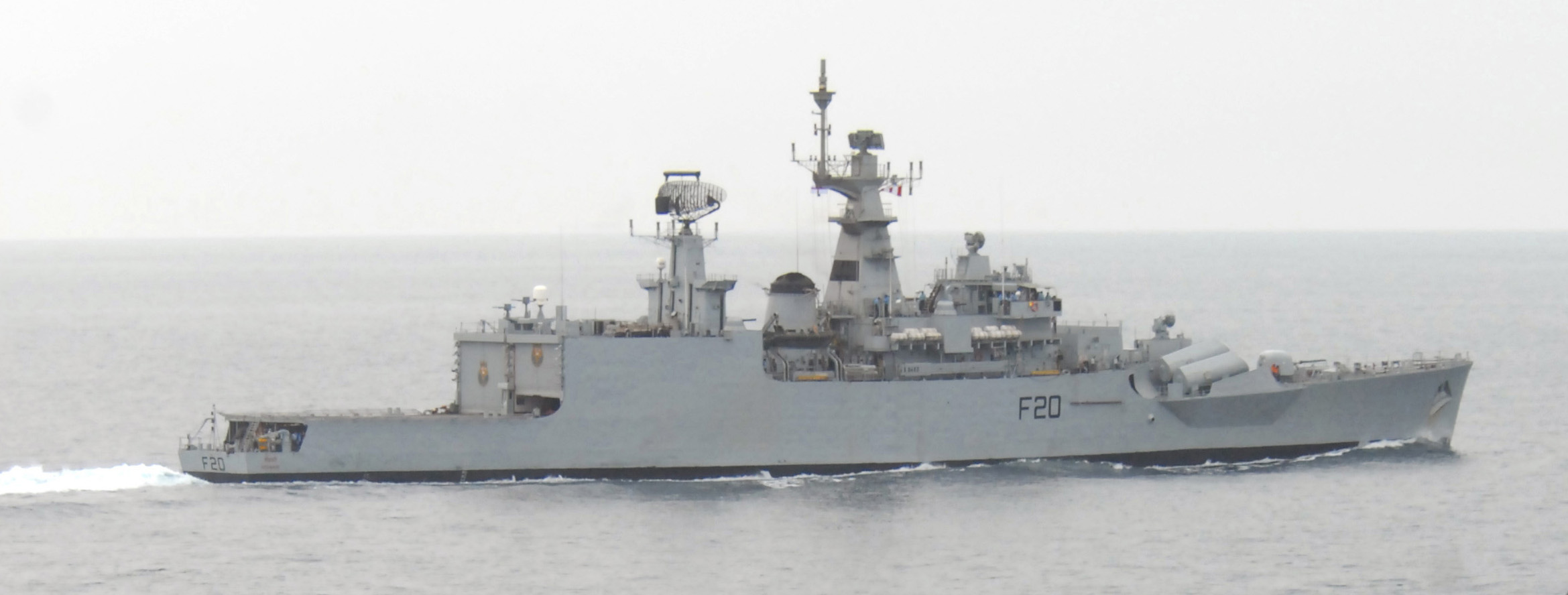
The value of Malabar lies not in the number of vessels but in the information processing when different navies track the same underwater targets. In submarine detection, the order in which to share towed sonar, onboard helicopters, patrol aircraft, and satellite/communication information can significantly affect the outcome. For the Japan Maritime Self-Defense Force, this was an opportunity to verify how far Australia and India could be incorporated as practical collaborators in joint U.S.-Japan responses around the Nansei Islands.
However, the fact that the exercise area is in Japan's coastal waters is both an advantage and a limitation. In peacetime training, participating countries can relatively smoothly share contact information under the safety rules they set. However, in a crisis in the East China Sea or around the Nansei Islands, communication disruptions, misinformation, the density of merchant vessels, and air/missile threats can occur simultaneously. To convert the anti-submarine tactics gained from the exercise into the defense of larger maritime traffic routes, redundancy in communication and the organization of decision-making authority are essential.
Signals to China and Practicality of Alliances
Kyodo News reported that the four nations began training amid increasing Chinese activities in the Indo-Pacific. While this is not an exercise explicitly aimed at encircling the Chinese Navy, conducting joint anti-submarine and anti-surface warfare training around Tokyo Bay sends a political signal that the maritime traffic routes of the first island chain will not be defended by a single nation alone. The operational capabilities of the United States, Japan's geographical knowledge, Australia's long-range deployment capabilities, and India's experience in the Indian Ocean are mutually complementary.
On the other hand, capabilities and intentions must be distinguished. Even if the four nations can train in the same maritime area, it does not guarantee that they will share information with the same priority in actual combat. Particularly, while India is aware of the competition with China, it is not part of the U.S.-Japan alliance. Malabar should not be seen as a venue to declare the formation of a "quasi-alliance," but rather as a place to build trust for limited missions.
Overlooked Challenges
USNI News reported that this exercise took place in Japan's coastal waters from November 5 to 12, and the Japan Maritime Self-Defense Force's announcement indicates anti-submarine and surface warfare training. The real challenge visible from this is not the detection capability itself, but who converts contact information into operational judgments, within how many minutes, and in what language and format. In maritime traffic route defense, synchronizing the judgments of escort ships, aircraft, merchant vessels, and coastal command is more difficult than finding a single submarine.
According to Tanaka's view, the criteria for measuring the success of Malabar 2026 are not the group photo of the participating nations. It is the data formats, communication procedures, and political space for sharing classified information that are maintained after the exercise concludes. The most vulnerable aspect may not be underwater, but rather the "decision-making lines" connecting the command centers of the four nations.
References
The Japan Maritime Self-Defense Force, along with the U.S. Navy, Royal Australian Navy, and Indian Navy, conducted the Malabar 2026 naval exercise in Tokyo Bay from November 5 to 12, 2026. The exercise emphasized anti-submarine warfare and the importance of information sharing among the participating nations. This joint operation serves as a political signal regarding maritime security in the context of increasing Chinese assertiveness in the Indo-Pacific region.
- The Malabar 2026 exercise took place from November 5 to 12 in Tokyo Bay.
- Participating navies included the U.S., Japan, Australia, and India.
- The exercise focused on anti-submarine warfare and information sharing among the navies.
- The exercise serves as a political signal against China's maritime activities.
- Coordination and communication among the four nations are critical for effective operations.