
Taiwan's 5 F-16V Block 70s Expose the Real 2026 Airpower Gap
 Marcus Chen
Taiwan's 5 F-16V Block 70s Expose the Real 2026 Airpower Gap
Five F-16V Block 70 fighters are now on Taiwan's flight line. Three more arrived at Taitung on November 9, following the first two aircraft delivered in October, according to the Taipei Times and Taiwan-focused reporting. The headline is delivery. The operational fact is more uncomfortable: Taiwan has begun receiving the aircraft it ordered, but the island still faces years of work before a 66-jet purchase becomes a combat-ready squadron system.
What Actually Arrived
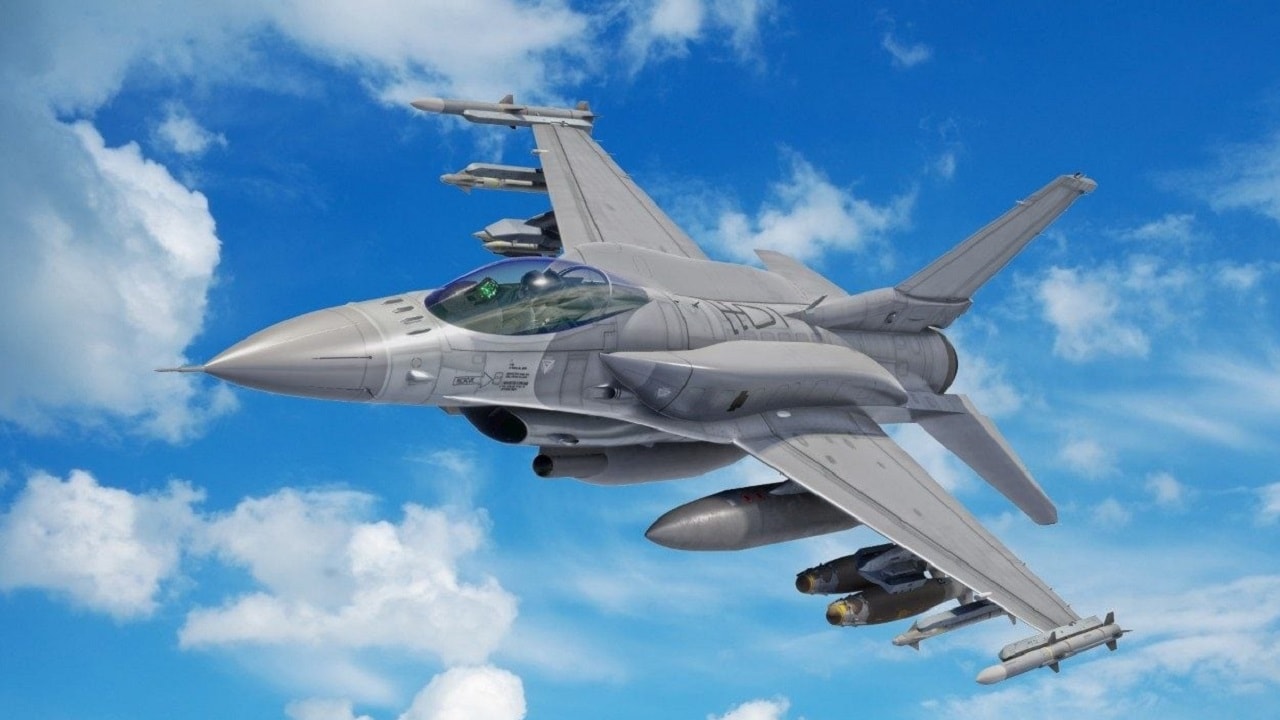
The new aircraft are factory-built F-16 Block 70s, not refurbished legacy airframes. Their central upgrade is the AN/APG-83 active electronically scanned array radar, supported by modern mission computers, electronic-warfare equipment, secure communications and the F-16's established weapons architecture. Taiwan's existing F-16 fleet is also being upgraded toward the F-16V standard, which matters because a mixed fleet is useful only when pilots, maintainers and data links can treat it as one force.
- Delivered so far: five F-16V Block 70 aircraft.
- Planned buy: 66 new fighters under the 2019 U.S. approval, with deliveries continuing over several years.
- Core advantage: AESA sensing, improved electronic protection and better networking than Taiwan's older F-16A/Bs.
- Primary problem: five aircraft do not provide persistent coverage over an island facing missile strikes, runway attacks and a much larger Chinese air force.
The aircraft's arrival is still meaningful. Taitung, on Taiwan's east coast, gives the fleet another operating location away from the island's western bases. That geography is not a magic shield, but it complicates the People's Liberation Army's targeting problem. A fighter that survives the first missile wave and can launch from a dispersed base is worth more than one parked in a hardened western shelter that has lost its runway.
The Numbers Are Still Bad
Sixty-six fighters sounds substantial until the arithmetic is applied. A squadron cannot keep every jet airborne. Training, maintenance, inspections, weapons loading and battle damage reduce the available pool. If Taiwan eventually fields roughly 50 operational aircraft from the new buy at any one time, that is enough to strengthen a sector, not to defeat a campaign designed to suppress runways and command networks across the island.
The F-16V also remains a fourth-generation fighter. Its radar improves detection and tracking, but the aircraft is not stealthy. Against the PLA Air Force, Taiwan will need ground-based radar, airborne early warning, passive sensors and off-board targeting to keep the F-16s from emitting a useful location before the fight begins. The aircraft's value is therefore network-dependent. Without resilient communications and a surviving weapons stockpile, an AESA radar becomes an expensive sensor attached to a vulnerable runway.
This is where delivery schedules become a military issue. Taipei Times reported that the second batch arrived amid continuing pressure from China. Anadolu Agency described the delivery as the second group of three aircraft, while Taiwan News reported a parallel pattern of Chinese maritime and air activity around the island. These are not separate stories. Beijing does not need to wait for a blockade to begin testing Taiwan's alert cycles, base dispersal and political endurance.
China's Advantage Is Persistence
The relevant comparison is not five F-16Vs against one Chinese fighter. It is Taiwan's usable sortie generation against the PLA's ability to sustain pressure from bases on the mainland and through a growing network of sensors, aircraft and ships. China can rotate aircraft, attack airfields with ballistic and cruise missiles, and force Taiwan to spend fuel and pilot hours simply proving that it is still watching.
That makes the new F-16s most valuable in three missions. First, they can add credible air-defense capacity when cued by surviving sensors. Second, they can threaten PLA aircraft and maritime forces with beyond-visual-range weapons, raising the cost of operating near Taiwan. Third, they can help preserve uncertainty: Beijing must assume that some fighters, crews and missiles remain after the opening strikes.
But aircraft cannot solve the magazine problem. Taiwan needs enough air-to-air missiles, decoys, runway repair teams, fuel, spare engines and hardened command nodes to keep flying after the first 72 hours. It also needs shelters and alternate strips that are connected to real logistics, not merely listed in an exercise brief. Anyone who has served on a warship knows that readiness is a supply-chain condition. Aircraft numbers are only the visible part.
Delivery Is Not Deterrence
The first five F-16V Block 70s mark progress, and the United States should complete the sale on schedule. But Washington and Taipei should stop treating delivery milestones as proof that the air-defense problem is solved. The fleet will not become a meaningful denial force until its aircraft, missiles, bases and data links can survive a coordinated PLA opening attack.
Five modern fighters can complicate China's plan. They cannot close Taiwan's airpower gap. The 2026 lesson is simple: a delivery ceremony creates headlines; sustained sortie generation creates deterrence. Taiwan has started the first task. The hard one is still ahead.
Sources: Taipei Times reporting on the three-aircraft arrival; Anadolu Agency reporting on the second batch; Taiwan News reporting on Chinese military activity; U.S. Defense Security Cooperation Agency and Lockheed Martin program specifications.
Taiwan received five F-16V Block 70 fighters on November 9, 2023, as part of a larger order of 66 aircraft. These new fighters feature advanced capabilities, including AESA radar, but Taiwan still faces significant challenges in achieving air superiority against the larger Chinese air force. The delivery marks progress, but operational readiness remains a concern due to the limited number of aircraft and the need for sustained sortie generation.
- Taiwan received 5 F-16V Block 70 fighters on November 9, 2023.
- A total of 66 F-16V Block 70 fighters are planned for purchase.
- The new aircraft feature advanced AESA radar and electronic warfare capabilities.
- Taiwan's existing F-16 fleet is being upgraded to the F-16V standard.
- Taiwan faces challenges in achieving air superiority against a larger Chinese air force.