
Thailand Just Hosted Chinese J-10Cs for a Fifth Straight Year
 Marcus Chen
Thailand Just Hosted Chinese J-10Cs for a Fifth Straight Year
The Royal Thai Air Force opened Falcon Strike-2026 on August 13 with PLA Air Force J-10C fighters, Y-20 transports, early-warning aircraft, tankers and ground-based air defense crews working its ramp. It is the fifth consecutive year Bangkok has hosted the exercise, and the ninth iteration of the series overall. Thailand remains a formal treaty ally of the United States, bound by the 1954 Manila Pact and the 1962 Thanat-Khoman communique. Both sentences are true, and the distance between them is the story.
What Beijing Actually Deployed
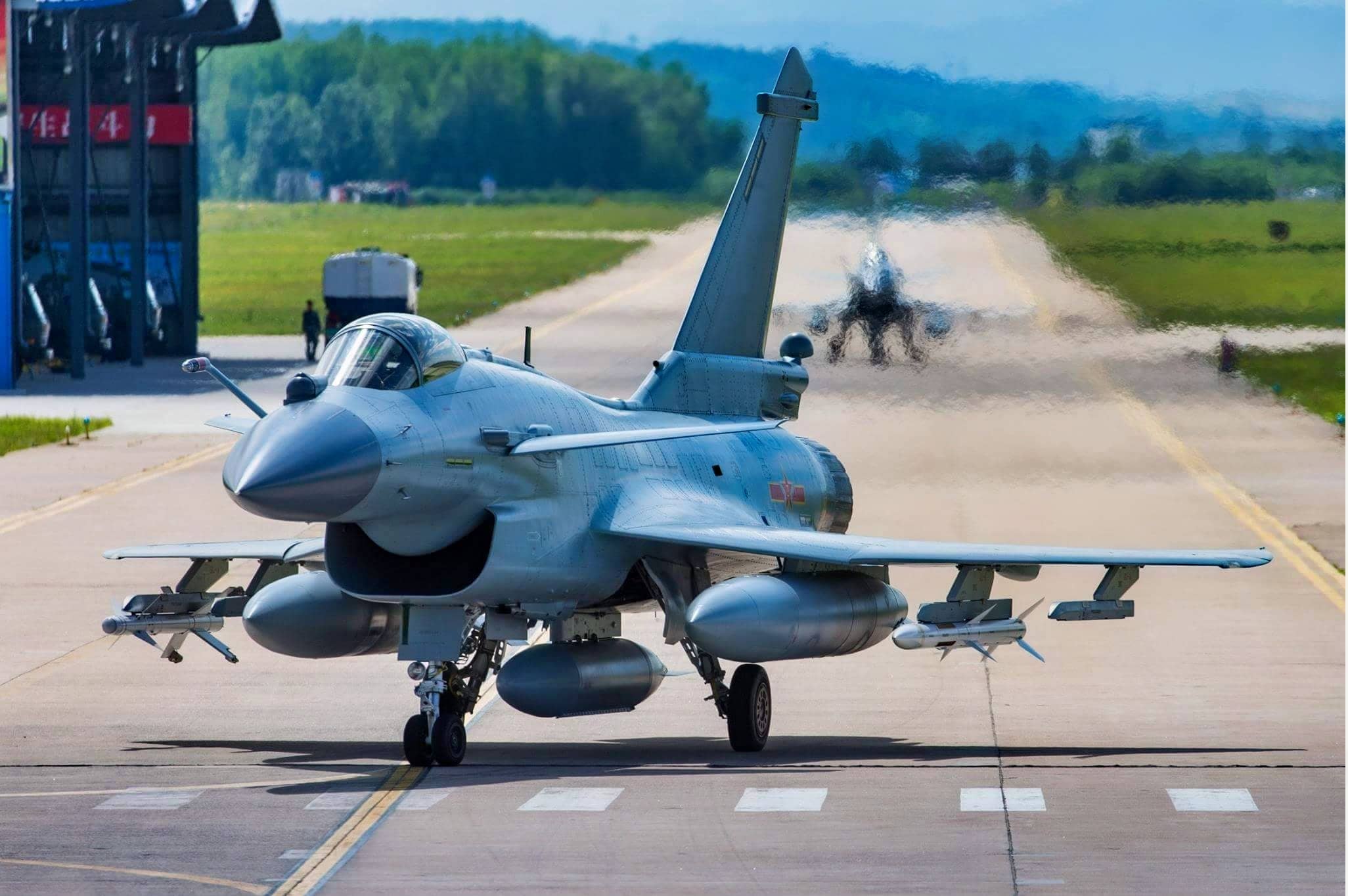
State broadcaster CCTV listed the package China flew in for the opening:
- J-10C multirole fighters and J-10S fighter-trainers
- Fighter-bombers and airborne early-warning aircraft
- Y-20 heavy transports and aerial refueling tankers
- Ground-based air defense systems with crews
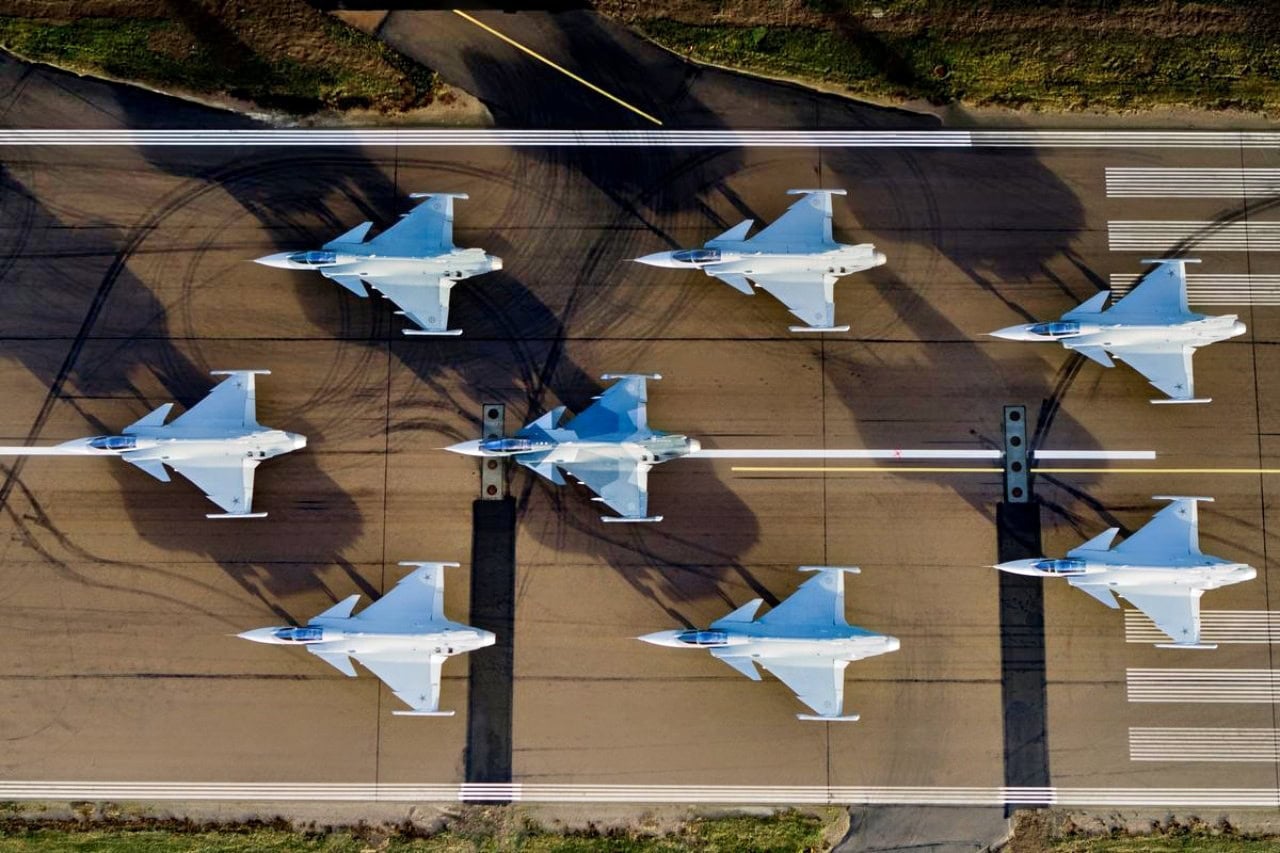
Thailand answered with its JAS 39 Gripen fighters and Alpha Jet light attack aircraft. The syllabus covers force deployment, joint air defense and humanitarian medical rescue — the same three boxes Beijing checks in nearly every exercise it now runs with Southeast Asian air forces.
Thailand's Side of the Ledger
Bangkok is not doing this out of ideological sympathy. The Royal Thai Air Force gets something concrete: access to a combat aircraft market the US has effectively closed to it, interoperability with the region's rising air power, and a hedge against Washington's unpredictable arms-sales cycles. Thailand has already bought Chinese S-26T submarines and VT-4 tanks, and the air force now trains with the same partner its army and navy do. The relationship is no longer a single service's experiment — it is a national pattern.
That pattern has a cost the Pentagon should price honestly. Every exercise cycle feeds Thai logistics, planning and officer exchanges into a Chinese orbit, and each cycle makes a future crisis decision — whose air defense network covers Korat, whose tankers can use U-Tapao — a little more complicated for INDOPACOM planners.
The Fifth Year Is the Problem
Falcon Strike is the ninth joint training event between the two air forces, according to Chinese defense spokesperson Jiang Bin, and the fifth straight edition held in Thailand. Repetition is the point. Every iteration lowers the political cost of the next one: first a transport visit, then fighters, then air defense radars, then a schedule the Royal Thai Air Force plans around the way it plans around Cobra Gold.
That is the quiet part. Washington still runs its flagship exercise with Bangkok and still treats U-Tapao as a usable facility in a crisis. But the United States no longer has exclusive access to Thai runways. A US treaty ally now hosts Chinese fighters and Chinese air defense crews as routine business, and the Pentagon's response this week — urging restraint in the Taiwan Strait after the China-Indonesia passage exercise — had nothing to say about the ramp at Korat.
Air Defenses Are Not a Photo Op
Anyone who has stood a duty watch at a forward base knows the sequence: you do not land and start sightseeing. You establish air defense first. Beijing deployed ground-based air defense systems and early-warning aircraft to Thailand, not because joint air defense is a comfortable exercise topic, but because that is the sequence a deployed air package follows. The drill is the deployment.
Chinese military expert Wang Yanan told the Global Times that the mix of fighters, early-warning aircraft, tankers and heavy transports forms "a complete small-scale overseas deployment and combat validation system." Translation: the PLAAF is rehearsing the sustainment chain — tanker tracks, transport flows, radar coverage — it would need to operate a combat package beyond the first island chain. The J-10C has a combat radius of roughly 1,200 kilometers; the flight from China's southern airfields to central Thailand runs well past that, which is exactly why the tankers and Y-20s came along.
Dual Access Is the Worst Outcome for Washington
"When friendly countries in the region reach consensus on security issues and conduct regular military cooperation, it has a stabilizing effect on regional security," Wang said.
Beijing calls that stability. From INDOPACOM's seat, it looks like something else: an ally whose airfields can no longer be assumed usable in a contingency, because the same fields now host the adversary's radars and air defense crews. Dual access is the worst case for a planner — you can neither rely on the base nor confidently strike it, and every Thai decision in a crisis gets slower and more public.
No single Falcon Strike breaks the alliance. That is the trap. The Manila Pact survives this year, and next year, and the year after, while Chinese air power compiles its fifth, sixth, seventh year of Thai tarmac time. Erosion by repetition does not announce itself; it just shows up as a scheduling conflict.
The Math Is Already on the Board
Five years ago, a US treaty ally hosting Chinese air defense systems would have been a crisis. Today it is a calendar entry. The PLA Air Force has turned a one-off exercise into an institutional rhythm, and the US alliance system has no equivalent cadence in Southeast Asia — no annual deployment that puts American fighters and air defense crews on allied Thai bases with the same reliability.
The question was never whether Thailand would leave the US camp. It is whether Washington notices when access stops being exclusive. Falcon Strike-2026 is the answer: the runways still say ally, but the schedule says otherwise.
Thailand hosted the Falcon Strike-2026 exercise on August 13, 2026, featuring Chinese J-10C fighters and various military assets. This marks the fifth consecutive year of such exercises, highlighting the growing military cooperation between Thailand and China. The Royal Thai Air Force participated alongside the People's Liberation Army Air Force, focusing on joint air defense and humanitarian operations. This ongoing collaboration raises concerns for U.S. military planners regarding access to Thai airfields during potential crises.
- Thailand hosted the Falcon Strike-2026 exercise with Chinese J-10C fighters and other military assets.
- This is the fifth consecutive year Thailand has hosted this exercise with China.
- The exercise involves joint air defense and humanitarian medical rescue training.
- Thailand's military cooperation with China includes procurement of Chinese military equipment.
- The presence of Chinese air defense systems in Thailand complicates U.S. military planning.