
The 2026 Japan Defense Strategy Review Centered on GCAP Strengthens Japan-U.S. Denial Capabilities
 Tanaka Takashi
The 2026 Japan Defense Strategy Review Centered on GCAP Strengthens Japan-U.S. Denial Capabilities
The information released by the Ministry of Defense on November 11 regarding the Japan-UK-Italy defense ministers' meeting, along with the policy direction for the review of the national defense strategy reported by Kyodo News on the same day, indicates that Japan's defense policy is at a critical juncture. The government is reportedly considering explicitly stating the "ability to deny" an adversary's invasion in policy documents, based on cooperation with the United States. This represents a shift in the traditional discussion surrounding the possession of counterstrike capabilities, restructuring it not as individual equipment but as a division of operations within the alliance.
Integrated Operations Become the Focus Over Missile Range
The ability to deny is not merely about increasing the number of long-range missiles. It is the capability to function as a single connection for target detection, identification, command orders, and post-launch assessment, leading the adversary to conclude that "attacking will not achieve their objectives." If the Japan Maritime Self-Defense Force's escort ships, the Japan Air Self-Defense Force's fighter jets, and the Japan Ground Self-Defense Force's stand-off missile units cannot share the same operational picture derived from information obtained from U.S. satellites, aircraft, and naval vessels, then the numbers associated with range do not directly translate to deterrence.
According to NHK, Foreign Minister Motegi and U.S. Secretary of State Rubio also confirmed on November 10 their intention to strengthen the alliance's deterrence and response capabilities. It is noteworthy that the expressions used by diplomatic authorities and the "denial capability" included in defense policy documents are converging. What Japan seeks is not a substitute for U.S. strike capabilities, but a framework for sharing detection, dispersion, sustainment, and re-strike responsibilities in the first island chain with the U.S.
GCAP Will Become an Alliance Infrastructure Beyond a Fighter Program
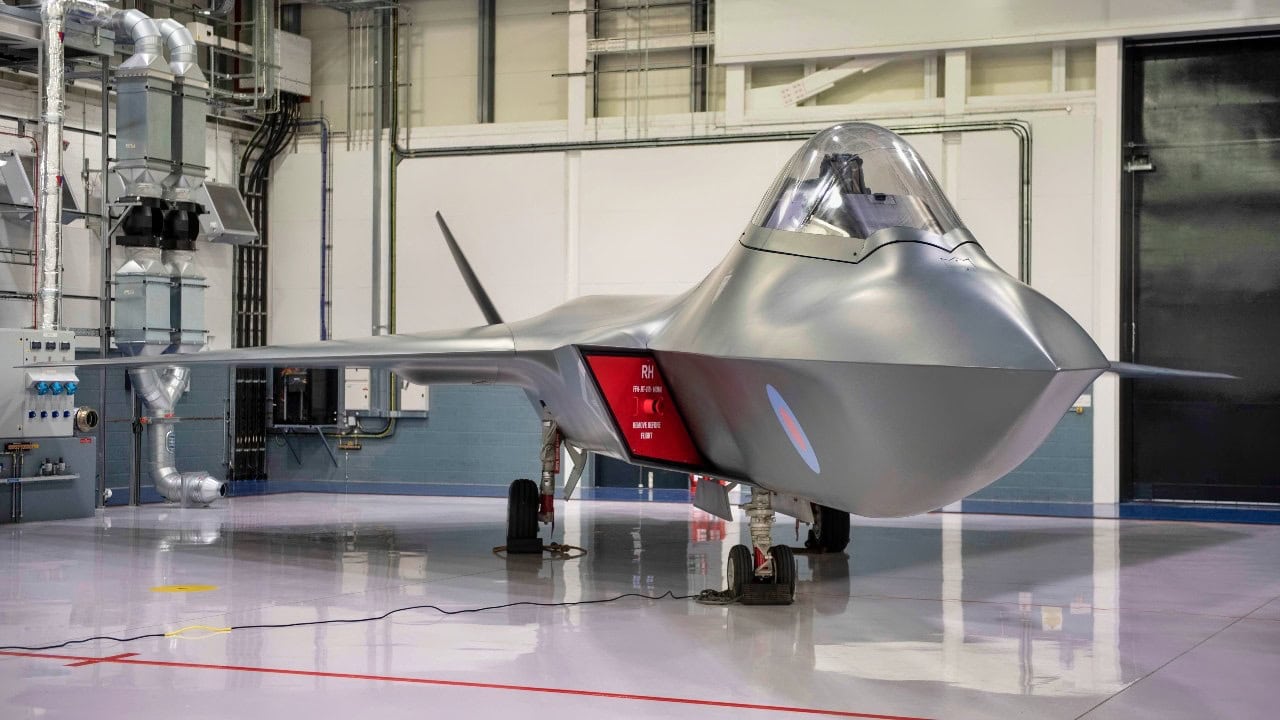
The next-generation fighter program GCAP among Japan, the UK, and Italy will support this policy shift from an industrial perspective. It is a plan to jointly develop the airframe, engine, sensors, and unmanned companion aircraft for practical use by 2035, differing from a relationship that merely imports finished products. As joint design and production progress, Japan will find it easier to maintain software updates, parts supply, and maintenance information necessary for air defense and anti-ship operations based on its own judgment. On the other hand, if the demands and budgets of the three countries diverge, development delays will directly result in gaps in the air defense network.
Political Bottlenecks Often Overlooked
In my view, the biggest challenge is not the number of missiles possessed, but who will approve the launch based on which information at what stage during a crisis. If there is a delay of several hours in the information superiority of the U.S. side and the political decision-making on the Japanese side, the joint denial capability will not be established. Furthermore, the joint development of GCAP will also be influenced by domestic procedures regarding export controls and the sharing of classified information.
Having the capability and being able to "use" it instantly as an alliance are two separate issues.
The 2026 review should be seen not as Japan abandoning its explanation of exclusively defensive posture, but as an attempt to embed the effectiveness of deterrence within the alliance's network. However, merely writing the denial capability into documents will not resolve the mundane issues of communications, supply, runway recovery, and ammunition stockpiling in the southwestern islands. The real risk lies not in Japan and the U.S. having different threat perceptions, but in both having the same perception while the speed of decision-making and supply does not keep pace.
Reference Information
Japan is revising its defense strategy to enhance denial capabilities in cooperation with the U.S. This involves integrating operations among the Japan Self-Defense Forces and U.S. Armed Forces, focusing on joint capabilities for air defense and maritime operations. The GCAP program supports this shift, emphasizing the need for rapid political decision-making to ensure effective joint operations.
- Japan is revising its defense strategy to enhance denial capabilities with the U.S.
- The focus is on integrating operations among the Japan Self-Defense Forces and U.S. Armed Forces.
- The GCAP program aims to develop joint capabilities for air defense and maritime operations.
- The revision is seen as a shift from purely defensive to a more proactive deterrent posture.
- Political decision-making speed is critical for effective joint operations.