
The Burden of 2026 Posed by the Passage of 10 Chinese Navy Ships Through the Southwest on the Japan Maritime Self-Defense Force's Surveillance Network
 Tanaka Takashi
The Burden of 2026 Imposed on the Maritime Self-Defense Force's Surveillance Network by the Passage of 10 Chinese Navy Vessels in the Southwest
In the last few days of June, the Japan Maritime Self-Defense Force's patrol aircraft and escort ships confirmed multiple Chinese Navy vessels in several straits around the Nansei Islands. According to a report by Stars and Stripes on July 2, from June 26 to the early morning of July 1, 10 Chinese Navy vessels passed through the first island chain surrounding Japan, with 8 of them reportedly heading towards the Pacific Ocean.
What Simultaneous Passages Mean
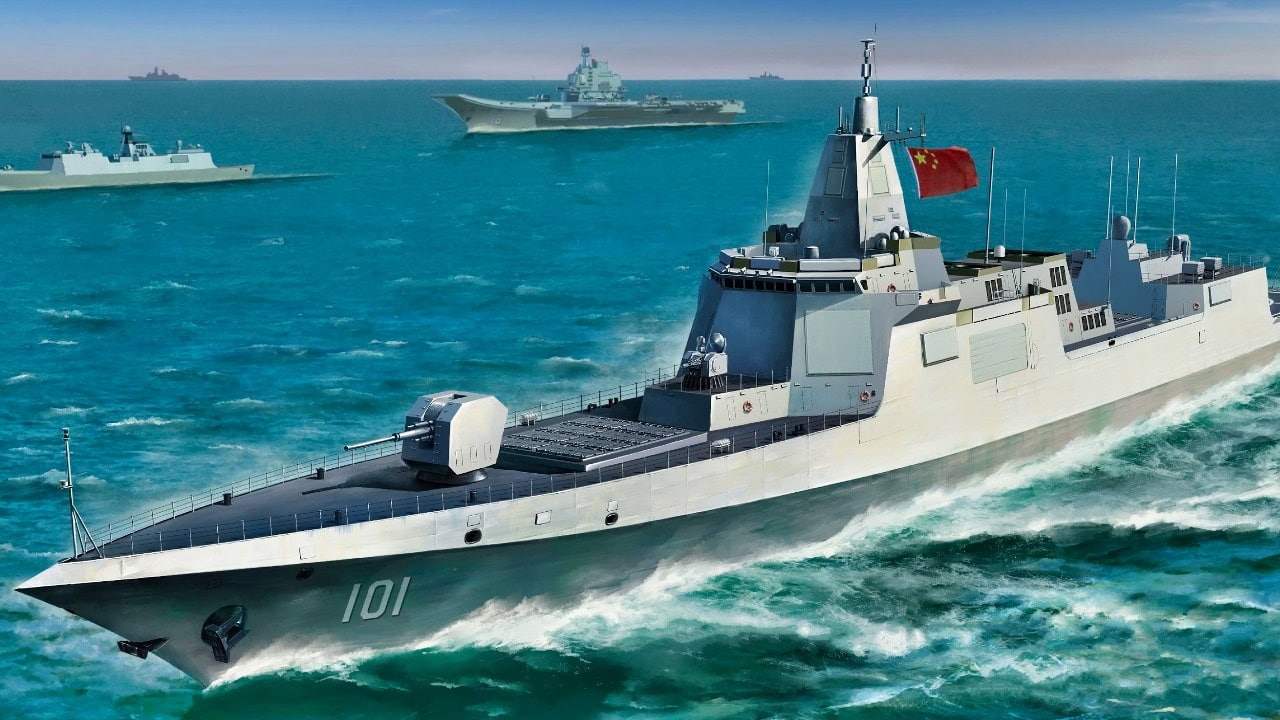
What is noteworthy is not just the number of vessels, but the dispersion of their passage routes. Reports indicate that the vessels An Yang and Dongguan passed through the Miyako Strait, Suzhou and the reconnaissance ship Tian Shu Xing passed between Amami Oshima and Yokotō Island, while Yancheng and the supply ship Dong Ping Hu, along with Nanchang and Xi'an, passed through the Osumi Strait. The Ministry of Defense's updated report on Chinese military activities in June lists the major routes through the Nansei Islands as Osumi, Yokotō, Miyako, between Yonaguni and Iriomote, and between Yonaguni and Taiwan, explaining that Chinese vessels are taking more diverse routes. This recent movement confirmed this description in actual operations.
From my experience in the Maritime Self-Defense Force, tracking a single large fleet and simultaneously monitoring multiple groups of several vessels imposes entirely different burdens on the field. It is necessary to integrate information from P-1 patrol aircraft, P-3C, coastal surveillance units, and escort ships in a short time, and if the opponent mixes supply ships, destroyers, and reconnaissance ships, it cannot be ruled out that this is not just navigation but training assuming future continued deployments.
We Should Focus on Japan's Depletion Rather Than Sino-Russian Coordination
At the same time, five Russian Navy vessels were also confirmed around Hokkaido and Kyushu. However, according to the Japan Joint Staff Office's explanation, this is not considered a Sino-Russian joint exercise. There is no need to hastily conclude that this is a coordinated action between China and Russia. Rather, the issue is that even if China and Russia operate separately, Japan's surveillance resources are consumed in the same maritime area.
Officials from the Joint Staff Office have reportedly stated that while the number of navigations itself is not unusually high, activities are expanding and intensifying.
According to a summary of the 2026 Defense White Paper reported by the Associated Press, the Japanese government positions China's military activities as the greatest strategic challenge and expresses caution regarding the expansion of activities from the southwest to the Pacific. This is a political expression, but it is close to the reality on the ground. Whether China's intentions are to prepare for a Taiwan contingency or to confirm the U.S. military's response, Japan's peacetime surveillance system itself is being tested.
The Sustained Oceanic Capability Indicated by Type 055 and Supply Ships
Nanchang and Xi'an are both large destroyers, and particularly, the Type 055 Nanchang is a core vessel of the Chinese Navy equipped with long-range air defense, anti-ship, and land attack capabilities. The addition of the supply ship Dong Ping Hu should not be underestimated. Whether the passage through the Nansei Islands ends as a temporary show of force or leads to sustained air and surface operations in the Pacific depends on the presence of supply ships.
Japan is enhancing its denial capabilities with the improved Type 12 surface-to-ship guided missile and deployment in island areas. However, if the chain of surveillance, identification, decision-making, and launch authority is delayed, the range of equipment alone will not serve as a deterrent. What the passage of these 10 vessels indicated is not that the Chinese Navy can break through Japan's southwestern defense line all at once. More troublesome is that by repeatedly passing through, they are becoming adept at forcing Japan to maintain a high level of vigilance at all times.
In my view, the real shortfall the Maritime Self-Defense Force faces is not just the number of vessels. It is how quickly politics can consolidate small incidents occurring simultaneously in different straits into a single crisis awareness. If this remains slow, the first island chain will revert from a line to a collection of points.
Ten Chinese naval vessels passed through multiple straits near Japan from June 26 to July 1, 2023, with eight heading towards the Pacific Ocean. The vessels included 055-class destroyers and a supply ship, indicating a potential for sustained naval operations. The Japanese Self-Defense Forces are actively monitoring these movements, which have raised concerns about China's military activities in the region.
- 10 Chinese naval vessels were confirmed passing through Japanese waters.
- 8 of the vessels headed towards the Pacific Ocean.
- The vessels used multiple straits, indicating a coordinated movement.
- The Japanese Self-Defense Forces are monitoring these movements closely.
- The presence of supply ships suggests potential for sustained operations.