
The Burden of Southwest Defense in 2026 Indicated by the Circumvention of Japan by Four Chinese and Russian Vessels and the Type 055 Cruiser
 Tanaka Takashi
The Circulation of Four Chinese and Russian Vessels Around Japan and the Burden of the Type 055 Cruiser on Southwest Defense in 2026
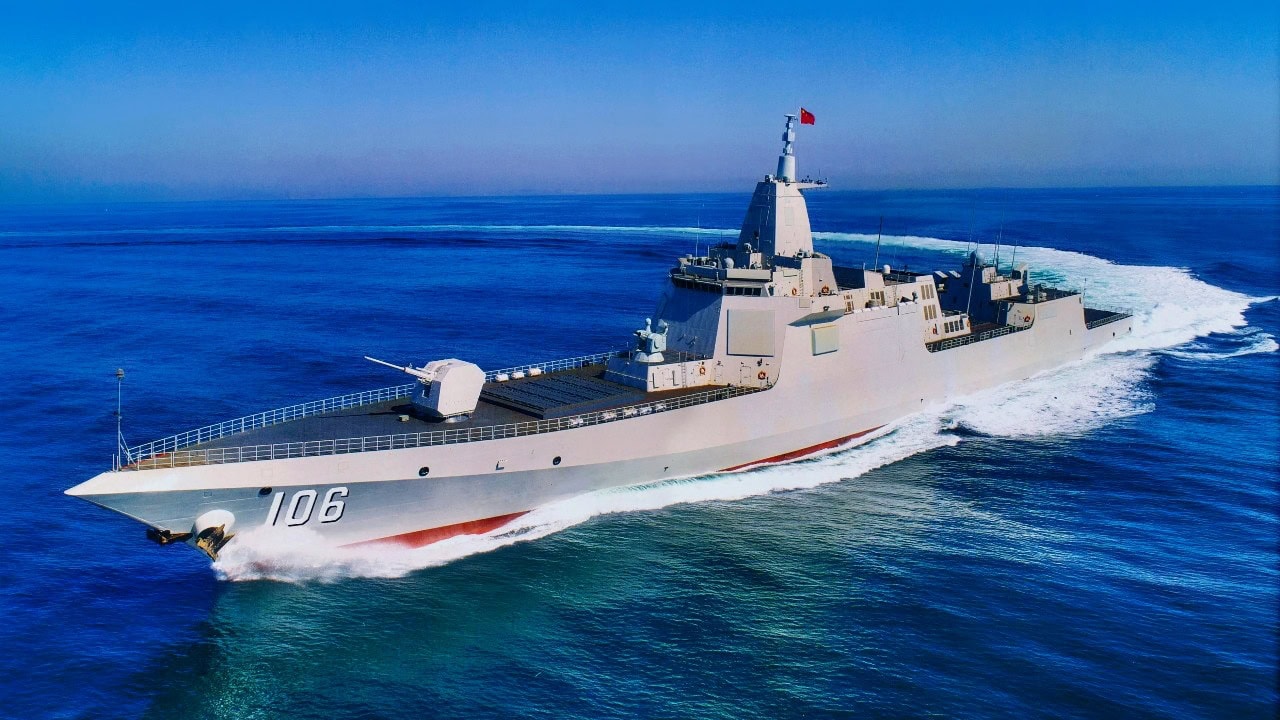
In the early hours of July 30, the Chinese Navy's Nanchang 101 and Yancheng 546, confirmed about 100 kilometers northeast of Miyako Island, were not merely passing vessels. According to the U.S. Naval Institute's Western Pacific Trends report dated July 31 and the announcement from Japan's Joint Staff Office, both ships passed northwest between Okinawa Island and Miyako Island and entered the East China Sea. The Japan Maritime Self-Defense Force (JMSDF) reportedly monitored them with the supply ship Hamana AOE-424 and the 5th Air Wing's P-3C.
At first glance, this incident appears to be a routine passage through the Miyako Strait. However, when combined with the fact that a joint Chinese-Russian surface fleet passed through the Soya Strait in the same week and another Chinese vessel demonstrated repeated actions in the direction of Miyako, this is more of an operational confirmation measuring multiple exit points of the archipelago line rather than a mere show of force around Japan.
The Joint Navigation of Four Vessels Illustrates Pressure Lines from North and South
The joint fleet consisted of the Chinese Navy's Anshan 103, Kaifeng 124, supply ship Kekexili Lake 903, and the Russian Navy's Reshitelny 343. According to USNI News, this fleet departed from Qingdao on July 13, passed between Okinawa and Miyako on the 16th, and on the 19th, the Kaifeng conducted machine gun firing in Japan's exclusive economic zone around Okinotori Island. It was reported that they entered Vladivostok on July 29, concluding their joint patrol.
According to the announcement from the Joint Staff Office, the fleet was reported to have moved westward around 8 a.m. on the 28th, approximately 70 kilometers northeast of Cape Soya, and subsequently passed through the La Perouse Strait. The JMSDF responded with the escort ship Suzunami DD-114, missile boat Kumotaka PG-827, and P-3C patrol aircraft. The routes of Soya to the north, Miyako to the southwest, and around Okinotori Island may appear distant on a map, but in terms of maritime operations, they lie along the same line, spreading Japan's surveillance resources thin.
The Presence of the Type 055 is a Matter of Quality Over Quantity
The Nanchang 101 is classified as a Type 055 by the Chinese side, with a full-load displacement of around 10,000 tons and 112 vertical launch system cells, which is perceived as closer to a cruiser by the JMSDF and the U.S. Navy. What is noteworthy about the actions near the Miyako Strait this time is not that the Type 055 appeared alone, but that it coincided temporally with the Yancheng, believed to be a Type 054A, and the supply ship, as well as the separate Chinese-Russian joint fleet.
If we separate capability from intent, in terms of capability, the Chinese Navy has already entered a stage where it can conduct continuous operations combining air defense, surface warfare, supply, and intelligence gathering at the entrances and exits of the first island chain. In terms of intent, rather than immediately applying pressure on Japanese territorial waters, it is highly likely that they are observing the response times of the Self-Defense Forces and U.S. military, the patterns of air patrol deployment, and the positioning of supply ships. This is not a flashy crisis, but it poses a troublesome test for practitioners.
The Thin Aspects of Surveillance Remaining for the JMSDF
In this response, it can be confirmed that the P-1, P-3C, escort ships, supply ships, and missile boats each played their roles. However, whether the JMSDF can consistently respond at this density is another question. In the southwest, the frequency of Chinese vessel passages has increased, and to the north, Russian IL-20 electronic intelligence aircraft have been confirmed in Japanese airspace, prompting emergency launches by the Air Self-Defense Force. Focusing solely on surface vessels risks missing the overall picture.
During the Cold War, monitoring the movements of the Soviet Pacific Fleet around Japan primarily centered on Soya, Tsugaru, and Tsushima. Now, routes from Miyako, Yonaguni, Okinotori Island, and the South China Sea overlap with this. From the perspective of protecting sea lines of communication (SLOC), Japan is losing the luxury of treating the north and south as separate issues.
According to the U.S. Naval Institute's report, RIMPAC 2026 concluded with 30 countries, 30,000 personnel, 31 surface ships, 5 submarines, and over 190 aircraft participating. The scale of the allied exercises is significant. However, peacetime surveillance missions cannot be confined to a set period like exercises.
Implications for Alliance Operations
For the Japan-U.S. alliance, the lesson from this incident is not just about a lack of military strength. In Sasebo, the amphibious assault ship Tripoli LHA-7 and the dock landing ship Rushmore LSD-47 returned after a six-month deployment, disembarking part of the 31st Marine Expeditionary Unit in Okinawa. This is both a recovery process of readiness and involves mundane constraints such as vessel maintenance, personnel rest, and preparations for the next deployment.
China and Russia are not accumulating fatigue on Japan's alert lines in a visible form like an aircraft carrier battle, but rather by combining patrols, transits, intelligence gathering, and supply operations. In the author's view, attention should be paid not just to the firepower of the Type 055 itself, but to the fact that multiple responses were forced in both the north and southwest during the same week.
The real challenge is not whether the JMSDF lost sight of the Chinese and Russian vessels. It is about how much aircraft, personnel, and maintenance time are routinely spent to avoid losing sight of them. This wear and tear is not easily reflected in published materials, but it is where the thinnest aspect of southwest defense lies.
Major Information Sources
- USNI News Western Pacific Pulse, July 31, 2026
- Japan Joint Staff Office information cited by USNI News on Chinese and Russian naval movements
- U.S. Navy RIMPAC 2026 public participation figures cited in USNI News
Chinese and Russian naval forces conducted joint operations near Japan, with the Nanchang 101 and Yancheng 546 observed passing through the Miyako Strait on July 30, 2026. The Kaifeng 124 performed machine gun exercises in Japan's Exclusive Economic Zone. This operation involved multiple vessels, indicating a coordinated military presence in the region.
- Chinese and Russian naval vessels conducted joint operations near Japan.
- The Nanchang 101 and Yancheng 546 were observed passing through the Miyako Strait.
- The Kaifeng 124 conducted machine gun firing exercises in Japan's Exclusive Economic Zone.
- The joint fleet included multiple vessels from both nations, indicating coordinated military activity.