
The deployment of 8,000 Pakistani soldiers and HQ-9 and JF-17 in Saudi Arabia opens the door to non-American air defense.
 Ahmed Al-Rashid
Deployment of 8000 Pakistani Soldiers, HQ-9, and JF-17 in Saudi Arabia Opens the Door to Non-American Air Defense
On May 18, 2026, Reuters reported, according to Army Recognition, that Pakistan has sent a military package to Saudi Arabia consisting of approximately 8000 soldiers, a squadron of JF-17 fighter jets, two squadrons of unmanned aerial vehicles, and a Chinese-made air defense system, the HQ-9, operated by Pakistani personnel and funded by Riyadh. At first glance, the news does not seem larger than a precautionary measure amid an ongoing American-Iranian confrontation. However, from a military perspective, it is more than that: it is a practical test of an idea that Gulf countries have been discussing for years, which is to reduce exclusive reliance on the American umbrella without losing it.
What Pakistan Has Actually Added
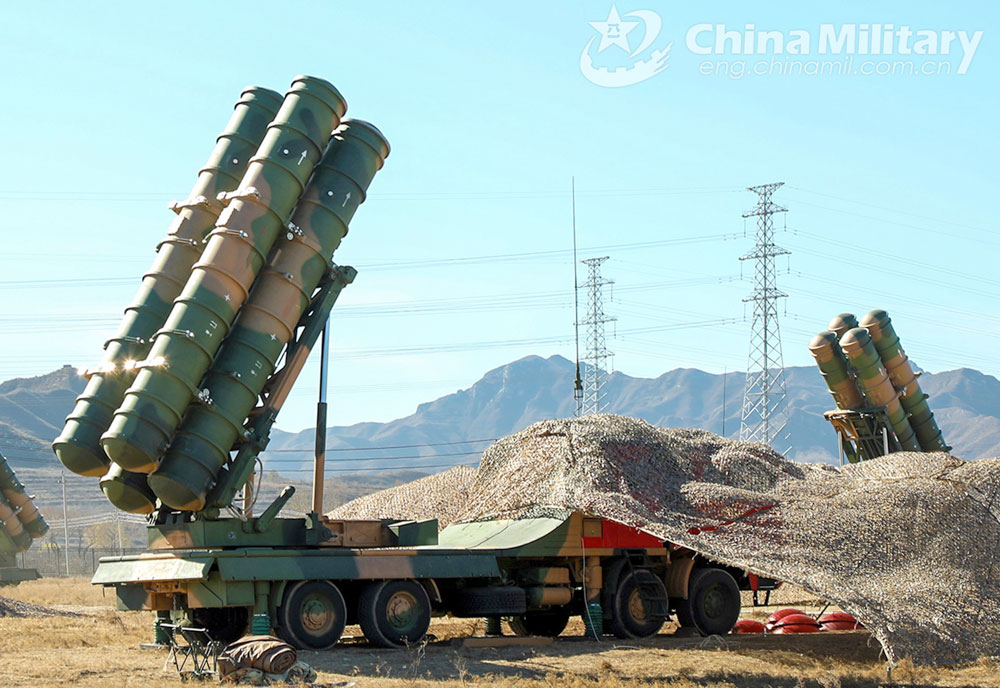
The announced package combines three different elements. The first is a relatively large human element, namely thousands of soldiers who can be used for protection, training, operating air defense, and guarding sensitive facilities. The second is a mobile air element, represented by the JF-17 Thunder, a lightweight multirole fighter developed by Pakistan in collaboration with China, capable of carrying air-to-air missiles and air-to-ground munitions, and operating at a lower cost than the heavy Western Gulf fighters. The third is the HQ-9, a long-range air defense system designed to protect cities, bases, and facilities from aircraft, cruise missiles, and some ballistic threats. Army Recognition data indicates that the HQ-9B variant theoretically has an engagement range of up to 260 kilometers and an altitude ceiling of 50 kilometers.
The most important figure is not just 8000, but the combination of operator and weapon. Saudi Arabia is not merely receiving a missile battery; it is receiving a system that operates with its crew, doctrine, and maintenance chain. This is an important distinction. Many Gulf deals end at the point of delivery and partnership statements, and then the issues of training, inventory, and readiness begin. In this case, a relatively ready capability is being introduced, even if it remains limited in size, into the Saudi defense network.
Chinese Air Defense Layer within an American Environment
Historically, Saudi air defense has been based on American and Western layers: Patriot, warning radars, F-15 fighters, and operational links with American forces. The introduction of the HQ-9 does not replace this structure, but adds a different political and technical layer. Practically, any deep integration between a Chinese system and a Western command and control network will not be easy and may be deliberately constrained to prevent sensitive data leaks or incompatible protocols from overlapping. Therefore, the HQ-9 should not be portrayed as a magic button that closes the Saudi skies.
However, its value lies elsewhere. The Pakistani battery can protect a specific sector or high-value facility or provide Riyadh with additional margin in distributing Patriot systems to other targets. In missile and drone wars, one does not only win with a more advanced system, but with the number of layers, the number of available shots, and the speed of ammunition replacement. Attacks on energy facilities in the Gulf over the past years have taught military personnel a simple lesson: a cheap missile or low-cost drone does not always defeat an expensive system, but it can wear it down if it comes in sufficient numbers and from low angles.
JF-17 is not F-15 but Carries a Different Message
The presence of the JF-17 in Saudi Arabia does not solely change the air balance with Iran. Saudi Arabia possesses F-15SA, Eurofighter Typhoon, and Tornado, which are heavier, more expensive, and have a longer range. However, the JF-17 adds something else: a lower-cost operational capability, deployable, and operated by pilots and maintenance personnel accustomed to working with fewer resources than those of Gulf air forces. In a prolonged crisis environment, this is not a small detail. An excellent fighter waiting for spare parts or approvals or qualified pilots may be less useful than a simpler fighter that flies every day.
This does not mean that the JF-17 will become the backbone of Saudi defense. It is more likely to be used as a reinforcement, for patrols, limited interceptions, or as a platform for political and military presence. But the message is clear to both Iran and Washington: Riyadh can call upon an air force from a non-Arab Muslim ally and make Chinese technology work on its territory through a Pakistani intermediary. This is not complete independence, but a redistribution of reliance.
The Difficult Pakistani Equation between Riyadh and Tehran
Pakistan does not enter this arena from a vacuum. Its military relationship with Saudi Arabia is longstanding, from training to the presence of advisors and troops, and Reuters reported that a secret agreement between the two parties could allow for the deployment of up to 80,000 Pakistani soldiers in the event of a major crisis. At the same time, Pakistan has sensitive borders with Iran and has no interest in opening a political or sectarian front with Tehran. Therefore, Islamabad appears to be holding a sword and a scale in the same hand.
From Pakistan's perspective, the deployment strengthens its financial and military relationship with Riyadh and showcases the JF-17 and HQ-9 as products capable of operating outside their original environment. From Saudi Arabia's perspective, this deployment buys time, depth, and more options. From Iran's perspective, the picture is more complicated: Pakistan, which mediates or attempts to de-escalate, is simultaneously placing radars, missiles, and aircraft alongside Iran's primary Gulf adversary.
A Test of Gulf Capability, Not Just Arms Purchase
The most important question is not whether the HQ-9 is better than the Patriot, nor whether the JF-17 is stronger than the F-15. These are useful questions in weapon catalogs, but they are incomplete in warfare. The real question is: can Saudi Arabia manage a mixed network involving Americans, Pakistanis, Chinese, and Westerners without turning the operations room into a market of translators and protocols? Any military officer who has served in the region knows that the problem often lies not in the radar screen, but in who has the right to fire, who bears the error, and who sees the complete picture.
If the Pakistani forces remain an independent island within Saudi defense, their benefit will be limited but tangible in protecting specific points. If Riyadh succeeds in gradually integrating them into a flexible command and control structure, it will be an important development in building a less unilateral Gulf air defense. However, this success requires joint training, clear rules of engagement, secure communication, and an ammunition stockpile that does not rely on political promises during a crisis.
Conclusion
The deployment of 8000 Pakistani soldiers, JF-17, and HQ-9 in Saudi Arabia is not a revolution in the balance of power, but a sign of a deeper transformation. The Gulf is not abandoning the American umbrella, but it has begun to place additional pillars under it from Pakistan, China, Turkey, and possibly others. These pillars may provide Riyadh with greater flexibility, but they may also complicate command and control. As military personnel in our country say: a multitude of rifles does not create a unified fire if everyone does not know who gives the first order and who stops the last shot.
Pakistan deployed 8000 troops, JF-17 fighters, and HQ-9 air defense systems to Saudi Arabia on May 18, 2026. This move marks a significant shift in Saudi defense strategy, aiming to reduce reliance on U.S. military support. The deployment includes operational Pakistani personnel to manage the systems, enhancing Saudi Arabia's air defense capabilities.
- Pakistan deployed 8000 troops to Saudi Arabia on May 18, 2026.
- The deployment includes JF-17 fighters and HQ-9 air defense systems.
- The HQ-9 system is designed to protect against aircraft and cruise missiles.
- This deployment signifies a shift in Saudi Arabia's defense strategy, reducing reliance on U.S. systems.
- Pakistan's involvement indicates a strengthening of military ties between Pakistan and Saudi Arabia.