

Summary and Key Points: The F-14D Super Tomcat replaced the F-14A’s stall-prone TF30 engines with GE F110s, gained roughly 60 percent more strike range, and added the digital APG-71 radar. It reached the fleet in 1992 as the Cold War ended; Defense Secretary Dick Cheney refused to buy more at about $50 million apiece, so the Navy got 55. VF-31 and VF-213 flew more than 1,000 combat sorties over Iraq in 2005–06, and the last F-14D flew to Long Island on October 4, 2006.
Editor’s Note: Since 2022, 19FortyFive has visited countless F-14 Tomcats and included many photos from our visits in this article.
The F-14D Tomcat: Retired Too Soon?
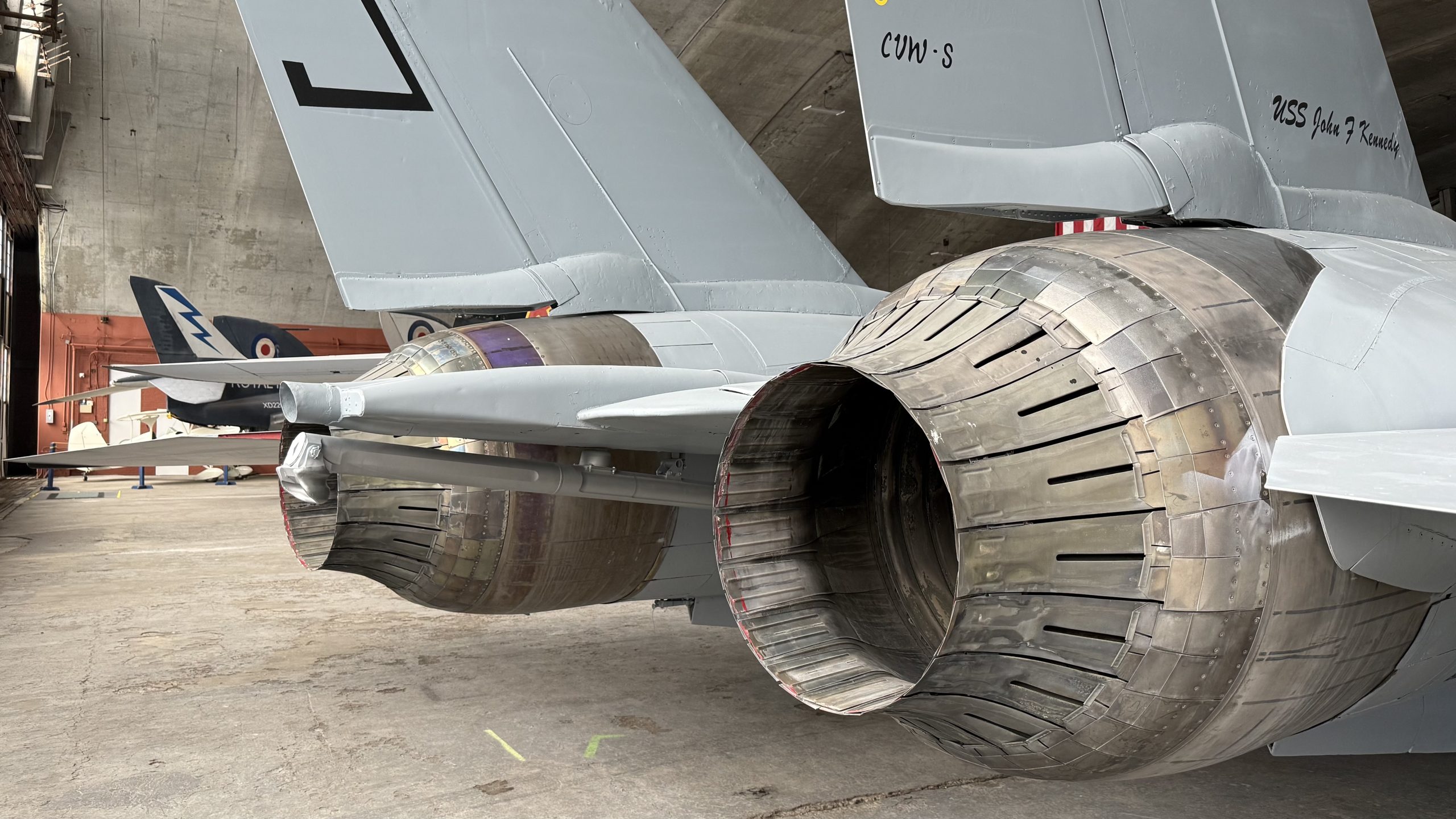
F-14 Museum photo by 19FortyFive.
The Navy’s best Tomcat was the one it bought the fewest of… naturally. The F-14D Super Tomcat was everything the Tomcat community had wanted since the 1970s. It had new engines, a digital radar, a modern cockpit, and sensors that let a crew identify a bandit long before they could see him.
However, by the time it reached the fleet, the Cold War was ending, and the Pentagon, in another short-sighted decision, was looking for programs to cut.
So the Navy got a handful of them. For those keeping score at home, that’s 55 airframes in total. Then it spent the next 15 years proving how good they were.
The Engines Fixed The Original Sin
Start with the powerplant, because that was the Tomcat’s biggest problem from day one.
The F-14A flew with temperamental, underpowered Pratt & Whitney TF30s for an airplane that size.
Pilots had to baby the throttles, and compressor stalls killed crews.
The D model got a pair of General Electric F110-GE-400s, the same engines the F-14B had already proven.
The difference was night and day.
The F-14D could launch off the catapult without afterburner, while an A model usually needed full burner unless it was very lightly loaded.
Over land, that translated into roughly 60 percent more strike range or a third more time on station. For a carrier air wing, that’s increased reach.
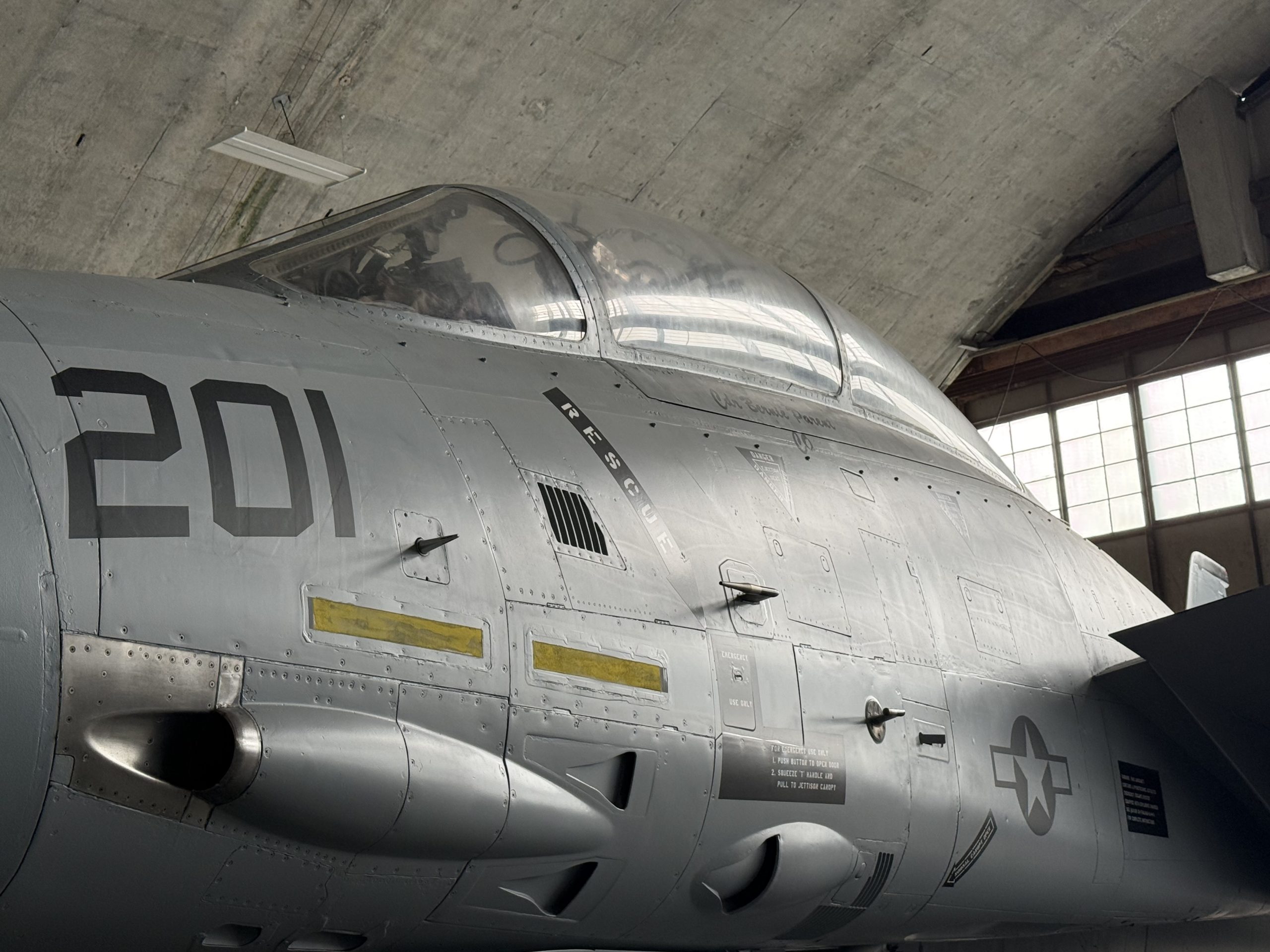
F-14 Tomcat. 19FortyFive staff photo from museum visit.
A Digital Brain And A Better Set Of Eyes
The real leap was inside the nose.
The old analog AWG-9 gave way to the Hughes AN/APG-71, a digital radar with synthetic aperture ground mapping.
That would prove itself much later, when the Tomcat was used as a bomber.
The rest of the jet got the digital treatment too, including new computers, data buses, navigation systems, and a glass cockpit.
Then there was the chin pod.
The F-14D carried a dual pod combining the Northrop AN/AXX-1 Television Camera Set with a new, improved infrared search-and-track system.
The TCS was a high-resolution TV camera used for long-range visual identification.
In plain English, the Radar Intercept Officer (RIO) could put eyes on a contact well beyond what the pilot could see.
In a crowded sky where shooting the wrong airplane is career-ending, that’s a big deal.
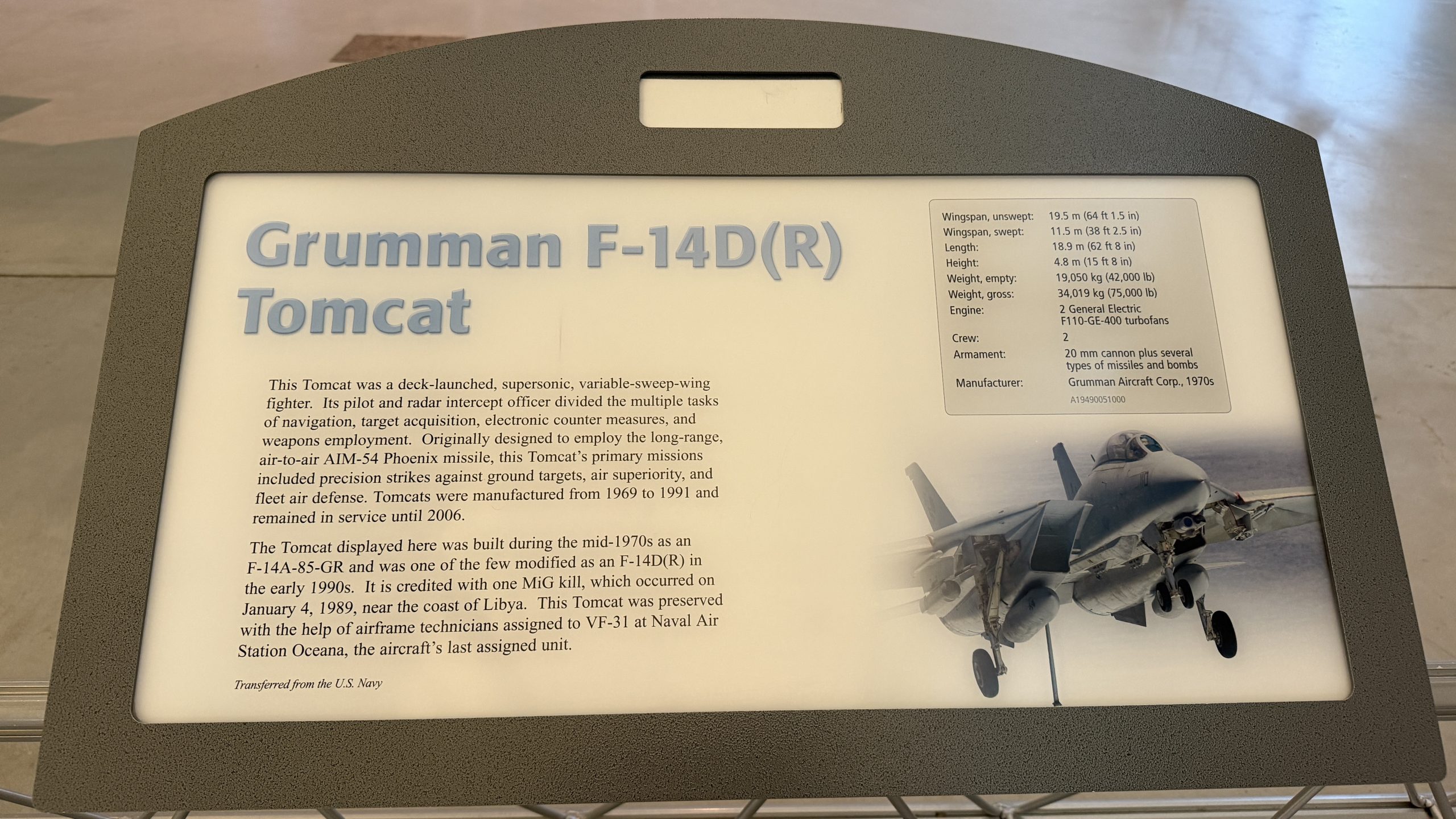
F-14 Tomcat from Steven F. Udvar-Hazy Center. Image taken by 19FortyFive staff on 9/30/2026.
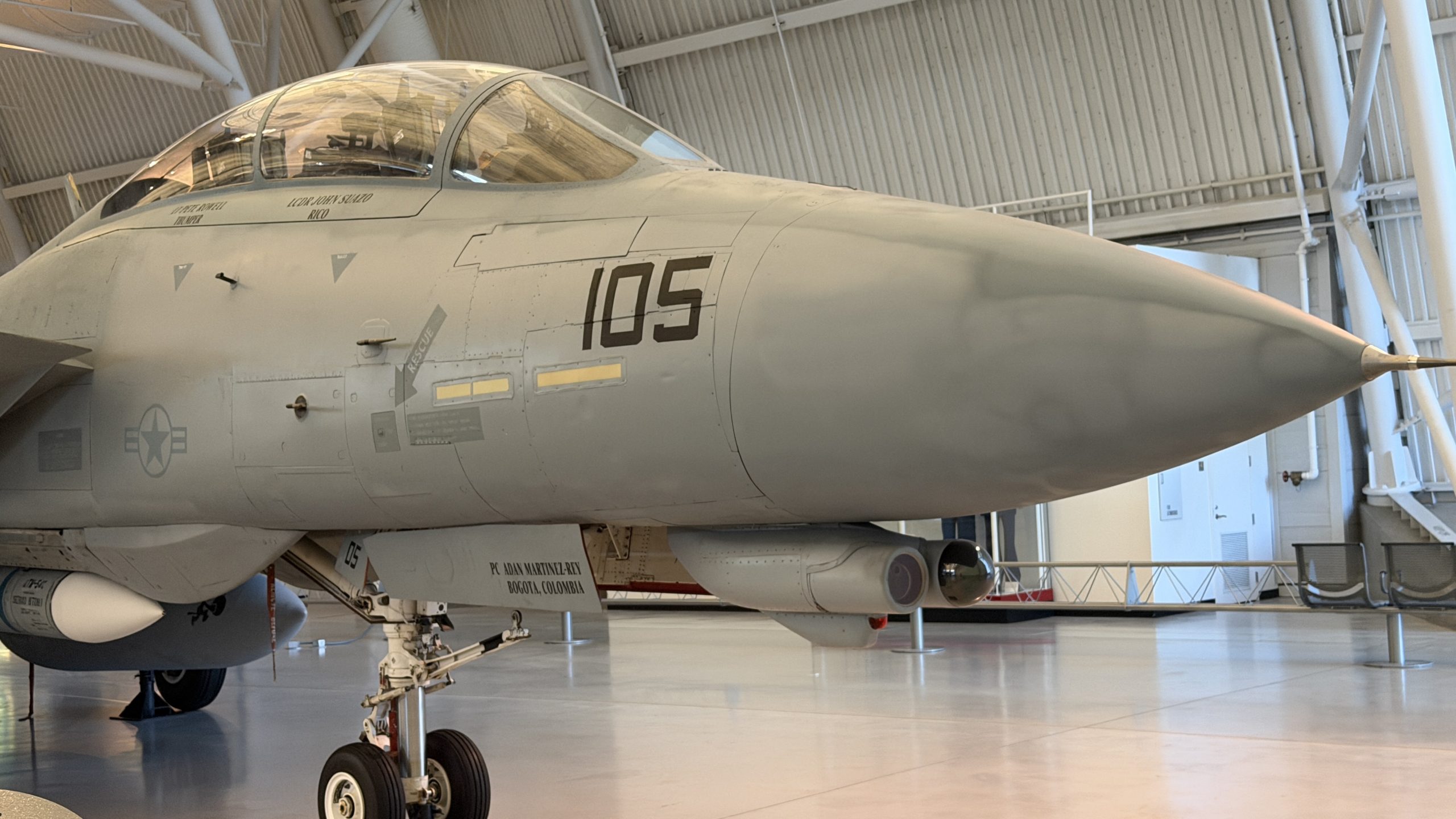
F-14 Tomcat from Steven F. Udvar-Hazy Center. Image taken by 19FortyFive staff on 9/30/2026.
Dick Cheney Pulled The Plug
The Navy originally wanted hundreds of D models, both new builds and rebuilt A and B airframes. That plan didn’t survive 1989.
Secretary of Defense Dick Cheney refused to buy more F-14Ds at about $50 million apiece and instead pushed a cheaper modernization of the existing fleet.
He dismissed the Tomcat as 1960s technology and a jobs program, and turned down the Navy Secretary’s plea for at least 132 jets.
The final count was 37 new-build aircraft plus 18 F-14As remanufactured to D standard.
The F-14D reached initial operational capability in fiscal 1992, and the last one rolled out that July, closing out 22 years of Tomcat production.
A planned software update to give it AIM-120 AMRAAM capability was also killed.
With the Soviet Union collapsing, the money had to be squeezed somewhere.
However, canceling the Navy’s most capable version of its premier fighter, among other weapons programs, was a mistake.
The fleet spent the next decade flying a mix of A, B, and D models instead of a single standardized jet.
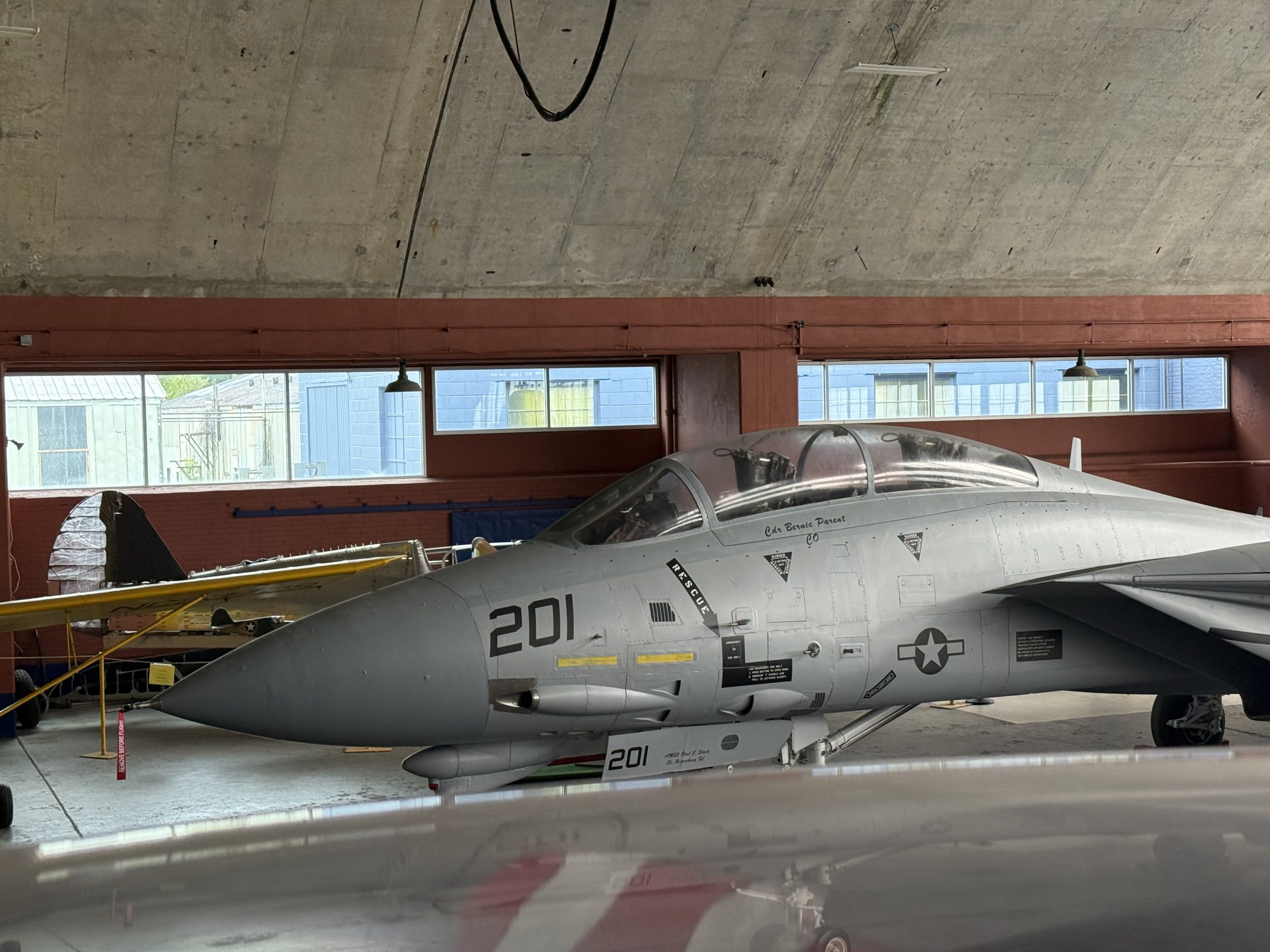
F-14 Tomcat Museum Photo 19FortyFive Photo Taken September 2026
The Fleet Defender Became A Bomber
Ironically, the Super Tomcat made its name dropping bombs. When the A-6 Intruder retired, the Navy needed a long-range strike platform, and the Tomcat evolved into the “Bombcat”.
The LANTIRN targeting pod let the RIO find and laser-designate his own targets, and the D model’s ground-mapping radar made it the best of the bunch for the job.
The last cruise came in 2005 and 2006, when VF-31 and VF-213 deployed aboard USS Theodore Roosevelt.
During that deployment, the jets carried ROVER downlinks that streamed LANTIRN video to troops on the ground, and the two squadrons flew more than 1,000 combat sorties over Iraq.
VF-31 became the last F-14 squadron to drop a bomb in combat.
The end came in September 2006.
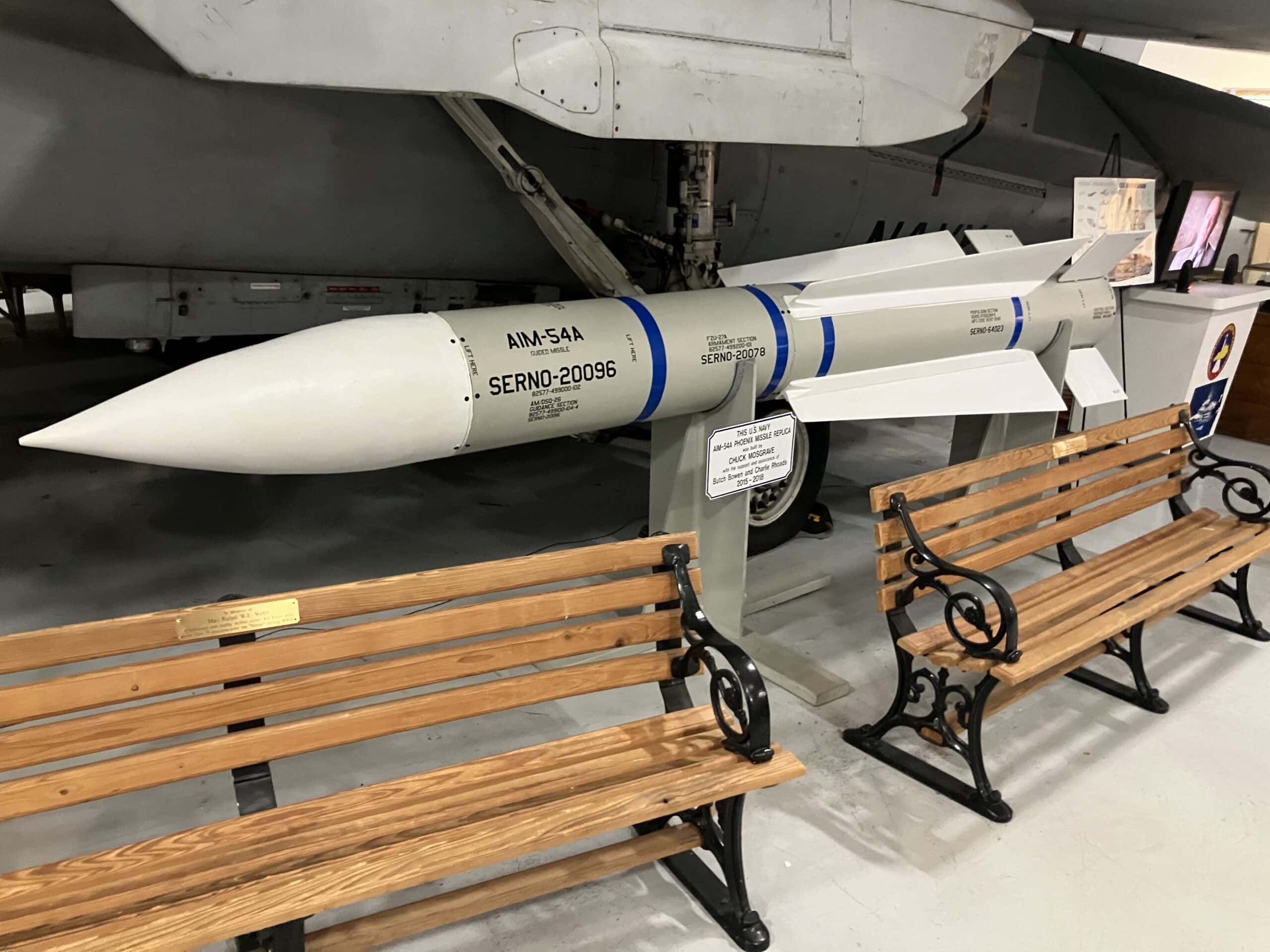
F-14 Tomcat Missile. 19FortyFive.com Image.
However, the true final flight came on October 4, when VF-31’s F-14D, BuNo 164603, ferried from NAS Oceana to Republic Airport on Long Island, right back to Grumman country. Fittingly, it was the second-to-last Tomcat ever built.
The Trade-Off Between The F-14D And The F-18
The F-14D wasn’t perfect.
It was a big, heavy, maintenance-hungry airplane, and the Super Hornet that replaced it was cheaper to fly and easier to keep on deck.
That’s the Navy’s argument, and it isn’t wrong.
However, the Super Hornet never matched the Tomcat’s speed, range, or sheer presence.
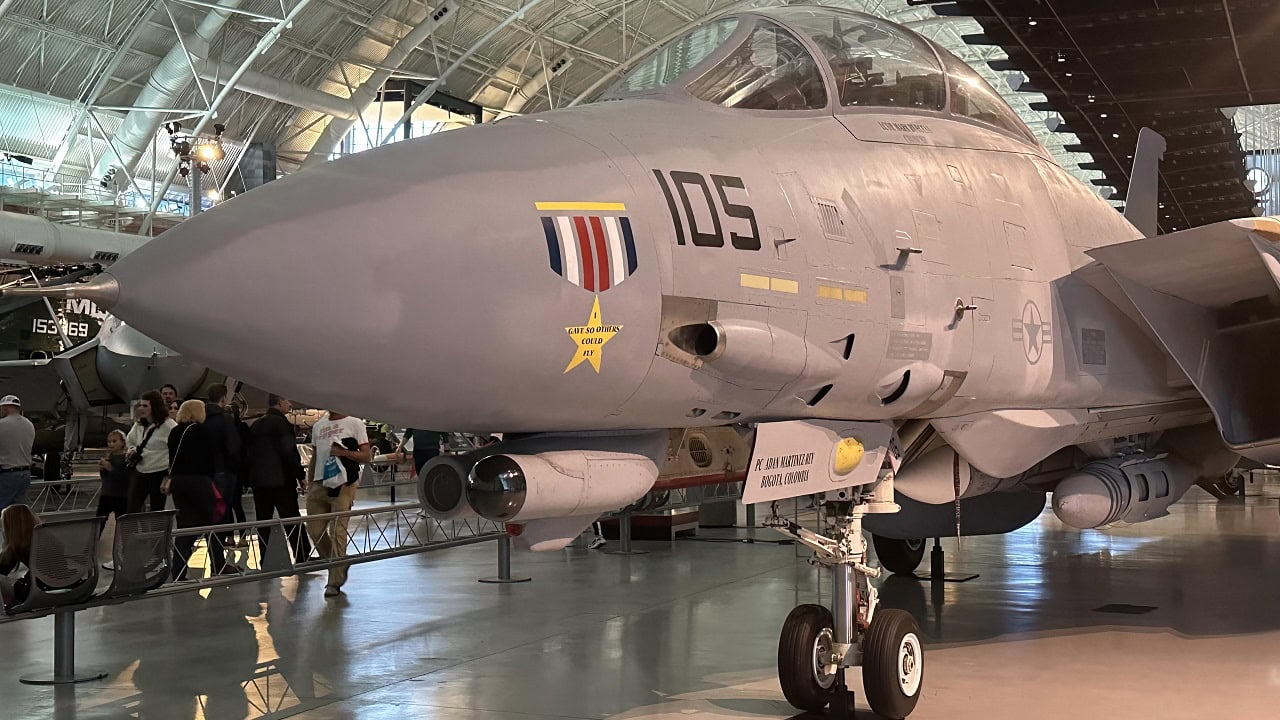
F-14 Tomcat. Image taken at National Air and Space Museum on October 1, 2022. Image by 19FortyFive.
The VF community itself passed into history with VF-31’s last jets, leaving only strike fighter squadrons behind.
Like many aviation enthusiasts, I’ve always liked the Tomcat; the aircraft and Kenny Loggins were excellent recruiters for the Navy.
And the D model was the version that finally lived up to the airframe.
It arrived late, in small numbers, with its best years cut short. It still earned the name Super Tomcat.
About the Author: Steve Balestrieri
Steve Balestrieri is a National Security Columnist. He served as a US Army Special Forces NCO and Warrant Officer. In addition to writing on defense, he covers the NFL for PatsFans.com and is a member of the Pro Football Writers of America (PFWA). His work was regularly featured in many military publications.